
Contributions by Ruth R. Caillouet, Mary C. Carruth, Nancy Dixon, Kathleen Downes, Edward J. Dupuy, Shari Evans, Paul Fess, Carina Evans Hoffpauir, Leslie Petty, Heidi Podlasi-Labrenz, Tierney S. Powell, Shanna M. Salinas, Matthew Teutsch, and Marcus Charles Tribbett
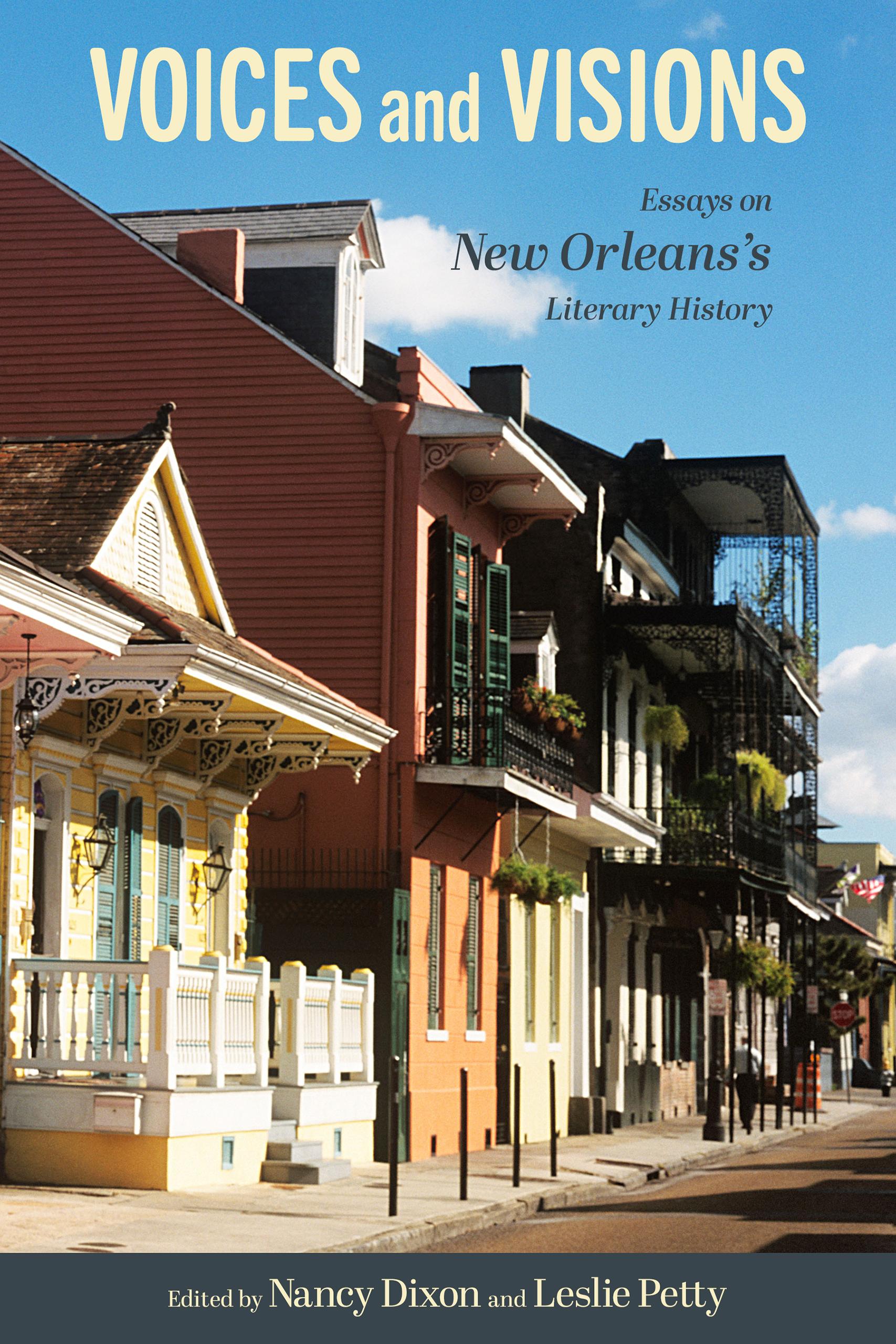
Voices and Visions: Essays on New Orleans's Literary History examines a rich combination of writers and texts, from antebellum works like Martin R. Delany’s novel, Blake, and the poetry of Les Cenelles to Patricia Smith’s recent collection of poems, Blood Dazzler. The thirteen essays in Voices and Visions treat two hundred years of literature and include discussions on canonical, contemporary, and experimental writers. Authors often associated with New Orleans such as Kate Chopin, George Washington Cable, and Walker Percy are treated in new ways, as are well-known writers who are not often thought of in relation to the city: Charles Chesnutt, Eudora Welty, Zora Neale Hurston, and Joy Harjo.
Examining this wide array of voices demonstrates the myriad ways New Orleans’s storied past has affected its present. Scholars find enduring themes—race, gender, religion, disease, art—but do so in the context of emerging conversations. Essayists in the volume address such topics as New Orleans as part of the Global South and the Black diaspora, the transformation of New Orleans after Hurricane Katrina, and the recovery of previously lost voices, including those of Native Americans and immigrants. They also discuss the legacy of pandemics and racial violence that in more recent years has been manifest in the COVID-19 outbreak and the Black Lives Matter movement.
Voices and Visions: Essays on New Orleans's Literary History examines a rich combination of writers and texts, from antebellum works like Martin R. Delany’s novel, Blake, and the poetry of Les Cenelles to Patricia Smith’s recent collection of poems, Blood Dazzler. The thirteen essays in Voices and Visions treat two hundred years of literature and include discussions on canonical, contemporary, and experimental writers. Authors often associated with New Orleans such as Kate Chopin, George Washington Cable, and Walker Percy are treated in new ways, as are well-known writers who are not often thought of in relation to the city: Charles Chesnutt, Eudora Welty, Zora Neale Hurston, and Joy Harjo.
Examining this wide array of voices demonstrates the myriad ways New Orleans’s storied past has affected its present. Scholars find enduring themes—race, gender, religion, disease, art—but do so in the context of emerging conversations. Essayists in the volume address such topics as New Orleans as part of the Global South and the Black diaspora, the transformation of New Orleans after Hurricane Katrina, and the recovery of previously lost voices, including those of Native Americans and immigrants. They also discuss the legacy of pandemics and racial violence that in more recent years has been manifest in the COVID-19 outbreak and the Black Lives Matter movement.
Betaal eenvoudig met kaart, Klarna, Apple Pay of Google Pay. Niet tevreden? Je hebt altijd 14 dagen bedenktijd. Lees meer in onze voorwaarden. Heb je vragen, mail ons dan via hello@memmo.org.
Memmo maakt studeren makkelijker – waar je ook bent ter wereld. Wij brengen je cursusboeken en slimme studietools samen op één plek: samenvattingen, quizzen, podcasts en flashcards. En Ted, je studievriend die antwoord geeft op alles wat je je afvraagt. Meer dan 50.000 studenten studeren hier al – gebouwd om je sneller te laten leren en minder stress te geven.
Misschien vind je dit ook leuk
Koop het boek0