
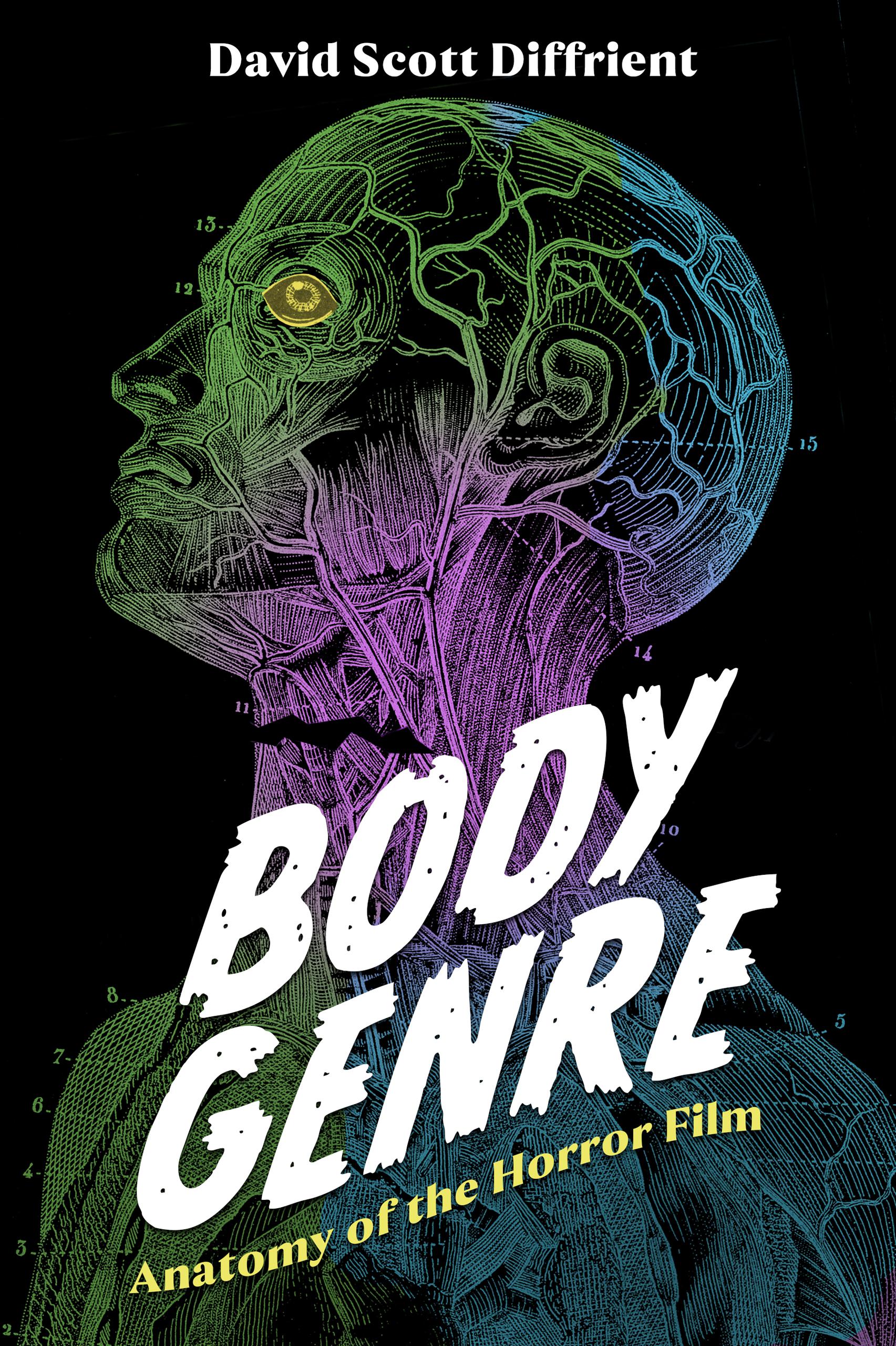
In this groundbreaking work, author David Scott Diffrient explores largely understudied facets of cinematic horror, from the various odors permeating classic and contemporary films to the wetness, sliminess, and stickiness of these productions, which, he argues, practically scream out for a tactile mode of textural analysis as much as they call for more traditional forms of textual analysis. Dating back to Carol Clover’s and Linda Williams’s pioneering work on horror cinema, film scholars have long conceptualized this once-disreputable category of cultural production as a “body genre.” However, despite the growing recognition that horror serves important biological and social functions in our lives, scholars have only scratched the surface of this genre with regard to its affective, corporeal, and sensorial appeals.
Diffrient anatomizes horror films in much the same way that a mad scientist might handle the body, separating and recombining constitutive parts into a new analytical whole. Further, he challenges the tendency of scholars to privilege human over nonhuman beings and calls into question ableist assumptions about the centrality to horror films of sight and sound to the near exclusion of other forms of sense experience. In addition to examining the role that animals—living or dead, real or fake—play in human-centered fictions, this volume asks what it means for audiences to consume motion pictures in which actors, stunt performers, and other creative personnel have put their own bodies and lives at risk for our amusement. Historically grounded and theoretically expansive, Body Genre: Anatomy of the Horror Film moves the study of cinematic horror into previously unchartered waters and breathes life into a subject that, not coincidentally, is intimately connected to breathing as our most cherished dividing line between life and death.
Diffrient anatomizes horror films in much the same way that a mad scientist might handle the body, separating and recombining constitutive parts into a new analytical whole. Further, he challenges the tendency of scholars to privilege human over nonhuman beings and calls into question ableist assumptions about the centrality to horror films of sight and sound to the near exclusion of other forms of sense experience. In addition to examining the role that animals—living or dead, real or fake—play in human-centered fictions, this volume asks what it means for audiences to consume motion pictures in which actors, stunt performers, and other creative personnel have put their own bodies and lives at risk for our amusement. Historically grounded and theoretically expansive, Body Genre: Anatomy of the Horror Film moves the study of cinematic horror into previously unchartered waters and breathes life into a subject that, not coincidentally, is intimately connected to breathing as our most cherished dividing line between life and death.
Betaal eenvoudig met kaart, Klarna, Apple Pay of Google Pay. Niet tevreden? Je hebt altijd 14 dagen bedenktijd. Lees meer in onze voorwaarden. Heb je vragen, mail ons dan via hello@memmo.org.
Memmo maakt studeren makkelijker – waar je ook bent ter wereld. Wij brengen je cursusboeken en slimme studietools samen op één plek: samenvattingen, quizzen, podcasts en flashcards. En Ted, je studievriend die antwoord geeft op alles wat je je afvraagt. Meer dan 50.000 studenten studeren hier al – gebouwd om je sneller te laten leren en minder stress te geven.
Misschien vind je dit ook leuk
Koop het boek0