
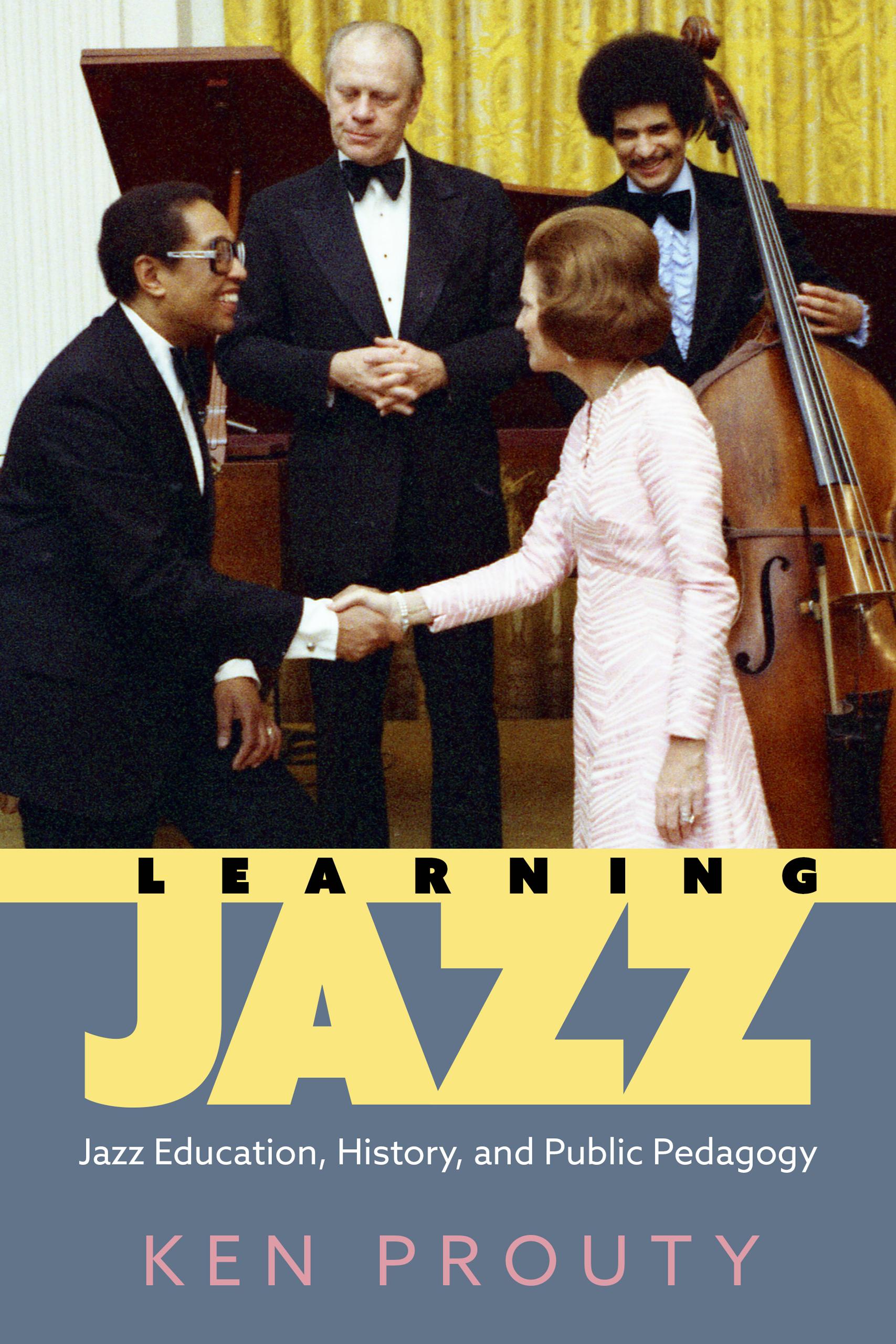
Learning Jazz: Jazz Education, History, and Public Pedagogy addresses a debate that has consumed practitioners and advocates since the music's early days. Studies on jazz learning typically focus on one of two methods: institutional education or the kinds of informal mentoring relationships long associated with the tradition. Ken Prouty argues that this distinction works against a common identity for audiences and communities. Rather, what happens within the institution impacts—and is impacted by—events and practices outside institutional contexts.
While formal institutions are well-defined in educational and civic contexts, informal institutions have profoundly influenced the development of jazz and its discourses. Drawing on historical case studies, Prouty details significant moments in jazz history. He examines the ways that early method books capitalized on a new commercial market, commandeering public expertise about the music. Chapters also discuss critic Paul Eduard Miller and his attempts to develop a jazz canon, as well as the disconnect between the spotlighted “great men” and the everyday realities of artists. Tackling race in jazz education, Prouty explores the intersections between identity and assessment; bandleaders Stan Kenton and Maynard Ferguson; public school segregation; Jazz at Lincoln Center; and more. He further examines jazz’s “public pedagogy,” and the sometimes-difficult relationships between “jazz people” and the general public. Ultimately, Learning Jazz posits that there is room for both institutional and noninstitutional forces in the educational realm of jazz.
While formal institutions are well-defined in educational and civic contexts, informal institutions have profoundly influenced the development of jazz and its discourses. Drawing on historical case studies, Prouty details significant moments in jazz history. He examines the ways that early method books capitalized on a new commercial market, commandeering public expertise about the music. Chapters also discuss critic Paul Eduard Miller and his attempts to develop a jazz canon, as well as the disconnect between the spotlighted “great men” and the everyday realities of artists. Tackling race in jazz education, Prouty explores the intersections between identity and assessment; bandleaders Stan Kenton and Maynard Ferguson; public school segregation; Jazz at Lincoln Center; and more. He further examines jazz’s “public pedagogy,” and the sometimes-difficult relationships between “jazz people” and the general public. Ultimately, Learning Jazz posits that there is room for both institutional and noninstitutional forces in the educational realm of jazz.
Betaal eenvoudig met kaart, Klarna, Apple Pay of Google Pay. Niet tevreden? Je hebt altijd 14 dagen bedenktijd. Lees meer in onze voorwaarden. Heb je vragen, mail ons dan via hello@memmo.org.
Memmo maakt studeren makkelijker – waar je ook bent ter wereld. Wij brengen je cursusboeken en slimme studietools samen op één plek: samenvattingen, quizzen, podcasts en flashcards. En Ted, je studievriend die antwoord geeft op alles wat je je afvraagt. Meer dan 50.000 studenten studeren hier al – gebouwd om je sneller te laten leren en minder stress te geven.
Misschien vind je dit ook leuk
Koop het boek0