
Contributions by Jared N. Champion, Miriam M. Chirico, Thomas Clark, David R. Dewberry, Christopher J. Gilbert, David Gillota, Kathryn Kein, Rob King, Rebecca Krefting, Peter C. Kunze, Linda Mizejewski, Aviva Orenstein, Raúl Pérez, Philip Scepanski, Susan Seizer, Monique Taylor, Ila Tyagi, and Timothy J. Viator
Stand-up comedians have a long history of walking a careful line between serious and playful engagement with social issues: Lenny Bruce questioned the symbolic valence of racial slurs, Dick Gregory took time away from the stage to speak alongside Martin Luther King Jr., and—more recently—Tig Notaro challenged popular notions of damaged or abject bodies. Stand-up comedians deploy humor to open up difficult topics for broader examination, which only underscores the social and cultural importance of their work.
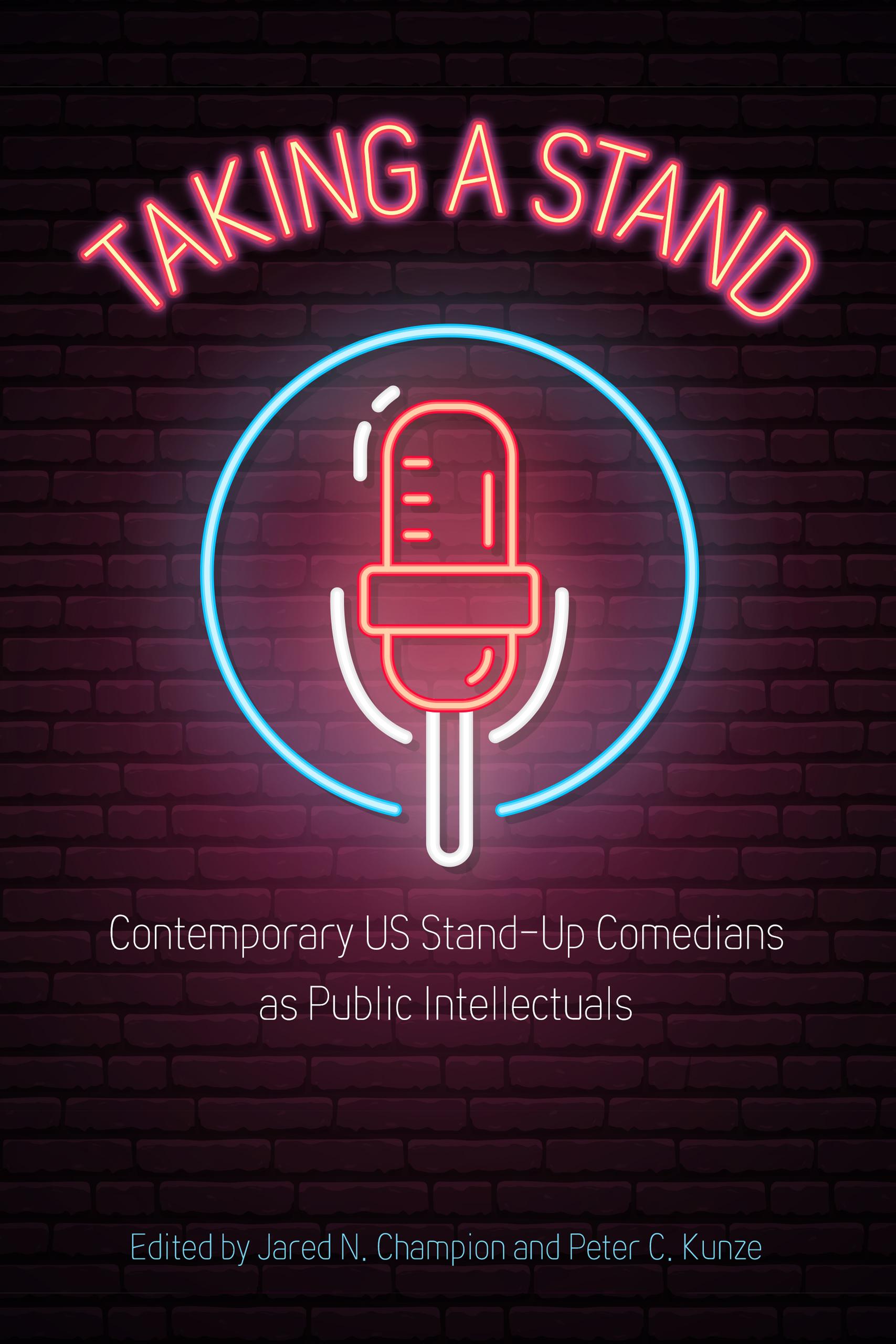
Taking a Stand: Contemporary US Stand-Up Comedians as Public Intellectuals draws together essays that contribute to the analysis of the stand-up comedian as public intellectual since the 1980s. The chapters explore stand-up comedians as contributors to and shapers of public discourse via their live performances, podcasts, social media presence, and political activism.
Each chapter highlights a stand-up comedian and their ongoing discussion of a cultural issue or expression of a political ideology/standpoint: Lisa Lampanelli’s use of problematic postracial humor, Aziz Ansari’s merging of sociology and technology, or Maria Bamford’s emphasis on mental health, to name just a few. Taking a Stand offers a starting point for understanding the work stand-up comedians do as well as its reach beyond the stage. Comedians influence discourse, perspectives, even public policy on myriad issues, and this book sets out to take those jokes seriously.
Stand-up comedians have a long history of walking a careful line between serious and playful engagement with social issues: Lenny Bruce questioned the symbolic valence of racial slurs, Dick Gregory took time away from the stage to speak alongside Martin Luther King Jr., and—more recently—Tig Notaro challenged popular notions of damaged or abject bodies. Stand-up comedians deploy humor to open up difficult topics for broader examination, which only underscores the social and cultural importance of their work.
Taking a Stand: Contemporary US Stand-Up Comedians as Public Intellectuals draws together essays that contribute to the analysis of the stand-up comedian as public intellectual since the 1980s. The chapters explore stand-up comedians as contributors to and shapers of public discourse via their live performances, podcasts, social media presence, and political activism.
Each chapter highlights a stand-up comedian and their ongoing discussion of a cultural issue or expression of a political ideology/standpoint: Lisa Lampanelli’s use of problematic postracial humor, Aziz Ansari’s merging of sociology and technology, or Maria Bamford’s emphasis on mental health, to name just a few. Taking a Stand offers a starting point for understanding the work stand-up comedians do as well as its reach beyond the stage. Comedians influence discourse, perspectives, even public policy on myriad issues, and this book sets out to take those jokes seriously.
Betaal eenvoudig met kaart, Klarna, Apple Pay of Google Pay. Niet tevreden? Je hebt altijd 14 dagen bedenktijd. Lees meer in onze voorwaarden. Heb je vragen, mail ons dan via hello@memmo.org.
Memmo maakt studeren makkelijker – waar je ook bent ter wereld. Wij brengen je cursusboeken en slimme studietools samen op één plek: samenvattingen, quizzen, podcasts en flashcards. En Ted, je studievriend die antwoord geeft op alles wat je je afvraagt. Meer dan 50.000 studenten studeren hier al – gebouwd om je sneller te laten leren en minder stress te geven.
Misschien vind je dit ook leuk
Koop het boek0