
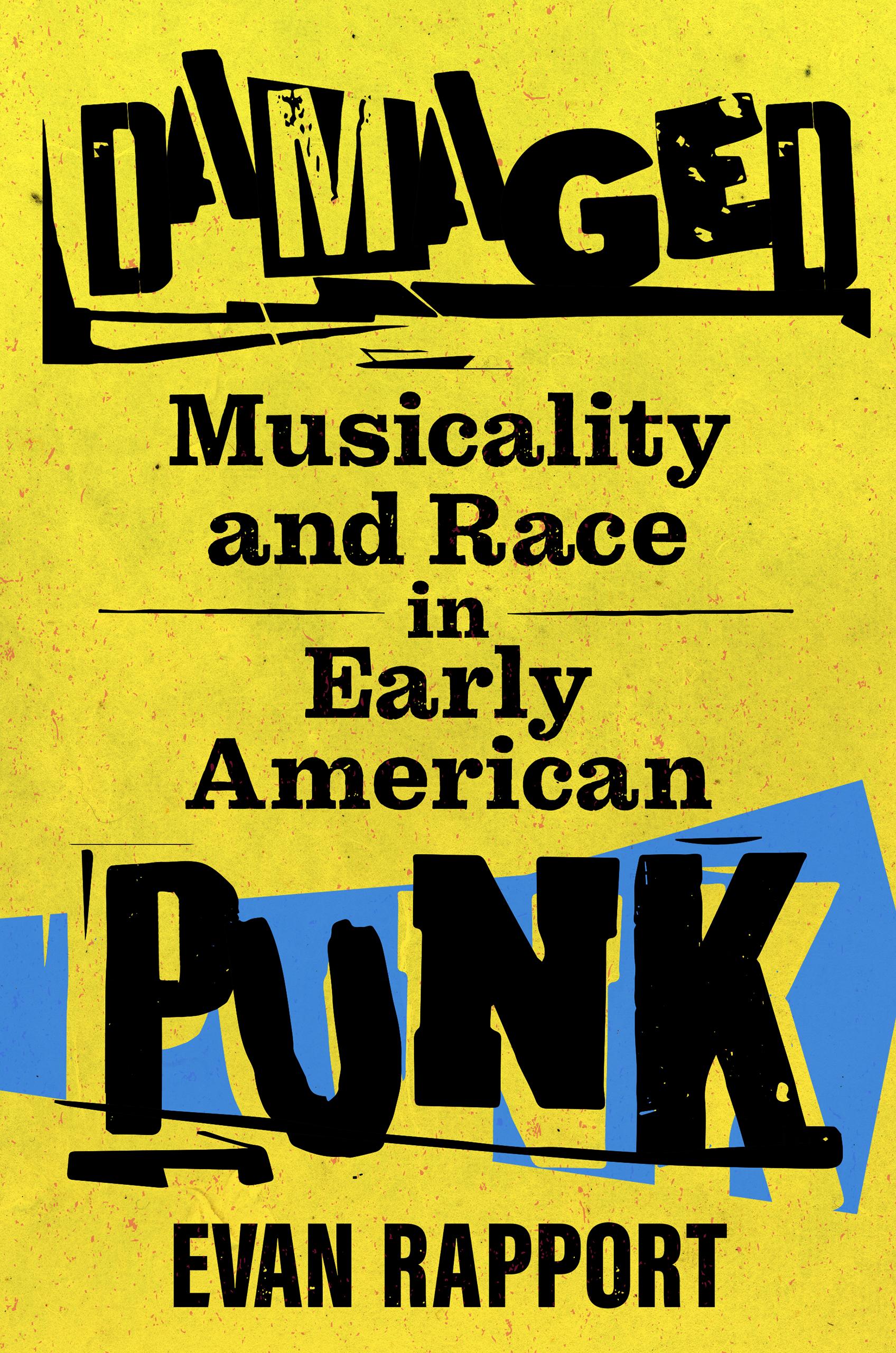
Damaged: Musicality and Race in Early American Punk is the first book-length portrait of punk as a musical style with an emphasis on how punk developed in relation to changing ideas of race in American society from the late 1960s to the early 1980s. Drawing on musical analysis, archival research, and new interviews, Damaged provides fresh interpretations of race and American society during this period and illuminates the contemporary importance of that era.
Evan Rapport outlines the ways in which punk developed out of dramatic changes to America’s cities and suburbs in the postwar era, especially with respect to race. The musical styles that led to punk included transformations to blues resources, experimental visions of the American musical past, and bold reworkings of the rock-and-roll and rhythm-and-blues sounds of the late 1950s and early 1960s, revealing a historically oriented approach to rock that is strikingly different from the common myths and conceptions about punk. Following these approaches, punk itself reflected new versions of older exchanges between the US and the UK, the changing environments of American suburbs and cities, and a shift from the expressions of older baby boomers to that of younger musicians belonging to Generation X. Throughout the book, Rapport also explores the discourses and contradictory narratives of punk history, which are often in direct conflict with the world that is captured in historical documents and revealed through musical analysis.
Evan Rapport outlines the ways in which punk developed out of dramatic changes to America’s cities and suburbs in the postwar era, especially with respect to race. The musical styles that led to punk included transformations to blues resources, experimental visions of the American musical past, and bold reworkings of the rock-and-roll and rhythm-and-blues sounds of the late 1950s and early 1960s, revealing a historically oriented approach to rock that is strikingly different from the common myths and conceptions about punk. Following these approaches, punk itself reflected new versions of older exchanges between the US and the UK, the changing environments of American suburbs and cities, and a shift from the expressions of older baby boomers to that of younger musicians belonging to Generation X. Throughout the book, Rapport also explores the discourses and contradictory narratives of punk history, which are often in direct conflict with the world that is captured in historical documents and revealed through musical analysis.
Betaal eenvoudig met kaart, Klarna, Apple Pay of Google Pay. Niet tevreden? Je hebt altijd 14 dagen bedenktijd. Lees meer in onze voorwaarden. Heb je vragen, mail ons dan via hello@memmo.org.
Memmo maakt studeren makkelijker – waar je ook bent ter wereld. Wij brengen je cursusboeken en slimme studietools samen op één plek: samenvattingen, quizzen, podcasts en flashcards. En Ted, je studievriend die antwoord geeft op alles wat je je afvraagt. Meer dan 50.000 studenten studeren hier al – gebouwd om je sneller te laten leren en minder stress te geven.
Misschien vind je dit ook leuk
Koop het boek0