
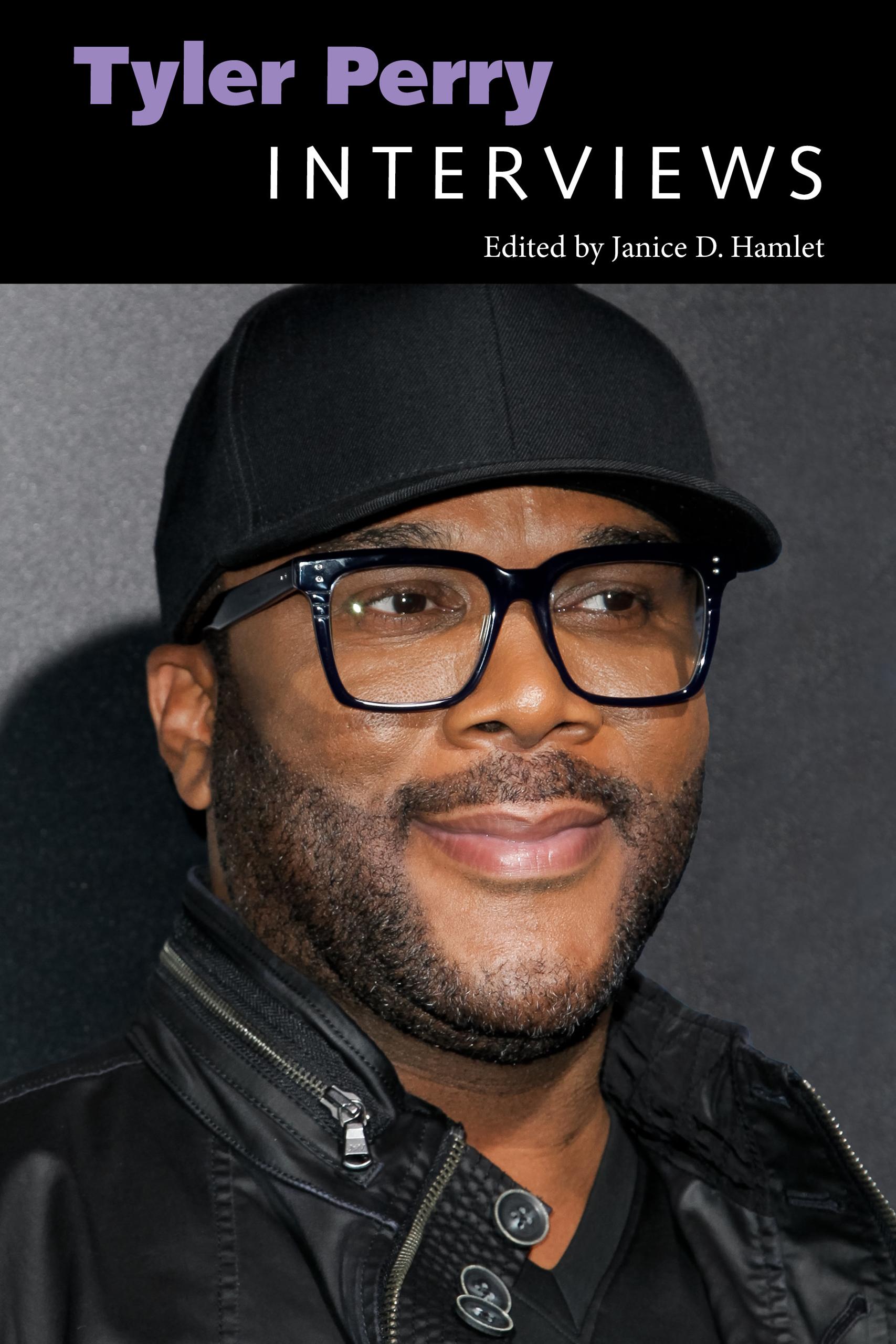
A career-spanning volume, Tyler Perry: Interviews collects sixteen interviews, ranging from the early 2000s to 2018. Once a destitute and struggling playwright, Tyler Perry (b. 1969) is now a multimedia phenomenon and one of the most lucrative auteurs in Hollywood. Known for his unwavering and audacious rhetorical style, Perry has produced an impressive body of work by rejecting Hollywood’s procedures and following his personal template.
Featuring mostly African American actors and centering primarily on women, Perry’s films lace drama and comedy with Christianity. Despite the skepticism of Hollywood executives who claimed that church-going black people do not go to the movies, Perry achieved critical success with the release of his first film, Diary of a Mad Black Woman, which became the US’s highest-grossing movie of 2005. With his movies, Perry has discovered an untapped audience for the stories he has to offer—stories about adversity, faith, family, and redemption.
Critics, including African American filmmaker Spike Lee, have censured Perry’s work for being repetitive and reinforcing negative stereotypes that have long plagued the African American community. Supporters, however, praise Perry for creating films that allow his audience to see themselves onscreen. Regardless of how his films are received, Perry’s accomplishments—establishing the Tyler Perry brand, building one of the largest movie studios in the country, employing more African Americans in front of and behind the camera than any other studio, and creating cinematic content for audiences other filmmakers have ignored—undeniably establish him as one of the most powerful multimedia moguls in the country.
Featuring mostly African American actors and centering primarily on women, Perry’s films lace drama and comedy with Christianity. Despite the skepticism of Hollywood executives who claimed that church-going black people do not go to the movies, Perry achieved critical success with the release of his first film, Diary of a Mad Black Woman, which became the US’s highest-grossing movie of 2005. With his movies, Perry has discovered an untapped audience for the stories he has to offer—stories about adversity, faith, family, and redemption.
Critics, including African American filmmaker Spike Lee, have censured Perry’s work for being repetitive and reinforcing negative stereotypes that have long plagued the African American community. Supporters, however, praise Perry for creating films that allow his audience to see themselves onscreen. Regardless of how his films are received, Perry’s accomplishments—establishing the Tyler Perry brand, building one of the largest movie studios in the country, employing more African Americans in front of and behind the camera than any other studio, and creating cinematic content for audiences other filmmakers have ignored—undeniably establish him as one of the most powerful multimedia moguls in the country.
Betaal eenvoudig met kaart, Klarna, Apple Pay of Google Pay. Niet tevreden? Je hebt altijd 14 dagen bedenktijd. Lees meer in onze voorwaarden. Heb je vragen, mail ons dan via hello@memmo.org.
Memmo maakt studeren makkelijker – waar je ook bent ter wereld. Wij brengen je cursusboeken en slimme studietools samen op één plek: samenvattingen, quizzen, podcasts en flashcards. En Ted, je studievriend die antwoord geeft op alles wat je je afvraagt. Meer dan 50.000 studenten studeren hier al – gebouwd om je sneller te laten leren en minder stress te geven.
Misschien vind je dit ook leuk
Koop het boek0