
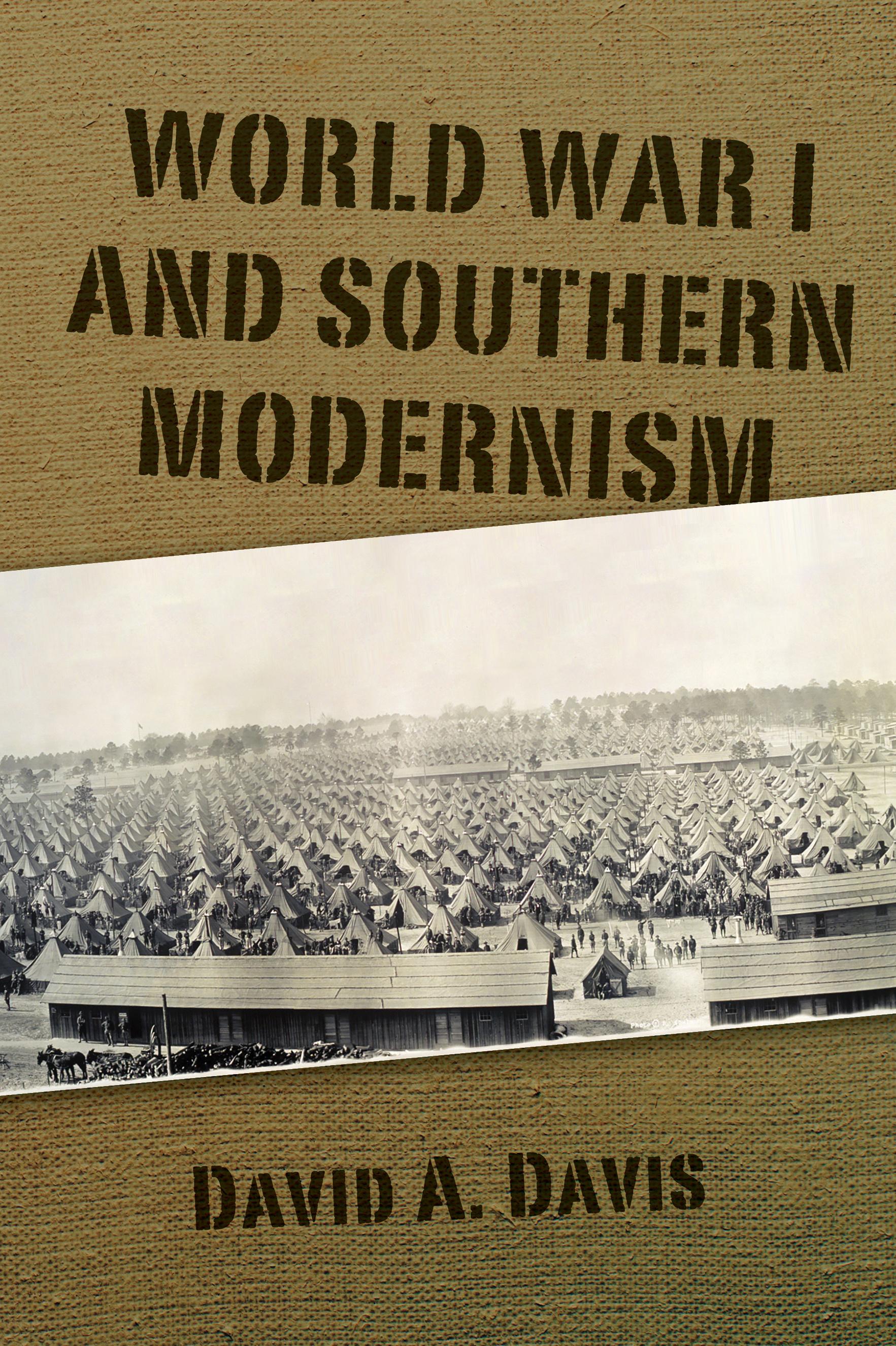
Winner of the 2018 Eudora Welty Prize
When the United States entered World War I, parts of the country had developed industries, urban cultures, and democratic political systems, but the South lagged behind, remaining an impoverished, agriculture region. Despite New South boosterism, the culture of the early twentieth-century South was comparatively artistically arid. Yet, southern writers dominated the literary marketplace by the 1920s and 1930s.
World War I brought southerners into contact with modernity before the South fully modernized. This shortfall created an inherent tension between the region's existing agricultural social structure and the processes of modernization, leading to distal modernism, a form of writing that combines elements of modernism to depict non-modern social structures. Critics have struggled to formulate explanations for the eruption of modern southern literature, sometimes called the Southern Renaissance.
Pinpointing World War I as the catalyst, David A. Davis argues southern modernism was not a self-generating outburst of writing, but a response to the disruptions modernity generated in the region. In World War I and Southern Modernism, Davis examines dozens of works of literature by writers, including William Faulkner, Ellen Glasgow, and Claude McKay, that depict the South during the war. Topics explored in the book include contact between the North and the South, southerners who served in combat, and the developing southern economy. Davis also provides a new lens for this argument, taking a closer look at African Americans in the military and changing gender roles.
When the United States entered World War I, parts of the country had developed industries, urban cultures, and democratic political systems, but the South lagged behind, remaining an impoverished, agriculture region. Despite New South boosterism, the culture of the early twentieth-century South was comparatively artistically arid. Yet, southern writers dominated the literary marketplace by the 1920s and 1930s.
World War I brought southerners into contact with modernity before the South fully modernized. This shortfall created an inherent tension between the region's existing agricultural social structure and the processes of modernization, leading to distal modernism, a form of writing that combines elements of modernism to depict non-modern social structures. Critics have struggled to formulate explanations for the eruption of modern southern literature, sometimes called the Southern Renaissance.
Pinpointing World War I as the catalyst, David A. Davis argues southern modernism was not a self-generating outburst of writing, but a response to the disruptions modernity generated in the region. In World War I and Southern Modernism, Davis examines dozens of works of literature by writers, including William Faulkner, Ellen Glasgow, and Claude McKay, that depict the South during the war. Topics explored in the book include contact between the North and the South, southerners who served in combat, and the developing southern economy. Davis also provides a new lens for this argument, taking a closer look at African Americans in the military and changing gender roles.
Betaal eenvoudig met kaart, Klarna, Apple Pay of Google Pay. Niet tevreden? Je hebt altijd 14 dagen bedenktijd. Lees meer in onze voorwaarden. Heb je vragen, mail ons dan via hello@memmo.org.
Memmo maakt studeren makkelijker – waar je ook bent ter wereld. Wij brengen je cursusboeken en slimme studietools samen op één plek: samenvattingen, quizzen, podcasts en flashcards. En Ted, je studievriend die antwoord geeft op alles wat je je afvraagt. Meer dan 50.000 studenten studeren hier al – gebouwd om je sneller te laten leren en minder stress te geven.
Misschien vind je dit ook leuk
Koop het boek0