
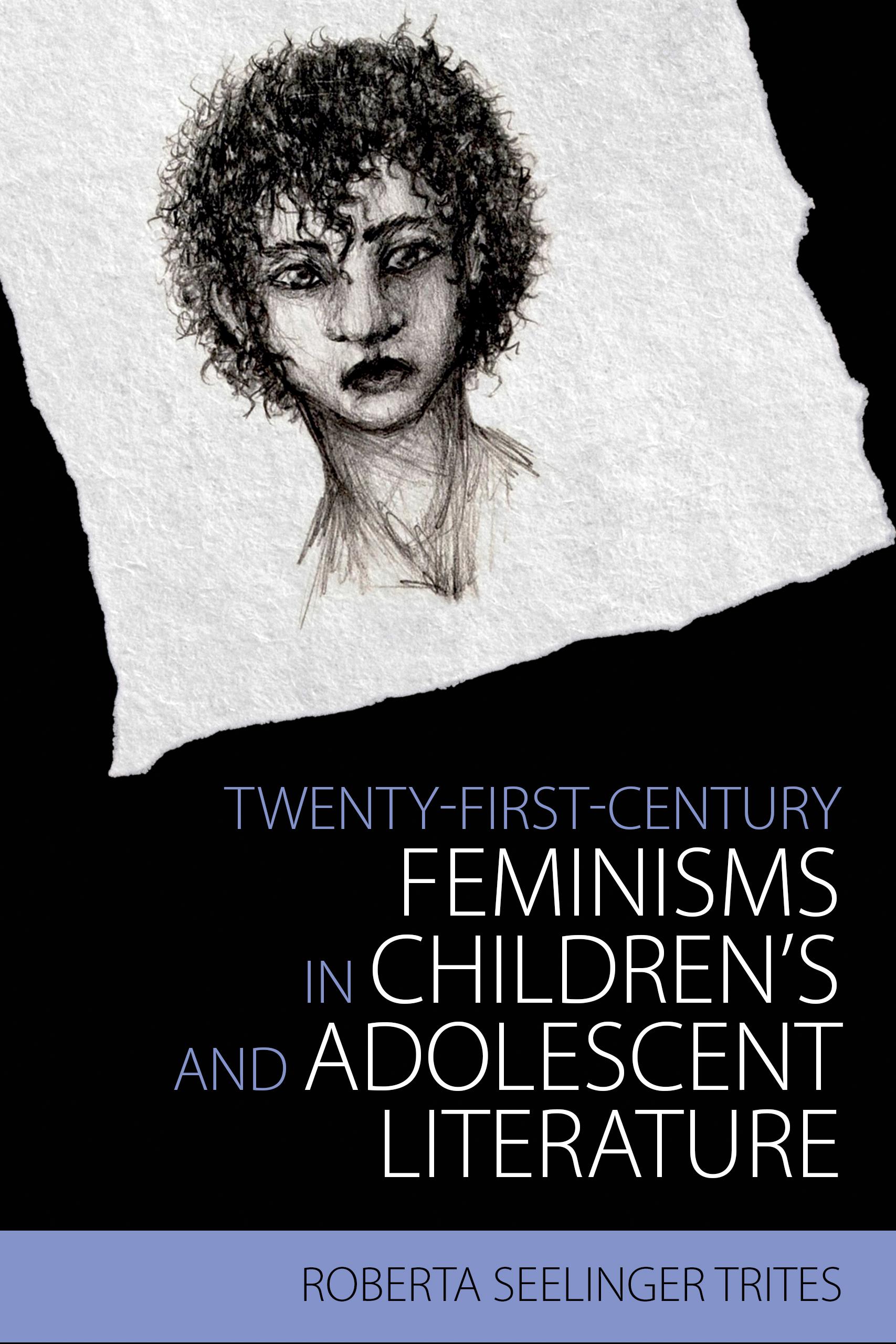
Over twenty years after the publication of her groundbreaking work, Waking Sleeping Beauty: Feminist Voices in Children’s Novels, Roberta Seelinger Trites returns to analyze how literature for the young still provides one outlet in which feminists can offer girls an alternative to sexism. Supplementing her previous work in the linguistic turn, Trites employs methodologies from the material turn to demonstrate how feminist thinking has influenced literature for the young in the last two decades. She interrogates how material feminism can expand our understanding of maturation and gender—especially girlhood—as represented in narratives for preadolescents and adolescents.
Twenty-First-Century Feminisms in Children’s and Adolescent Literature applies principles behind material feminisms, such as ecofeminism, intersectionality, and the ethics of care, to analyze important feminist thinking that permeates twenty-first-century publishing for youth. The structure moves from examinations of the individual to examinations of the individual in social, environmental, and interpersonal contexts. The book deploys ecofeminism and the posthuman to investigate how embodied individuals interact with the environment and via the extension of feministic ethics how people interact with each other romantically and sexually.
Throughout the book, Trites explores issues of identity, gender, race, class, age, and sexuality in a wide range of literature for young readers, such as Kate DiCamillo’s Flora and Ulysses, Jacqueline Woodson’s Brown Girl Dreaming, and Rainbow Rowell’s Eleanor & Park. She demonstrates how shifting cultural perceptions of feminism affect what is happening both in publishing for the young and in the academic study of literature for children and adolescents.
Twenty-First-Century Feminisms in Children’s and Adolescent Literature applies principles behind material feminisms, such as ecofeminism, intersectionality, and the ethics of care, to analyze important feminist thinking that permeates twenty-first-century publishing for youth. The structure moves from examinations of the individual to examinations of the individual in social, environmental, and interpersonal contexts. The book deploys ecofeminism and the posthuman to investigate how embodied individuals interact with the environment and via the extension of feministic ethics how people interact with each other romantically and sexually.
Throughout the book, Trites explores issues of identity, gender, race, class, age, and sexuality in a wide range of literature for young readers, such as Kate DiCamillo’s Flora and Ulysses, Jacqueline Woodson’s Brown Girl Dreaming, and Rainbow Rowell’s Eleanor & Park. She demonstrates how shifting cultural perceptions of feminism affect what is happening both in publishing for the young and in the academic study of literature for children and adolescents.
Betaal eenvoudig met kaart, Klarna, Apple Pay of Google Pay. Niet tevreden? Je hebt altijd 14 dagen bedenktijd. Lees meer in onze voorwaarden. Heb je vragen, mail ons dan via hello@memmo.org.
Memmo maakt studeren makkelijker – waar je ook bent ter wereld. Wij brengen je cursusboeken en slimme studietools samen op één plek: samenvattingen, quizzen, podcasts en flashcards. En Ted, je studievriend die antwoord geeft op alles wat je je afvraagt. Meer dan 50.000 studenten studeren hier al – gebouwd om je sneller te laten leren en minder stress te geven.
Misschien vind je dit ook leuk
Koop het boek0