
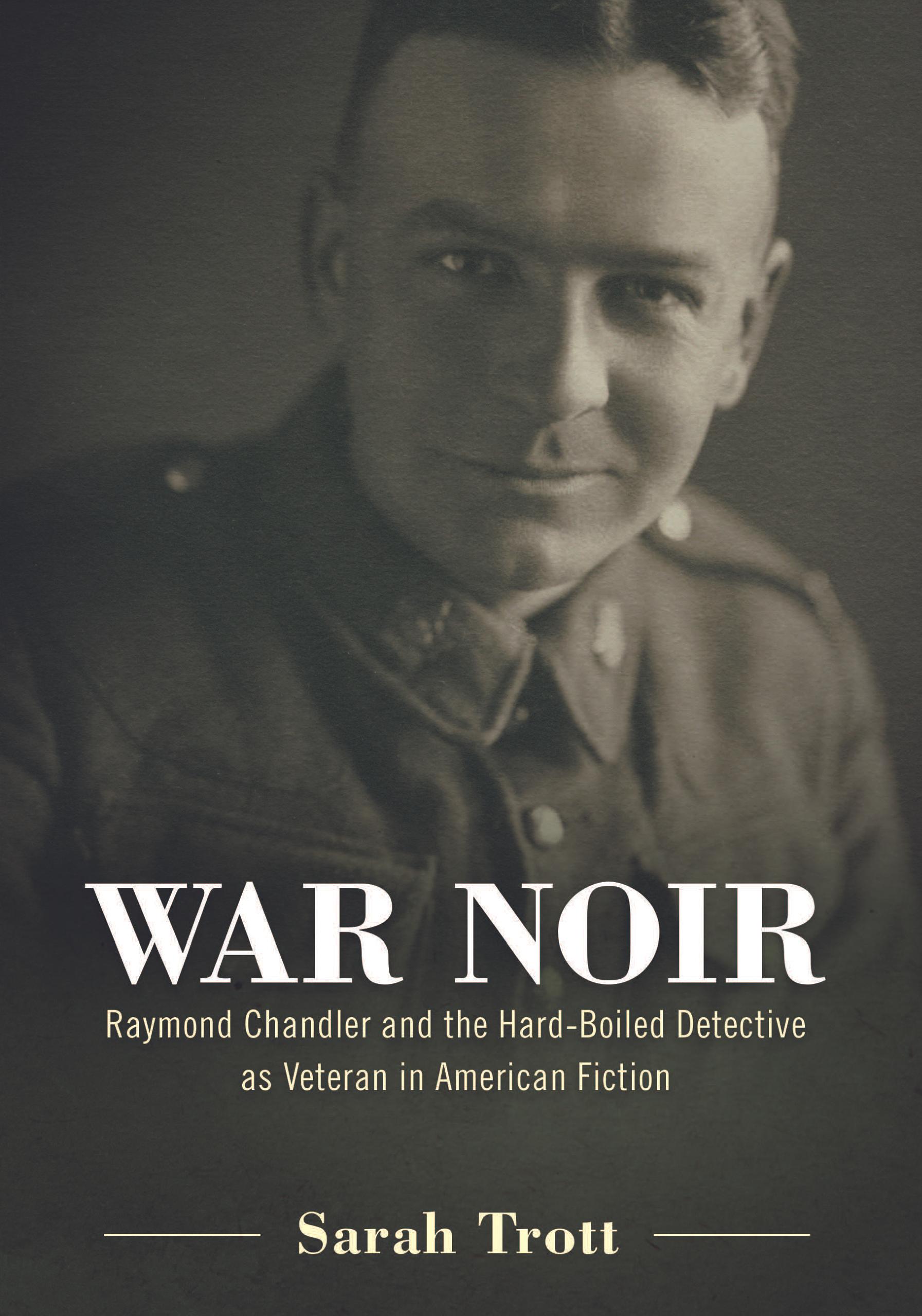
The conflation of the hard-boiled style and war experience has influenced many contemporary crime writers, particularly in the traumatic aftermath of the Vietnam War. Yet, earlier writers in the genre, such as Raymond Chandler, remain overlooked when it comes to examining how their war experience affected their writing. Sarah Trott corrects this oversight by examining Chandler alongside the World War I writers of the Lost Generation as well as highlighting a melding of very different styles in Chandler’s work.
Based on Chandler’s experience in combat, Trott explains that the writer created detective Philip Marlowe not as the idealization of heroic individualism, as is commonly perceived, but instead as an authentic individual subjected to very real psychological frailties from trauma during the First World War. Inspecting Chandler’s work and correspondence indicates that the characterization of the fictional Marlowe goes beyond the traditional chivalric readings and can instead be interpreted as a genuine representation of a traumatized veteran in American society. Substituting the horror of the trenches for the corruption of the city, Chandler formed a disillusioned protagonist in an uncaring America. Chandler did so with the sophistication necessary to straddle genre fiction and canonical literature.
The sum of this work offers a new understanding of how Chandler uses his war trauma, how that experience established the traditional archetype of detective fiction, and how this reading of his fiction enables Chandler to transcend generic limitations and be recognized as a key twentieth-century literary figure.
Based on Chandler’s experience in combat, Trott explains that the writer created detective Philip Marlowe not as the idealization of heroic individualism, as is commonly perceived, but instead as an authentic individual subjected to very real psychological frailties from trauma during the First World War. Inspecting Chandler’s work and correspondence indicates that the characterization of the fictional Marlowe goes beyond the traditional chivalric readings and can instead be interpreted as a genuine representation of a traumatized veteran in American society. Substituting the horror of the trenches for the corruption of the city, Chandler formed a disillusioned protagonist in an uncaring America. Chandler did so with the sophistication necessary to straddle genre fiction and canonical literature.
The sum of this work offers a new understanding of how Chandler uses his war trauma, how that experience established the traditional archetype of detective fiction, and how this reading of his fiction enables Chandler to transcend generic limitations and be recognized as a key twentieth-century literary figure.
Betaal eenvoudig met kaart, Klarna, Apple Pay of Google Pay. Niet tevreden? Je hebt altijd 14 dagen bedenktijd. Lees meer in onze voorwaarden. Heb je vragen, mail ons dan via hello@memmo.org.
Memmo maakt studeren makkelijker – waar je ook bent ter wereld. Wij brengen je cursusboeken en slimme studietools samen op één plek: samenvattingen, quizzen, podcasts en flashcards. En Ted, je studievriend die antwoord geeft op alles wat je je afvraagt. Meer dan 50.000 studenten studeren hier al – gebouwd om je sneller te laten leren en minder stress te geven.
Misschien vind je dit ook leuk
Koop het boek0