
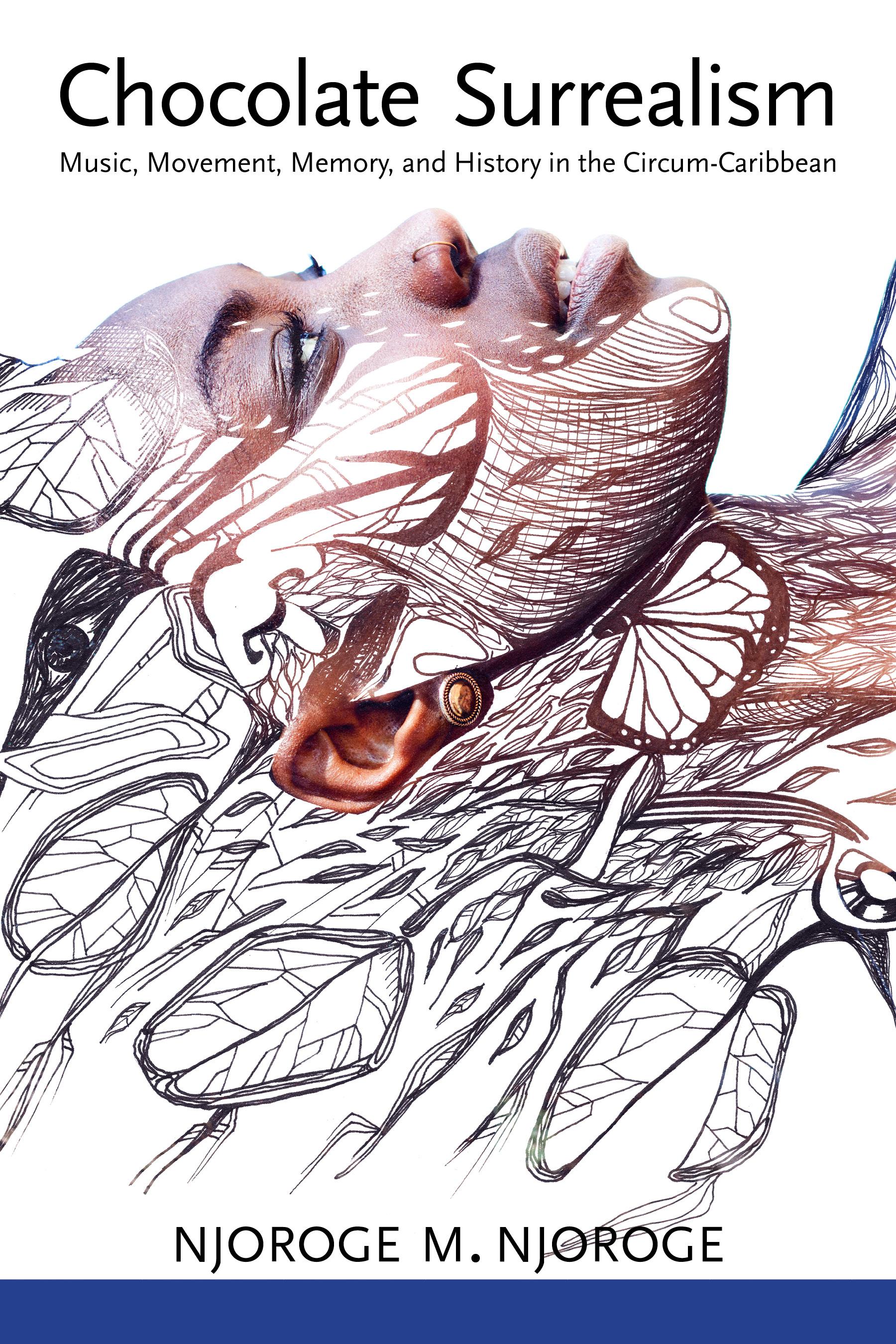
In Chocolate Surrealism, Njoroge M. Njoroge highlights connections among the production, performance, and reception of popular music at critical historical junctures in the late nineteenth and twentieth centuries. The author sifts different origins and styles to place socio-musical movements into a larger historical framework.
Calypso reigned during the turbulent interwar period and the ensuing crises of capitalism. The Cuban rumba/son complex enlivened the postwar era of American empire. Jazz exploded in the Bandung period and the rise of decolonization. And, lastly, Nuyorican Salsa coincided with the period of the civil rights movement and the beginnings of black/brown power. Njoroge illuminates musics of the circum-Caribbean as culturally and conceptually integrated within the larger history of the region. He pays close attention to the fractures, fragmentations, and historical particularities that both unite and divide the region’s sounds. At the same time, he engages with a larger discussion of the Atlantic world.
Njoroge examines the deep interrelations between music, movement, memory, and history in the African diaspora. He finds the music both a theoretical anchor and a mode of expression and representation of black identities and political cultures. Music and performance offer ways for the author to re-theorize the intersections of race, nationalism and musical practice, and geopolitical connections. Further music allows Njoroge a reassessment of the development of the modern world system in the context of local, popular responses to the global age. The book analyzes different styles, times, and politics to render a brief history of Black Atlantic sound.
Calypso reigned during the turbulent interwar period and the ensuing crises of capitalism. The Cuban rumba/son complex enlivened the postwar era of American empire. Jazz exploded in the Bandung period and the rise of decolonization. And, lastly, Nuyorican Salsa coincided with the period of the civil rights movement and the beginnings of black/brown power. Njoroge illuminates musics of the circum-Caribbean as culturally and conceptually integrated within the larger history of the region. He pays close attention to the fractures, fragmentations, and historical particularities that both unite and divide the region’s sounds. At the same time, he engages with a larger discussion of the Atlantic world.
Njoroge examines the deep interrelations between music, movement, memory, and history in the African diaspora. He finds the music both a theoretical anchor and a mode of expression and representation of black identities and political cultures. Music and performance offer ways for the author to re-theorize the intersections of race, nationalism and musical practice, and geopolitical connections. Further music allows Njoroge a reassessment of the development of the modern world system in the context of local, popular responses to the global age. The book analyzes different styles, times, and politics to render a brief history of Black Atlantic sound.
Betaal eenvoudig met kaart, Klarna, Apple Pay of Google Pay. Niet tevreden? Je hebt altijd 14 dagen bedenktijd. Lees meer in onze voorwaarden. Heb je vragen, mail ons dan via hello@memmo.org.
Memmo maakt studeren makkelijker – waar je ook bent ter wereld. Wij brengen je cursusboeken en slimme studietools samen op één plek: samenvattingen, quizzen, podcasts en flashcards. En Ted, je studievriend die antwoord geeft op alles wat je je afvraagt. Meer dan 50.000 studenten studeren hier al – gebouwd om je sneller te laten leren en minder stress te geven.
Misschien vind je dit ook leuk
Koop het boek0