
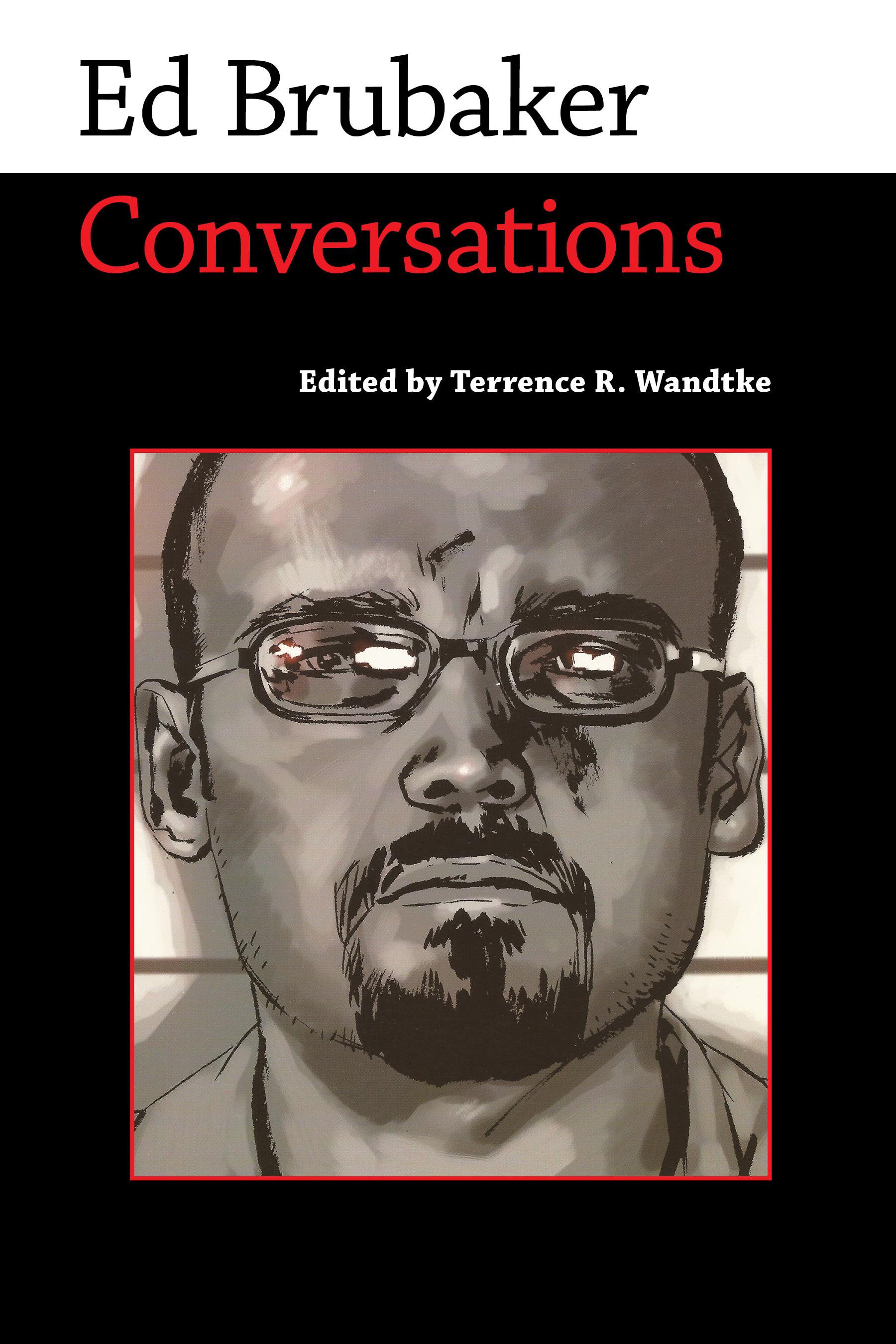
Ed Brubaker (b. 1966) has emerged as one of the most popular, significant figures in art comics since the 1990s. Most famous as the man who killed Captain America in 2007, Brubaker's work on company-owned properties such as Batman and Captain America and creator-owned series like Criminal and Fatale live up to the usual expectations for the superhero and crime genres. And yet, Brubaker layers his stories with a keen self-awareness, applying his expansive knowledge of American comic book history to invigorate his work and challenge the dividing line between popular entertainment and high art. This collection of interviews explores the sophisticated artist's work, drawing upon the entire length of the award-winning Brubaker's career.
With his stints writing Catwoman, Gotham Central, and Daredevil, Brubaker advanced the work of crime comic book writers through superhero stories informed by hard-boiled detective fiction and film noir. During his time on Captain America and his series Sleeper and Incognito, Brubaker revisited the conventions of the espionage thriller. With double agents who lose themselves in their jobs, the stories expose the arbitrary superhero standards of good and evil. In his series Criminal, Brubaker offered complex crime stories and, with a clear sense of the complicated lost world before the Comics Code, rejected crusading critic Fredric Wertham's myth of the innocence of early comics.
Overall, Brubaker demonstrates his self-conscious methodology in these often little-known and hard-to-find interviews, worthwhile conversations in their own right as well as objects of study for both scholars and researchers.
With his stints writing Catwoman, Gotham Central, and Daredevil, Brubaker advanced the work of crime comic book writers through superhero stories informed by hard-boiled detective fiction and film noir. During his time on Captain America and his series Sleeper and Incognito, Brubaker revisited the conventions of the espionage thriller. With double agents who lose themselves in their jobs, the stories expose the arbitrary superhero standards of good and evil. In his series Criminal, Brubaker offered complex crime stories and, with a clear sense of the complicated lost world before the Comics Code, rejected crusading critic Fredric Wertham's myth of the innocence of early comics.
Overall, Brubaker demonstrates his self-conscious methodology in these often little-known and hard-to-find interviews, worthwhile conversations in their own right as well as objects of study for both scholars and researchers.
Betaal eenvoudig met kaart, Klarna, Apple Pay of Google Pay. Niet tevreden? Je hebt altijd 14 dagen bedenktijd. Lees meer in onze voorwaarden. Heb je vragen, mail ons dan via hello@memmo.org.
Memmo maakt studeren makkelijker – waar je ook bent ter wereld. Wij brengen je cursusboeken en slimme studietools samen op één plek: samenvattingen, quizzen, podcasts en flashcards. En Ted, je studievriend die antwoord geeft op alles wat je je afvraagt. Meer dan 50.000 studenten studeren hier al – gebouwd om je sneller te laten leren en minder stress te geven.
Misschien vind je dit ook leuk
Koop het boek0