
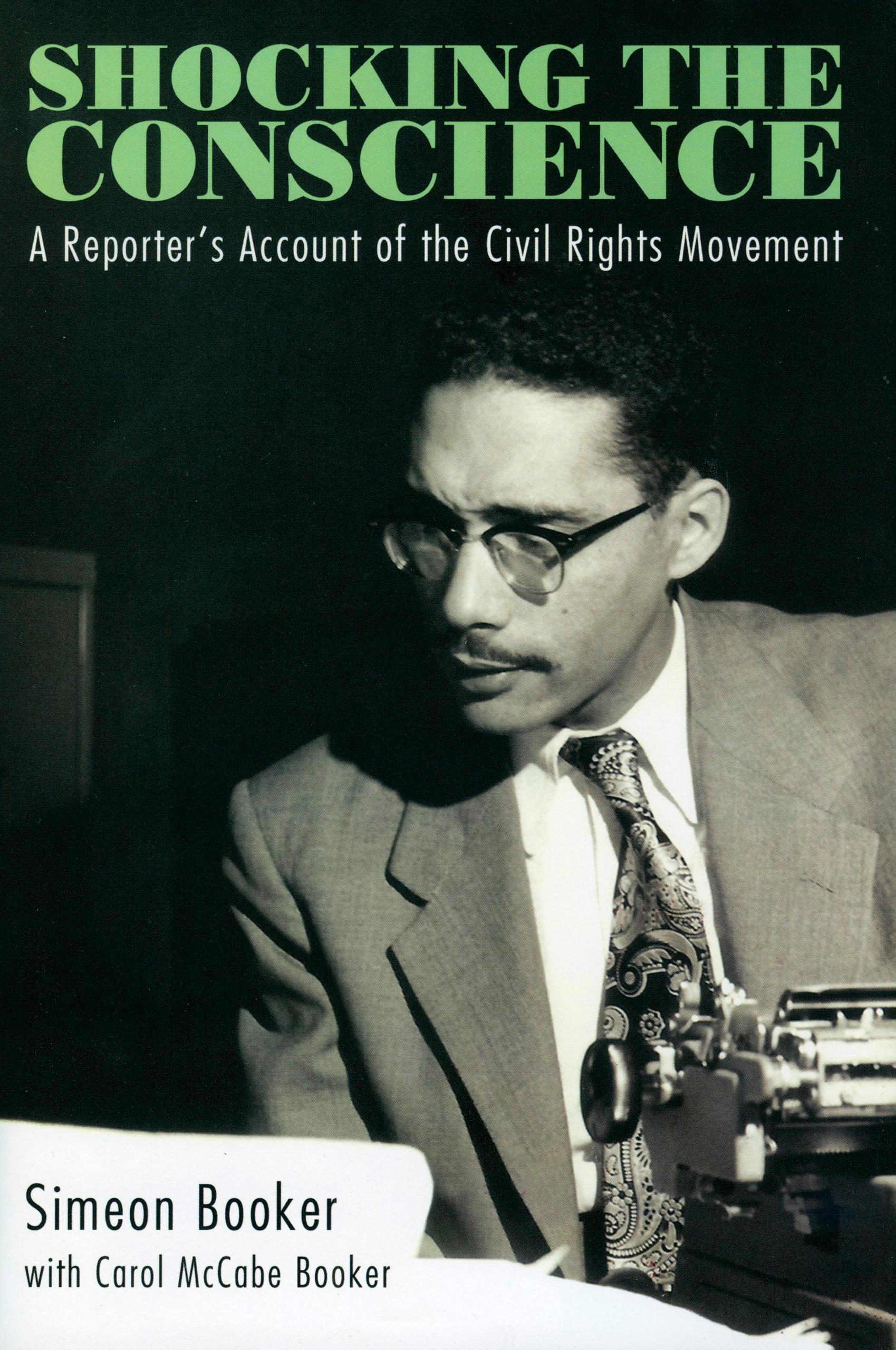
Within a few years of its first issue in 1951, Jet, a pocket-sized magazine, became the “bible” for news of the civil rights movement. It was said, only half-jokingly, “If it wasn’t in Jet, it didn't happen.” Writing for the magazine and its glossy, big sister Ebony, for fifty-three years, longer than any other journalist, Washington bureau chief Simeon Booker was on the front lines of virtually every major event of the revolution that transformed America.
Rather than tracking the freedom struggle from the usually cited ignition points, Shocking the Conscience begins with a massive voting rights rally in the Mississippi Delta town of Mound Bayou in 1955. It’s the first rally since the Supreme Court’s Brown decision struck fear in the hearts of segregationists across the former Confederacy. It was also Booker’s first assignment in the Deep South, and before the next run of the weekly magazine, the killings would begin.
Booker vowed that lynchings would no longer be ignored beyond the black press. Jet was reaching into households across America, and he was determined to cover the next murder like none before. He had only a few weeks to wait. A small item on the AP wire reported that a Chicago boy vacationing in Mississippi was missing. Booker was on it, and stayed on it, through one of the most infamous murder trials in US history. His coverage of Emmett Till’s death lit a fire that would galvanize the movement, while a succession of US presidents wished it would go away.
This is the story of the century that changed everything about journalism, politics, and more in America, as only Simeon Booker, the dean of the black press, could tell it.
Rather than tracking the freedom struggle from the usually cited ignition points, Shocking the Conscience begins with a massive voting rights rally in the Mississippi Delta town of Mound Bayou in 1955. It’s the first rally since the Supreme Court’s Brown decision struck fear in the hearts of segregationists across the former Confederacy. It was also Booker’s first assignment in the Deep South, and before the next run of the weekly magazine, the killings would begin.
Booker vowed that lynchings would no longer be ignored beyond the black press. Jet was reaching into households across America, and he was determined to cover the next murder like none before. He had only a few weeks to wait. A small item on the AP wire reported that a Chicago boy vacationing in Mississippi was missing. Booker was on it, and stayed on it, through one of the most infamous murder trials in US history. His coverage of Emmett Till’s death lit a fire that would galvanize the movement, while a succession of US presidents wished it would go away.
This is the story of the century that changed everything about journalism, politics, and more in America, as only Simeon Booker, the dean of the black press, could tell it.
Betaal eenvoudig met kaart, Klarna, Apple Pay of Google Pay. Niet tevreden? Je hebt altijd 14 dagen bedenktijd. Lees meer in onze voorwaarden. Heb je vragen, mail ons dan via hello@memmo.org.
Memmo maakt studeren makkelijker – waar je ook bent ter wereld. Wij brengen je cursusboeken en slimme studietools samen op één plek: samenvattingen, quizzen, podcasts en flashcards. En Ted, je studievriend die antwoord geeft op alles wat je je afvraagt. Meer dan 50.000 studenten studeren hier al – gebouwd om je sneller te laten leren en minder stress te geven.
Misschien vind je dit ook leuk
Koop het boek0