
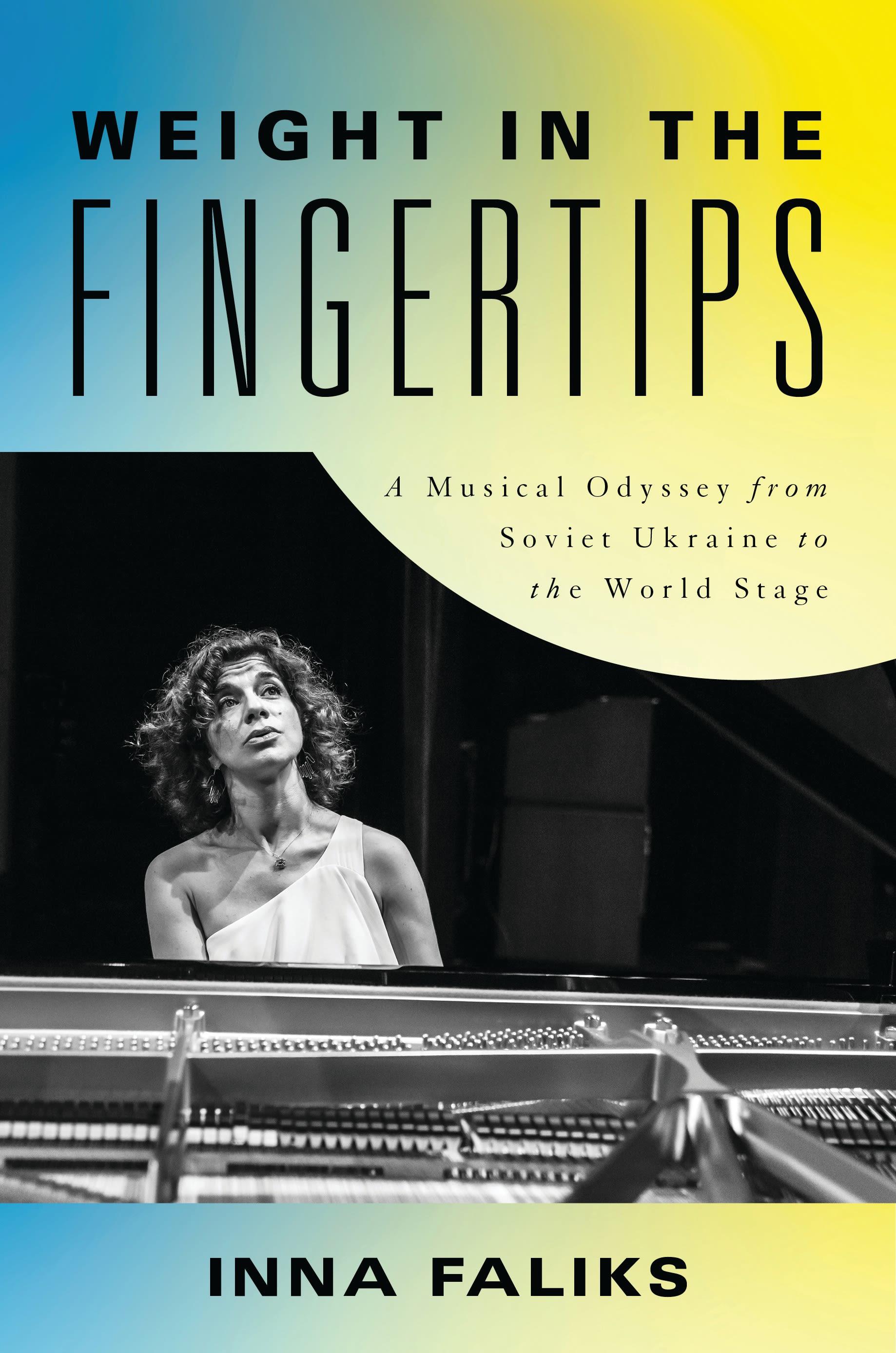
Before she knew she was Ukrainian, Soviet, or Jewish, Inna Faliks knew she was a musician. Growing up in the city of Odessa, the piano became her best friend, and she explored the brilliant, intricate puzzles of Bach’s music and learned to compose under her mother’s watchful eye. At ten, Faliks and her parents moved to Chicago as part of the tide of Jewish refugees who fled the USSR for the West in the 1980s. During the months-long immigration process, she would silently practice on kitchen tables while imagining a full set of piano keys beneath her fingertips.
In Weight in the Fingertips, Faliks gives a globe-trotting account of her upbringing as a child prodigy in a Soviet state, the perils of immigration, the struggle of assimilating as an American, years of training with teachers, and her slow and steady rise in the world of classical music. With a warm and playful style, she helps non-musicians understand the experience of becoming a world-renowned concert pianist. The places she grew up, the books she read, the poems she memorized as a child all connect to her sound at the piano, and the way she hears and shapes a musical phrase illuminate classical music and elite performance. She also explores how a person’s humanity makes their art honest and their voice unique, and how the life-long challenge of retaining that voice is fueled by a balance between being a great musician and being a human being. Throughout, Faliks provides powerful insights into the role of music in a world of conflict, change, and hope for a better tomorrow.
In Weight in the Fingertips, Faliks gives a globe-trotting account of her upbringing as a child prodigy in a Soviet state, the perils of immigration, the struggle of assimilating as an American, years of training with teachers, and her slow and steady rise in the world of classical music. With a warm and playful style, she helps non-musicians understand the experience of becoming a world-renowned concert pianist. The places she grew up, the books she read, the poems she memorized as a child all connect to her sound at the piano, and the way she hears and shapes a musical phrase illuminate classical music and elite performance. She also explores how a person’s humanity makes their art honest and their voice unique, and how the life-long challenge of retaining that voice is fueled by a balance between being a great musician and being a human being. Throughout, Faliks provides powerful insights into the role of music in a world of conflict, change, and hope for a better tomorrow.
Betaal eenvoudig met kaart, Klarna, Apple Pay of Google Pay. Niet tevreden? Je hebt altijd 14 dagen bedenktijd. Lees meer in onze voorwaarden. Heb je vragen, mail ons dan via hello@memmo.org.
Memmo maakt studeren makkelijker – waar je ook bent ter wereld. Wij brengen je cursusboeken en slimme studietools samen op één plek: samenvattingen, quizzen, podcasts en flashcards. En Ted, je studievriend die antwoord geeft op alles wat je je afvraagt. Meer dan 50.000 studenten studeren hier al – gebouwd om je sneller te laten leren en minder stress te geven.