
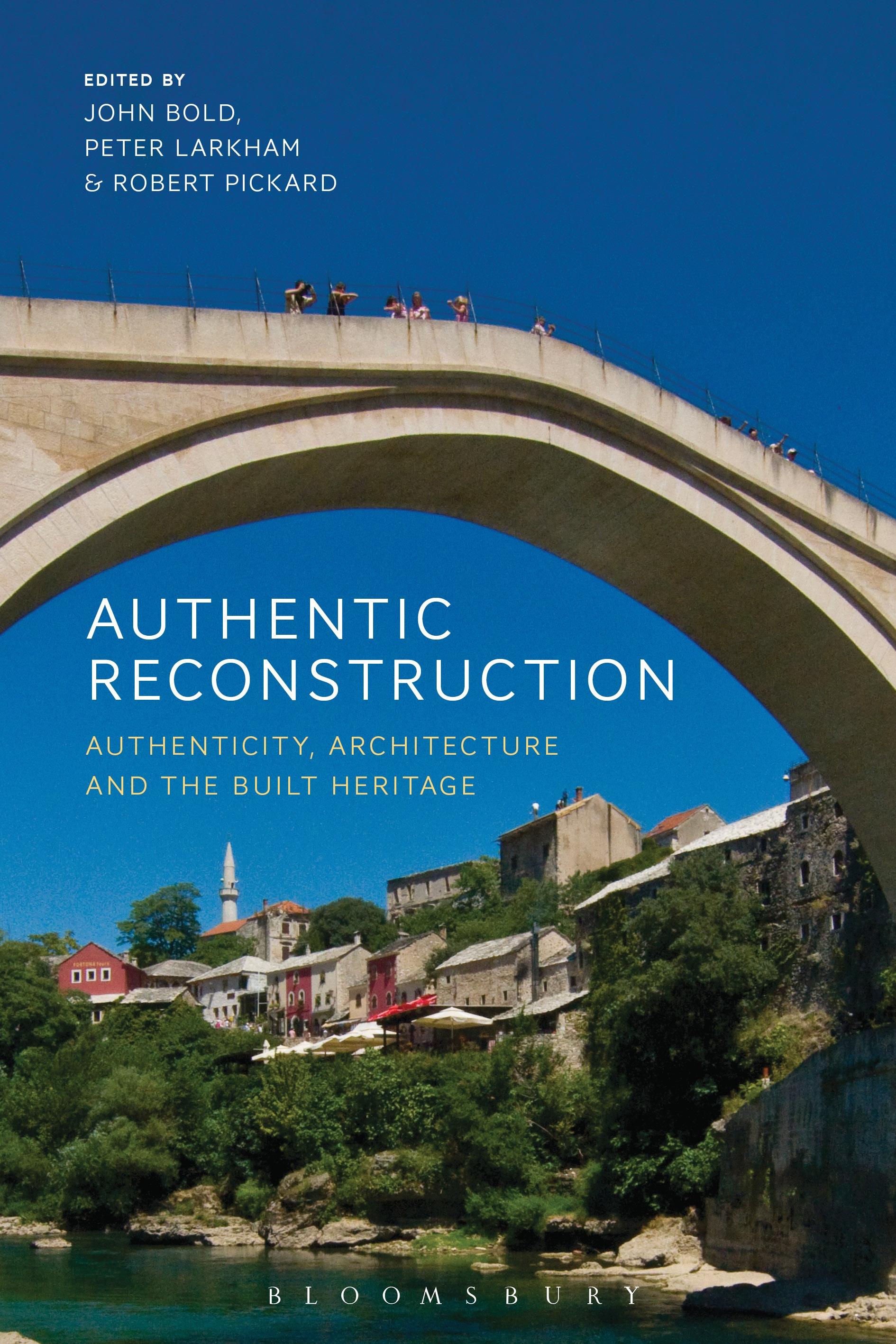
Notions of authenticity lie at the heart of many questions about heritage and identity in the built environment. These questions are most pertinent when buildings have been destroyed in disaster or war, and the built fabric is being reconstructed to reinstate traditional or historic appearances in place of what was lost.
Authentic Reconstruction examines this idea of reconstruction, using it as a prompt to examine a range of deeper issues on heritage and the built environment. From post-WWII reconstruction programmes through to the rebuilding of historic cultural landscapes lost in natural disasters, this collection of essays by heritage specialists provides a wide range of case-studies and discussions. Each presents responses to crises and lessons learned, in order to extrapolate general guidelines for future actions by politicians, architects and planners in reconstructing buildings.
The book also looks beyond disaster and war, noting how authenticity bears on political intentions and image building, exploring how reconstruction is used to tell a political or historical story, so conditioning the ways in which the built environment is perceived and appreciated by its users. This is not just about the buildings as bricks and mortar, but about perceptions of identity and the social and historical values which buildings and spaces embody for a richly diverse population.
This book will be valuable to all who are concerned with heritage as practitioners or consumers, particularly those concerned with reconstruction and the creation of authentic places and experiences: architects, architectural historians, town planners, preservationists, conservationists, and those involved in heritage management and material culture.
Authentic Reconstruction examines this idea of reconstruction, using it as a prompt to examine a range of deeper issues on heritage and the built environment. From post-WWII reconstruction programmes through to the rebuilding of historic cultural landscapes lost in natural disasters, this collection of essays by heritage specialists provides a wide range of case-studies and discussions. Each presents responses to crises and lessons learned, in order to extrapolate general guidelines for future actions by politicians, architects and planners in reconstructing buildings.
The book also looks beyond disaster and war, noting how authenticity bears on political intentions and image building, exploring how reconstruction is used to tell a political or historical story, so conditioning the ways in which the built environment is perceived and appreciated by its users. This is not just about the buildings as bricks and mortar, but about perceptions of identity and the social and historical values which buildings and spaces embody for a richly diverse population.
This book will be valuable to all who are concerned with heritage as practitioners or consumers, particularly those concerned with reconstruction and the creation of authentic places and experiences: architects, architectural historians, town planners, preservationists, conservationists, and those involved in heritage management and material culture.
Betaal eenvoudig met kaart, Klarna, Apple Pay of Google Pay. Niet tevreden? Je hebt altijd 14 dagen bedenktijd. Lees meer in onze voorwaarden. Heb je vragen, mail ons dan via hello@memmo.org.
Memmo maakt studeren makkelijker – waar je ook bent ter wereld. Wij brengen je cursusboeken en slimme studietools samen op één plek: samenvattingen, quizzen, podcasts en flashcards. En Ted, je studievriend die antwoord geeft op alles wat je je afvraagt. Meer dan 50.000 studenten studeren hier al – gebouwd om je sneller te laten leren en minder stress te geven.