
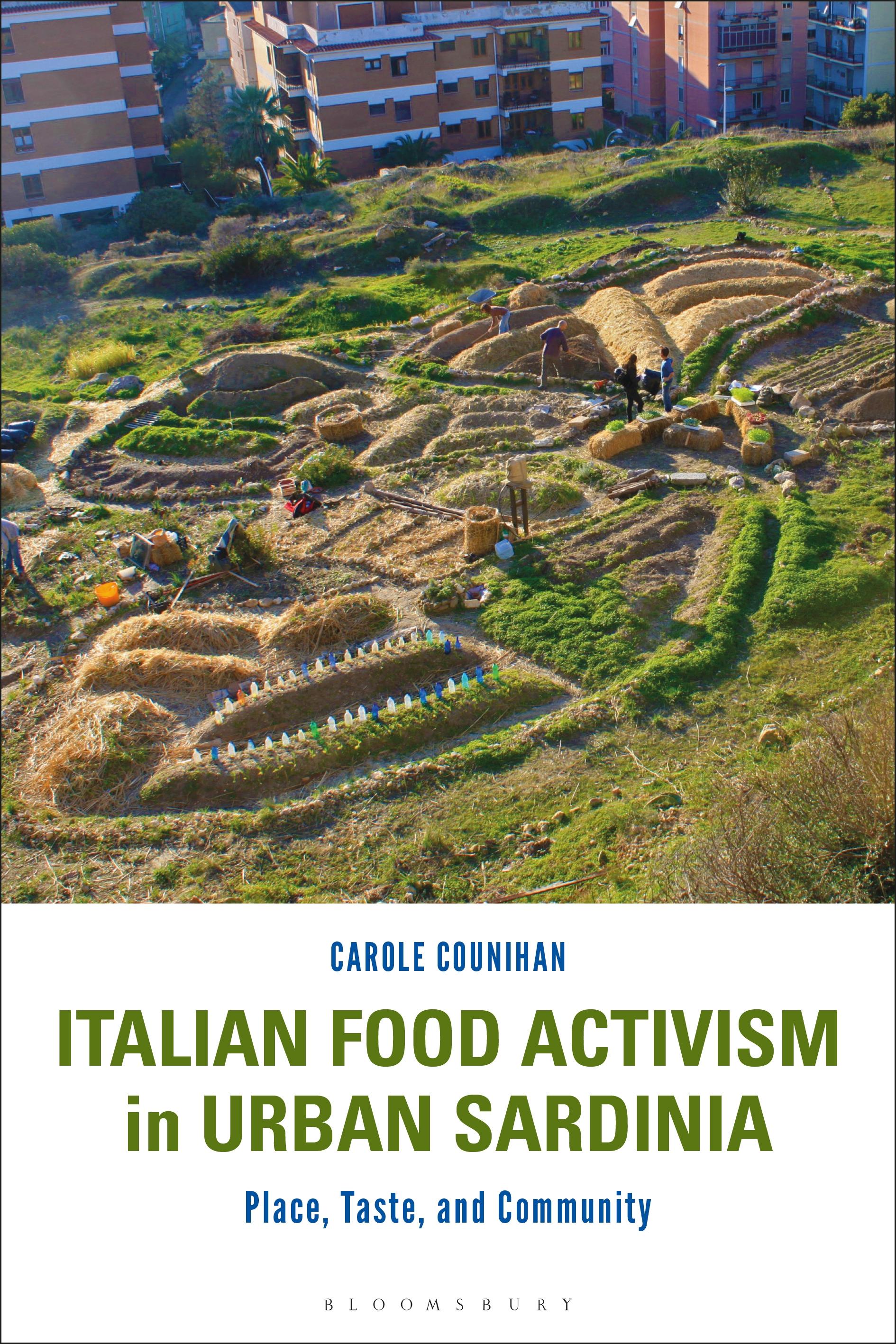
With her new book, Italian Food Activism in Urban Sardinia, cultural anthropologist Carole Counihan makes a significant contribution to understanding the growing global movement for food democracy.
Providing a detailed ethnographic case study from Cagliari, the capital of the Italian island-region of Sardinia, she draws upon Sardinians' own descriptions of their actions and motivations to change their food as they pursue grassroots alternatives to the agro-industrial food system through GAS (Gruppi di Acquisito Solidale or solidarity-based purchase groups), organic and urban agriculture, alternative restaurants, and farm-to-school programs. They link their activism to the sensory and emotional resonance of food and its nostalgic connections to place, tradition, and culture. They stress the importance of education through experience, and they build relationships and networks through workshops, farm visits, and commensality.
The book focuses on three key themes to emerge in interviews with Cagliari food activists: the significance of territorio (or place), the importance of taste, and the role of education. By exploring these areas of concern, Counihan uncovers key tensions in consumption as a force for change, in individual vs. group actions, and in political and economic power relations, which are of crucial importance to wider global efforts to promote food democracy.
Providing a detailed ethnographic case study from Cagliari, the capital of the Italian island-region of Sardinia, she draws upon Sardinians' own descriptions of their actions and motivations to change their food as they pursue grassroots alternatives to the agro-industrial food system through GAS (Gruppi di Acquisito Solidale or solidarity-based purchase groups), organic and urban agriculture, alternative restaurants, and farm-to-school programs. They link their activism to the sensory and emotional resonance of food and its nostalgic connections to place, tradition, and culture. They stress the importance of education through experience, and they build relationships and networks through workshops, farm visits, and commensality.
The book focuses on three key themes to emerge in interviews with Cagliari food activists: the significance of territorio (or place), the importance of taste, and the role of education. By exploring these areas of concern, Counihan uncovers key tensions in consumption as a force for change, in individual vs. group actions, and in political and economic power relations, which are of crucial importance to wider global efforts to promote food democracy.
Betaal eenvoudig met kaart, Klarna, Apple Pay of Google Pay. Niet tevreden? Je hebt altijd 14 dagen bedenktijd. Lees meer in onze voorwaarden. Heb je vragen, mail ons dan via hello@memmo.org.
Memmo maakt studeren makkelijker – waar je ook bent ter wereld. Wij brengen je cursusboeken en slimme studietools samen op één plek: samenvattingen, quizzen, podcasts en flashcards. En Ted, je studievriend die antwoord geeft op alles wat je je afvraagt. Meer dan 50.000 studenten studeren hier al – gebouwd om je sneller te laten leren en minder stress te geven.