
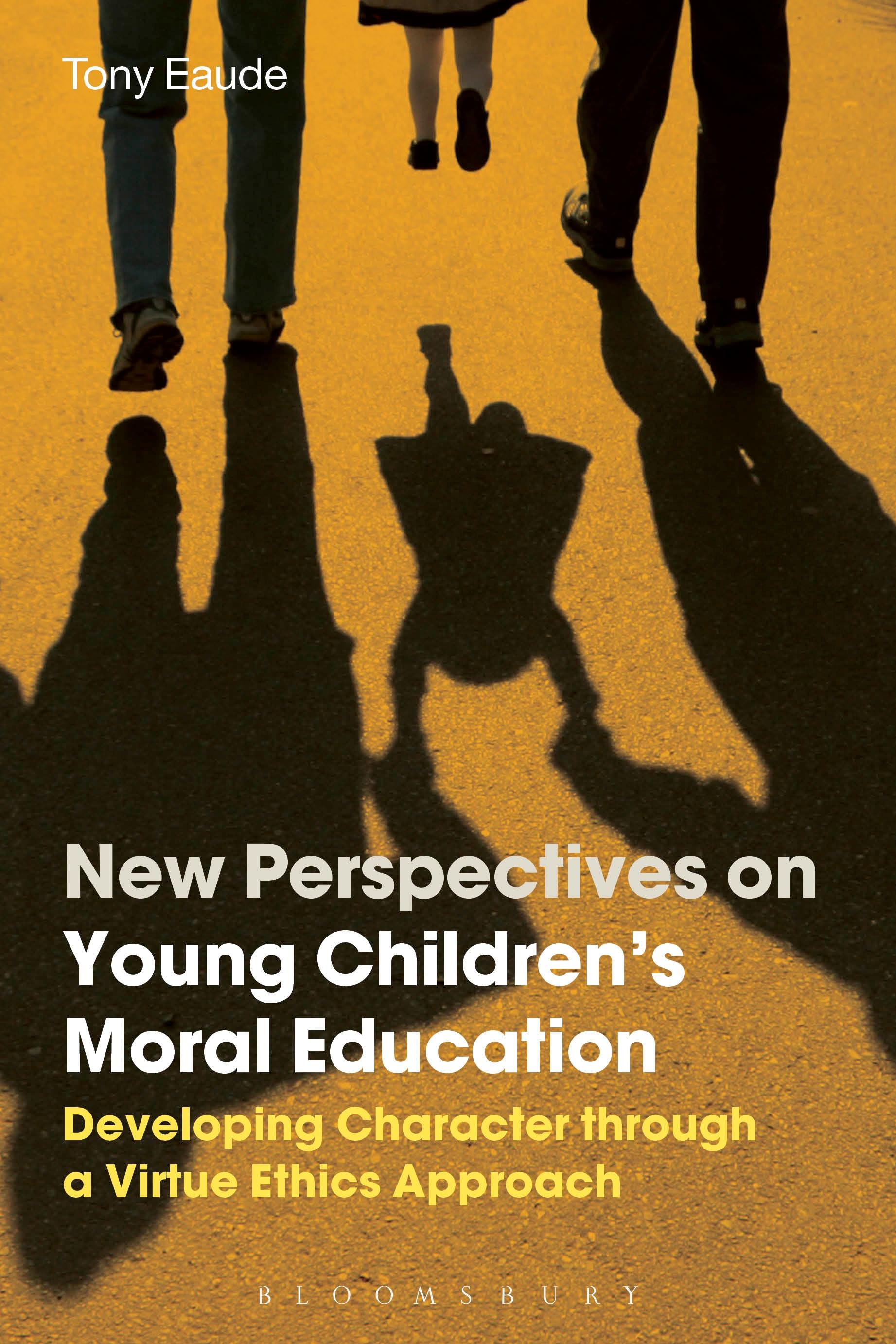
New Perspectives on Young Children's Moral Education explores how to approach young children's moral education in a world of uncertainty and change.
What is moral education? How do young children learn to act and interact appropriately? How do we enable children to recognise that how they act and interact matters? How can character, virtues and value help young children internalise qualities associated with living 'a good life'?
Challenging many current assumptions about ethics and education, Tony Eaude suggests that a moral dimension runs through every aspect of life and that ethics involves learning to act and interact appropriately, based on an 'ethic of care' and enduring qualities and attributes, to equip children to resist strong external pressures. Drawing accessibly on research in neuroscience and psychology, he discusses how young children learn, highlighting the role of emotion, culture, example, habituation and feedback. Small actions can help to develop agency, empathy and thoughtfulness and a sense of moral identity, with an increasing emphasis on self-regulation, a vocabulary of ethics and intrinsic motivation. Eaude explores how character, virtues and values can help young children and adults to recognize and internalize qualities associated with living 'a good life'. He identifies how adults and learning environments can support these processes and shows why an inclusive approach is needed, rather than focusing on these topics only in particular settings, programmes or lessons. Recognising pitfalls and dilemmas, Eaude argues that an approach based on virtue ethics and an apprenticeship model is suitable in school and other settings, both religious and otherwise, internationally.
What is moral education? How do young children learn to act and interact appropriately? How do we enable children to recognise that how they act and interact matters? How can character, virtues and value help young children internalise qualities associated with living 'a good life'?
Challenging many current assumptions about ethics and education, Tony Eaude suggests that a moral dimension runs through every aspect of life and that ethics involves learning to act and interact appropriately, based on an 'ethic of care' and enduring qualities and attributes, to equip children to resist strong external pressures. Drawing accessibly on research in neuroscience and psychology, he discusses how young children learn, highlighting the role of emotion, culture, example, habituation and feedback. Small actions can help to develop agency, empathy and thoughtfulness and a sense of moral identity, with an increasing emphasis on self-regulation, a vocabulary of ethics and intrinsic motivation. Eaude explores how character, virtues and values can help young children and adults to recognize and internalize qualities associated with living 'a good life'. He identifies how adults and learning environments can support these processes and shows why an inclusive approach is needed, rather than focusing on these topics only in particular settings, programmes or lessons. Recognising pitfalls and dilemmas, Eaude argues that an approach based on virtue ethics and an apprenticeship model is suitable in school and other settings, both religious and otherwise, internationally.
Betaal eenvoudig met kaart, Klarna, Apple Pay of Google Pay. Niet tevreden? Je hebt altijd 14 dagen bedenktijd. Lees meer in onze voorwaarden. Heb je vragen, mail ons dan via hello@memmo.org.
Memmo maakt studeren makkelijker – waar je ook bent ter wereld. Wij brengen je cursusboeken en slimme studietools samen op één plek: samenvattingen, quizzen, podcasts en flashcards. En Ted, je studievriend die antwoord geeft op alles wat je je afvraagt. Meer dan 50.000 studenten studeren hier al – gebouwd om je sneller te laten leren en minder stress te geven.