
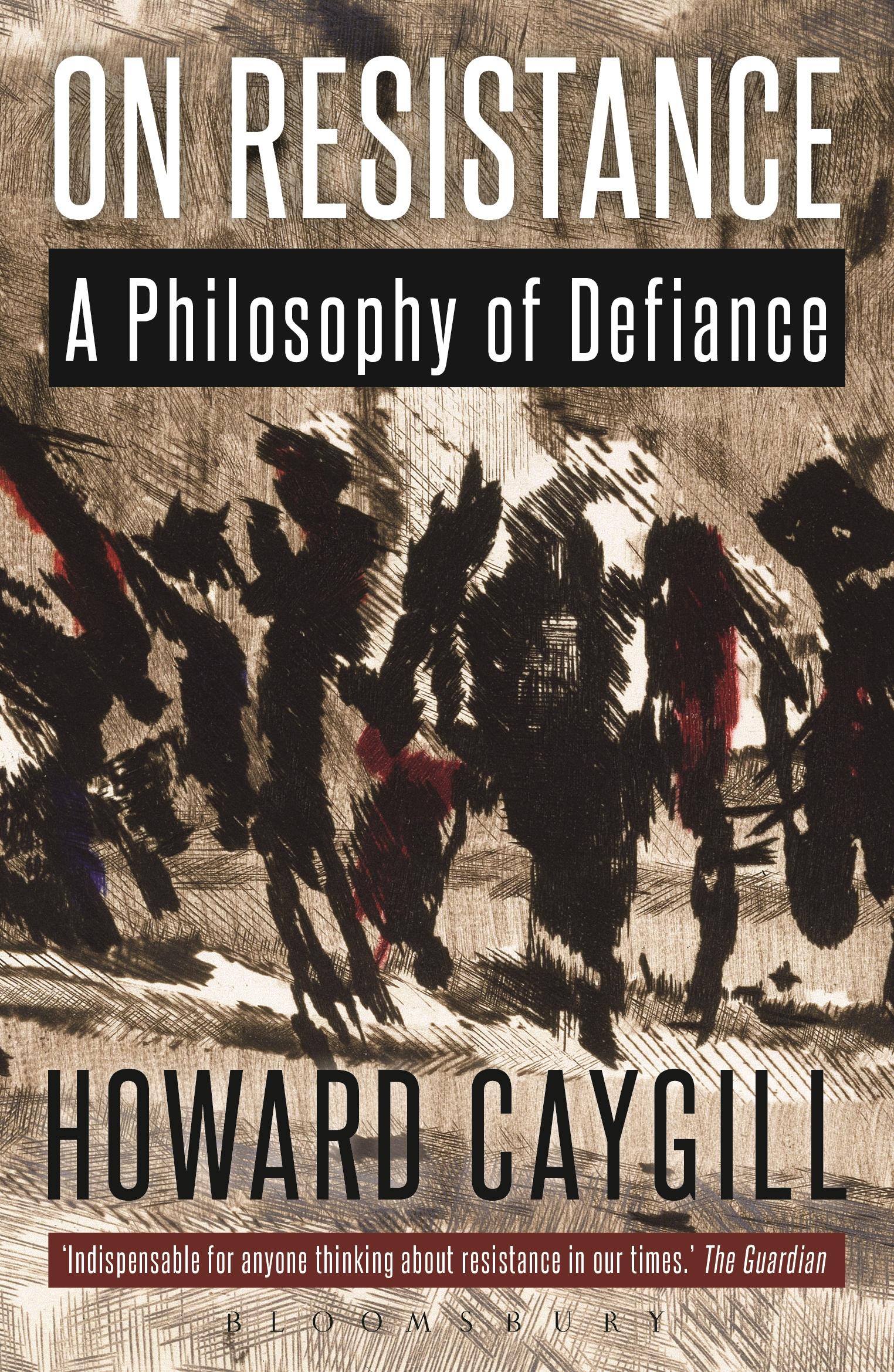
No word is more central to the contemporary political imagination and action than 'resistance'. In its various manifestations - from the armed guerrilla to Gandhian mass pacifist protest, from Wikileaks and the Arab Spring to the global eruption and violent repression of the Occupy movement - concepts of resistance are becoming ubiquitous and urgent. In this book, Howard Caygill conducts the first ever systematic analysis of 'resistance': as a means of defying political oppression, in its relationship with military violence and its cultural representation.
Beginning with the militaristic doctrine of Clausewitz and the evolution of a new model of guerrilla warfare to resist the forces of Napoleonic France, On Resistance elucidates and critiques the contributions of seminal resistant thinkers from Marx and Nietzsche to Mao, Gandhi, Sartre and Fanon to identify continuities of resistance and rebellion from the Paris Commune to the Greenham Women's Peace Camp. Employing a threefold line of inquiry, Caygill exposes the persistent discourses through which resistance has been framed in terms of force, violence, consciousness and subjectivity to evolve a critique of resistance. Tracing the features of resistance, its strategies, character and habitual forms throughout modern world history Caygill identifies the typological consistencies which make up resistance. Finally, by teasing out the conceptual nuances of resistance and its affinities to concepts of repression, reform and revolution, Caygill reflects upon contemporary manifestations of resistance to identify whether the 21st century is evolving new understandings of protest and struggle.
Beginning with the militaristic doctrine of Clausewitz and the evolution of a new model of guerrilla warfare to resist the forces of Napoleonic France, On Resistance elucidates and critiques the contributions of seminal resistant thinkers from Marx and Nietzsche to Mao, Gandhi, Sartre and Fanon to identify continuities of resistance and rebellion from the Paris Commune to the Greenham Women's Peace Camp. Employing a threefold line of inquiry, Caygill exposes the persistent discourses through which resistance has been framed in terms of force, violence, consciousness and subjectivity to evolve a critique of resistance. Tracing the features of resistance, its strategies, character and habitual forms throughout modern world history Caygill identifies the typological consistencies which make up resistance. Finally, by teasing out the conceptual nuances of resistance and its affinities to concepts of repression, reform and revolution, Caygill reflects upon contemporary manifestations of resistance to identify whether the 21st century is evolving new understandings of protest and struggle.
Betaal eenvoudig met kaart, Klarna, Apple Pay of Google Pay. Niet tevreden? Je hebt altijd 14 dagen bedenktijd. Lees meer in onze voorwaarden. Heb je vragen, mail ons dan via hello@memmo.org.
Memmo maakt studeren makkelijker – waar je ook bent ter wereld. Wij brengen je cursusboeken en slimme studietools samen op één plek: samenvattingen, quizzen, podcasts en flashcards. En Ted, je studievriend die antwoord geeft op alles wat je je afvraagt. Meer dan 50.000 studenten studeren hier al – gebouwd om je sneller te laten leren en minder stress te geven.