
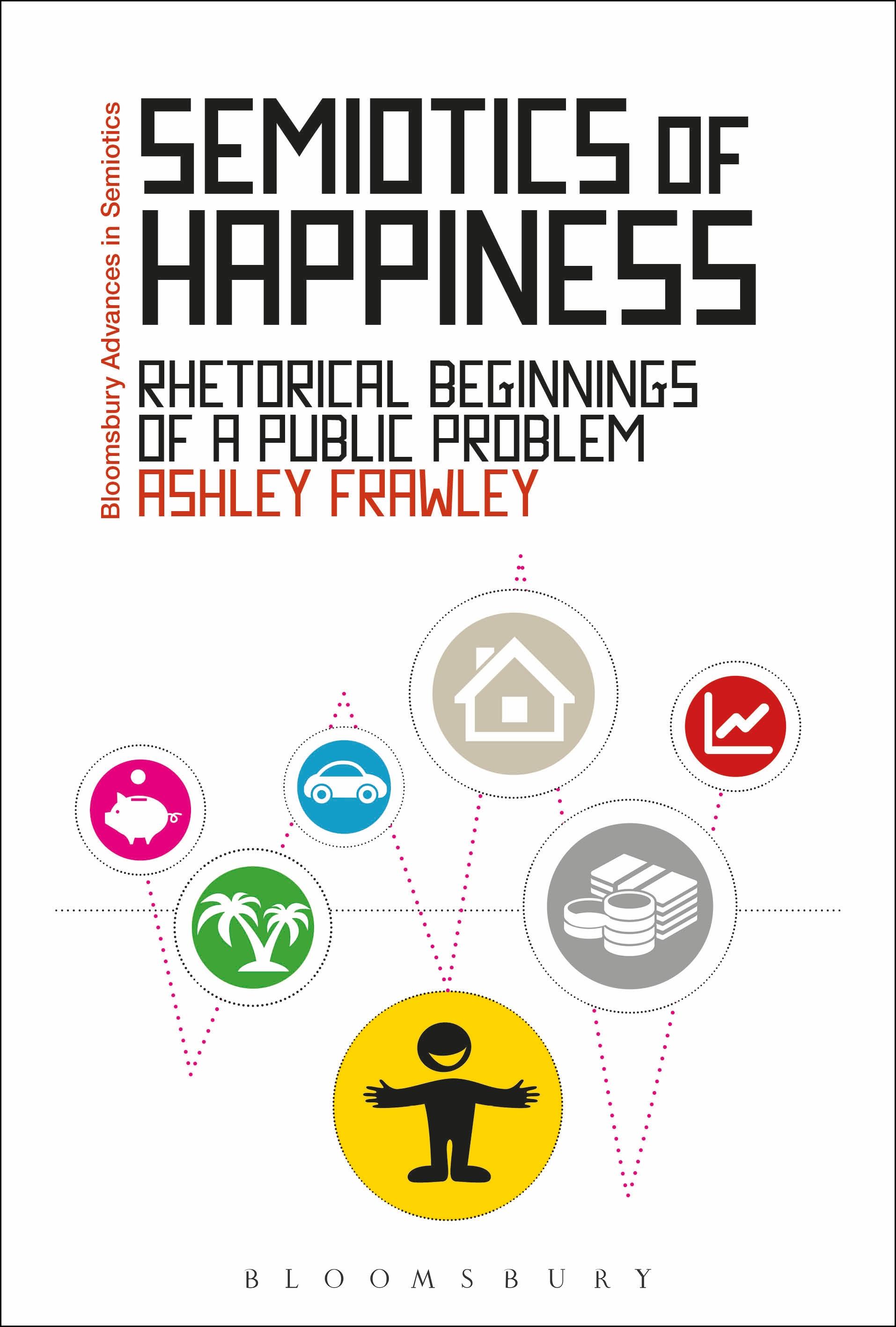
The Semiotics of Happiness examines the rise of 'happiness' (and its various satellite terminologies) as a social and political semiotic, exploring its origins in the US and subsequent spread into the UK and across the globe.
The research takes as its starting point the development of discussions about happiness in UK newspapers in which dedicated advocates began to claim that a new 'science of happiness' had been discovered and argued for social and political change on its behalf. Through an in-depth analysis of the written and visual rhetoric and subsequent activities of these influential 'claims-makers', Frawley argues that happiness became a serious political issue not because of a growing unhappiness in society nor a demand 'on the ground' for new knowledge about it, but rather because influential and dedicated 'insiders' took the issue on at a cultural moment when problems cast in emotional terms were particularly likely to make an impact.
Emerging from the analysis is the observation that, while apparently positive and light-hearted, the concern with happiness implicitly affirms a 'vulnerability' model of human functioning, encourages a morality of low expectations, and in spite of the radical language used to describe it, is ultimately conservative and ideally suited to an era of 'no alternative' (to capitalism).
The research takes as its starting point the development of discussions about happiness in UK newspapers in which dedicated advocates began to claim that a new 'science of happiness' had been discovered and argued for social and political change on its behalf. Through an in-depth analysis of the written and visual rhetoric and subsequent activities of these influential 'claims-makers', Frawley argues that happiness became a serious political issue not because of a growing unhappiness in society nor a demand 'on the ground' for new knowledge about it, but rather because influential and dedicated 'insiders' took the issue on at a cultural moment when problems cast in emotional terms were particularly likely to make an impact.
Emerging from the analysis is the observation that, while apparently positive and light-hearted, the concern with happiness implicitly affirms a 'vulnerability' model of human functioning, encourages a morality of low expectations, and in spite of the radical language used to describe it, is ultimately conservative and ideally suited to an era of 'no alternative' (to capitalism).
Pagina's: 240
Categorie: Samhällsvetenskap
e-ISBN: 9781472523303
Verzendgewicht: 1.2 kg
Verzending binnen: 1-2 dagen
Betaal eenvoudig met kaart, Klarna, Apple Pay of Google Pay. Niet tevreden? Je hebt altijd 14 dagen bedenktijd. Lees meer in onze voorwaarden. Heb je vragen, mail ons dan via hello@memmo.org.
Memmo maakt studeren makkelijker – waar je ook bent ter wereld. Wij brengen je cursusboeken en slimme studietools samen op één plek: samenvattingen, quizzen, podcasts en flashcards. En Ted, je studievriend die antwoord geeft op alles wat je je afvraagt. Meer dan 50.000 studenten studeren hier al – gebouwd om je sneller te laten leren en minder stress te geven.