
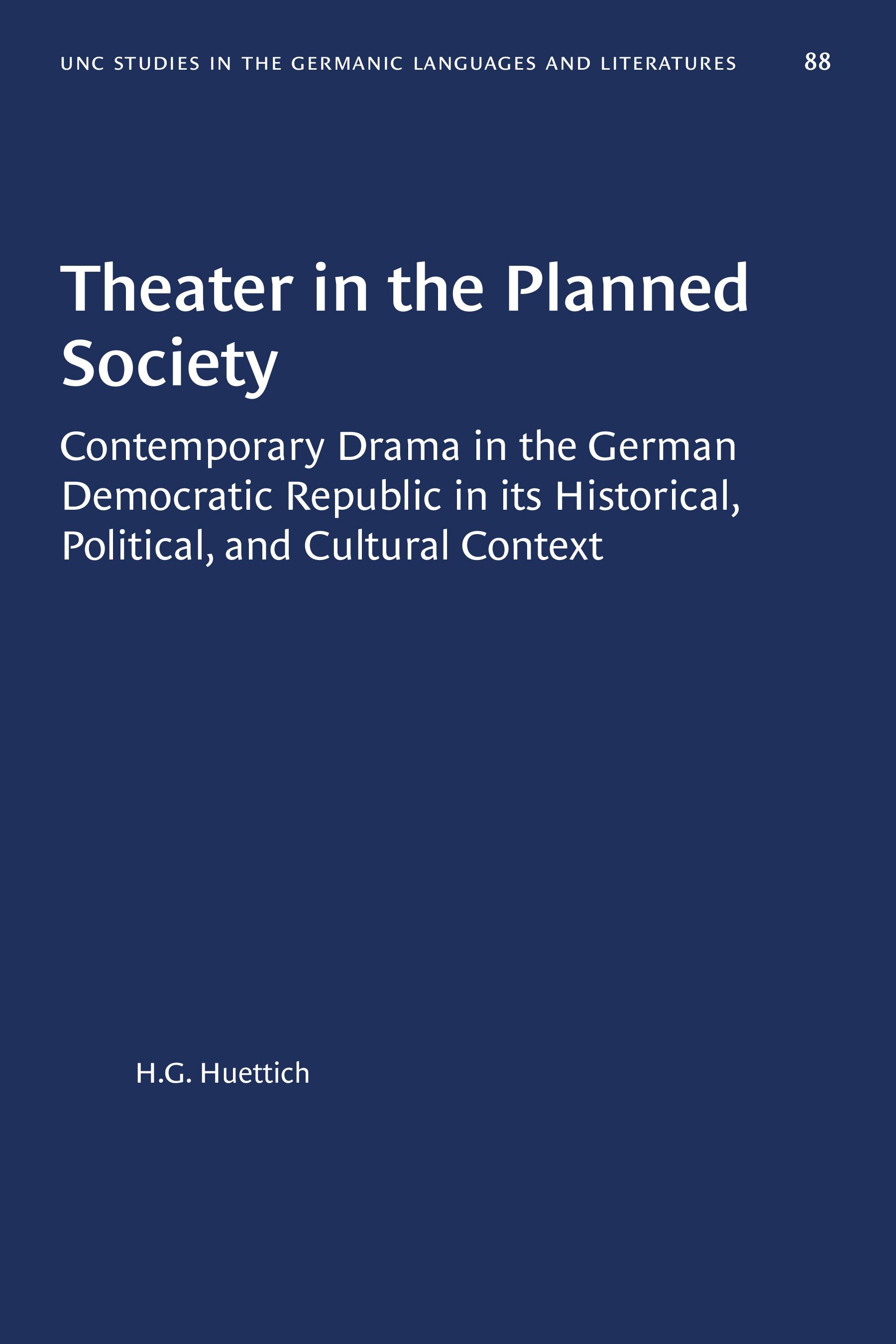
This study presents the historical development of topical drama in the German Democratic Republic from 1945 to 1975. The author investigates the sociopolitical function of both dramas and dramatists such as Karl Grünberg, Friedrich Wolf, and Erwin Strittmatter during the various transitional stages of the GDR’s growth toward a socialist society.
The substantive, critical study of plays, authors, productions, and dramatic theory is supplemented by a critical analysis of the Socialist Unity Party’s cultural and literary policies during the GDR’s turbulent history. While Western critics tend to isolate individual GDR dramas and interpret them out of context, Huettich explores in depth how the cultural policy of the GDR significantly helped shape the course of post-World War II drama in the 'planned society.'
The substantive, critical study of plays, authors, productions, and dramatic theory is supplemented by a critical analysis of the Socialist Unity Party’s cultural and literary policies during the GDR’s turbulent history. While Western critics tend to isolate individual GDR dramas and interpret them out of context, Huettich explores in depth how the cultural policy of the GDR significantly helped shape the course of post-World War II drama in the 'planned society.'
Betaal eenvoudig met kaart, Klarna, Apple Pay of Google Pay. Niet tevreden? Je hebt altijd 14 dagen bedenktijd. Lees meer in onze voorwaarden. Heb je vragen, mail ons dan via hello@memmo.org.
Memmo maakt studeren makkelijker – waar je ook bent ter wereld. Wij brengen je cursusboeken en slimme studietools samen op één plek: samenvattingen, quizzen, podcasts en flashcards. En Ted, je studievriend die antwoord geeft op alles wat je je afvraagt. Meer dan 50.000 studenten studeren hier al – gebouwd om je sneller te laten leren en minder stress te geven.
Misschien vind je dit ook leuk
Koop het boek0