
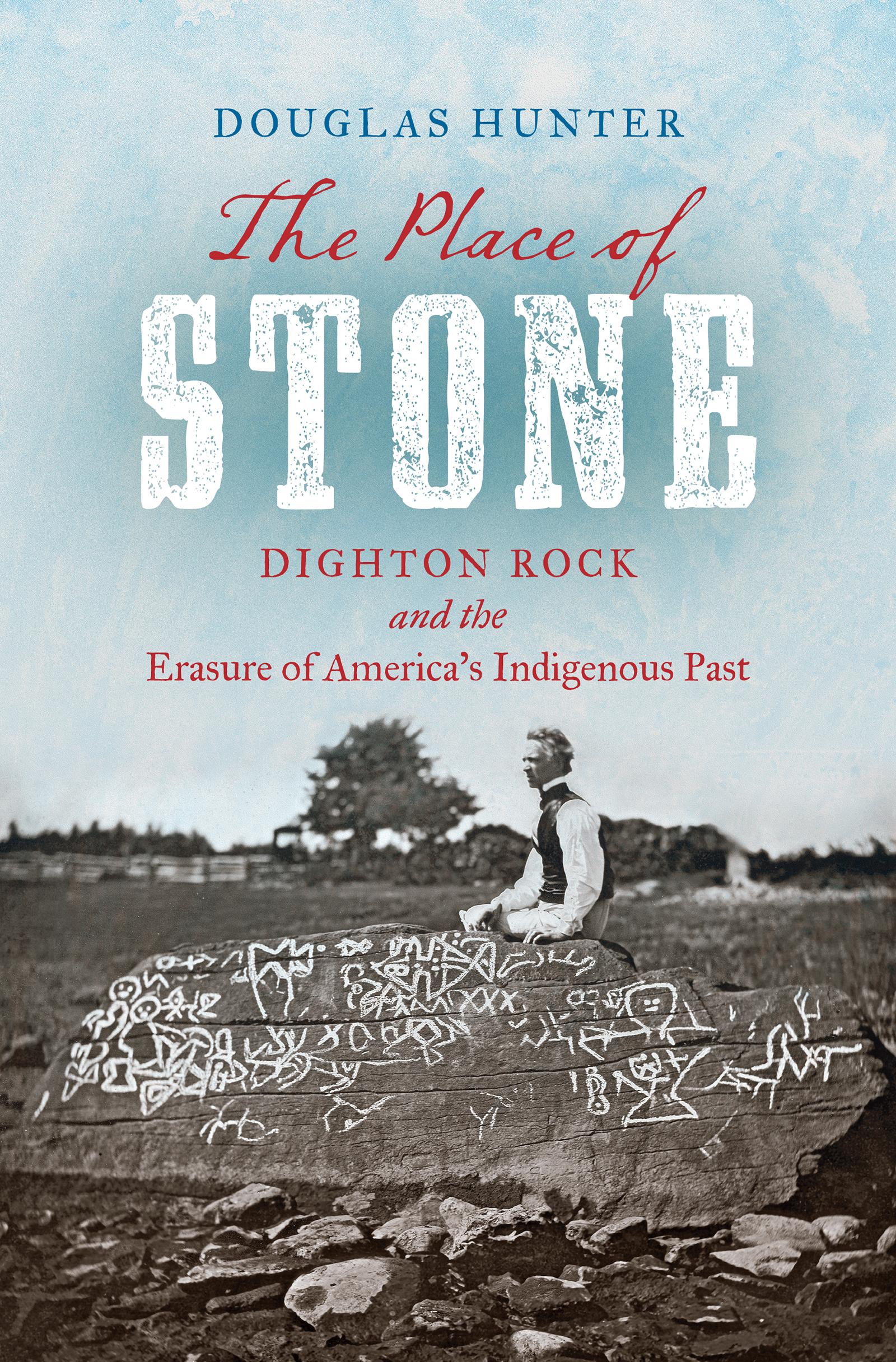
Claimed by many to be the most frequently documented artifact in American archeology, Dighton Rock is a forty-ton boulder covered in petroglyphs in southern Massachusetts. First noted by New England colonists in 1680, the rock’s markings have been debated endlessly by scholars and everyday people alike on both sides of the Atlantic. The glyphs have been erroneously assigned to an array of non-Indigenous cultures: Norsemen, Egyptians, Lost Tribes of Israel, vanished Portuguese explorers, and even a prince from Atlantis.
In this fascinating story rich in personalities and memorable characters, Douglas Hunter uses Dighton Rock to reveal the long, complex history of colonization, American archaeology, and the conceptualization of Indigenous people. Hunter argues that misinterpretations of the rock’s markings share common motivations and have erased Indigenous people not only from their own history but from the landscape. He shows how Dighton Rock for centuries drove ideas about the original peopling of the Americas, including Bering Strait migration scenarios and the identity of the “Mound Builders.” He argues the debates over Dighton Rock have served to answer two questions: Who belongs in America, and to whom does America belong?
Betaal eenvoudig met kaart, Klarna, Apple Pay of Google Pay. Niet tevreden? Je hebt altijd 14 dagen bedenktijd. Lees meer in onze voorwaarden. Heb je vragen, mail ons dan via hello@memmo.org.
Memmo maakt studeren makkelijker – waar je ook bent ter wereld. Wij brengen je cursusboeken en slimme studietools samen op één plek: samenvattingen, quizzen, podcasts en flashcards. En Ted, je studievriend die antwoord geeft op alles wat je je afvraagt. Meer dan 50.000 studenten studeren hier al – gebouwd om je sneller te laten leren en minder stress te geven.