
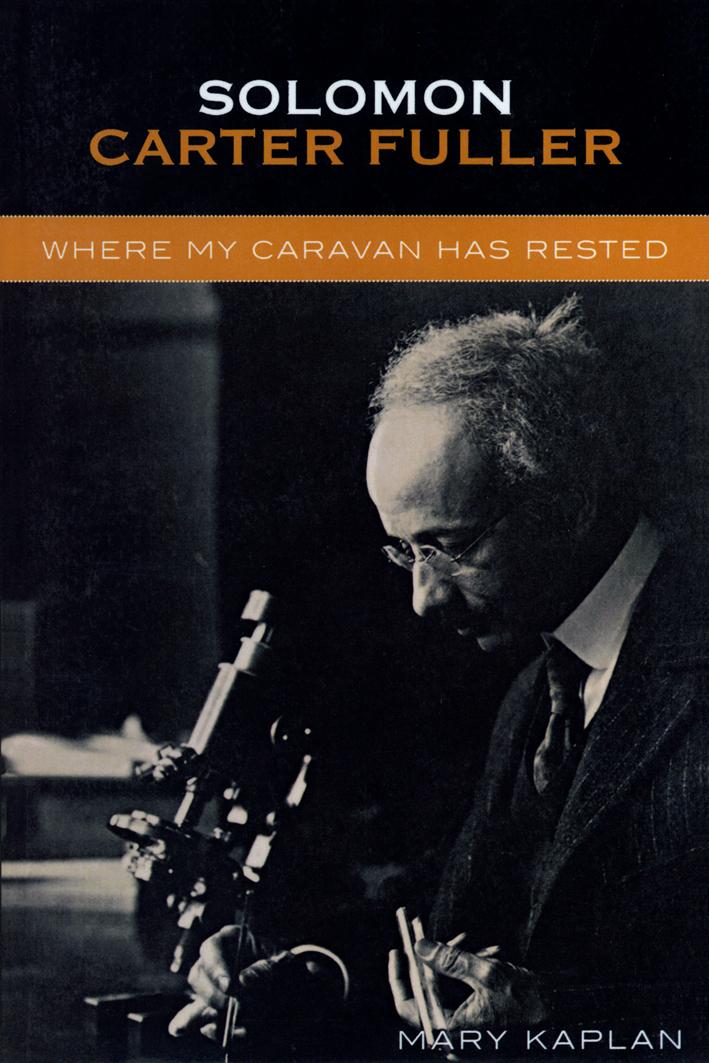
Solomon Carter Fuller: Where My Caravan Has Rested is the documentation of the life and accomplishments of an African American who would not allow racism to quench resolve and commitment to a productive life in medicine and scientific research.
Dr. Fuller was born in Africa in 1872, the grandson of American slaves. He was America's first black psychiatrist and one of the first black physicians to hold faculty rank at an American medical school. He was a widely published neuropathologist and a pioneer in Alzheimer's disease research.
To provide the reader with some insight into the life experiences that influenced and motivated Dr. Fuller, the book traces his family history from the days of slavery to the 1950s, crossing the North American, African, and European continents. Information obtained from his personal notes and interviews with his family provide a glimpse of the racial oppression that Fuller sought to overcome in both his personal and professional lives.
This classic "Horatio Alger" strive and succeed story has important implications for our understanding of American, African, and European culture. Fuller's biography is an important addition to black history and to the history of medicine, not only for its account of a man whose achievements were many, but also for its portrait of what it was like to be black in the days of slavery, during the colonization of Liberia, and as a husband, father, and physician in early 20th century white America.
Dr. Fuller was born in Africa in 1872, the grandson of American slaves. He was America's first black psychiatrist and one of the first black physicians to hold faculty rank at an American medical school. He was a widely published neuropathologist and a pioneer in Alzheimer's disease research.
To provide the reader with some insight into the life experiences that influenced and motivated Dr. Fuller, the book traces his family history from the days of slavery to the 1950s, crossing the North American, African, and European continents. Information obtained from his personal notes and interviews with his family provide a glimpse of the racial oppression that Fuller sought to overcome in both his personal and professional lives.
This classic "Horatio Alger" strive and succeed story has important implications for our understanding of American, African, and European culture. Fuller's biography is an important addition to black history and to the history of medicine, not only for its account of a man whose achievements were many, but also for its portrait of what it was like to be black in the days of slavery, during the colonization of Liberia, and as a husband, father, and physician in early 20th century white America.
Betaal eenvoudig met kaart, Klarna, Apple Pay of Google Pay. Niet tevreden? Je hebt altijd 14 dagen bedenktijd. Lees meer in onze voorwaarden. Heb je vragen, mail ons dan via hello@memmo.org.
Memmo maakt studeren makkelijker – waar je ook bent ter wereld. Wij brengen je cursusboeken en slimme studietools samen op één plek: samenvattingen, quizzen, podcasts en flashcards. En Ted, je studievriend die antwoord geeft op alles wat je je afvraagt. Meer dan 50.000 studenten studeren hier al – gebouwd om je sneller te laten leren en minder stress te geven.