
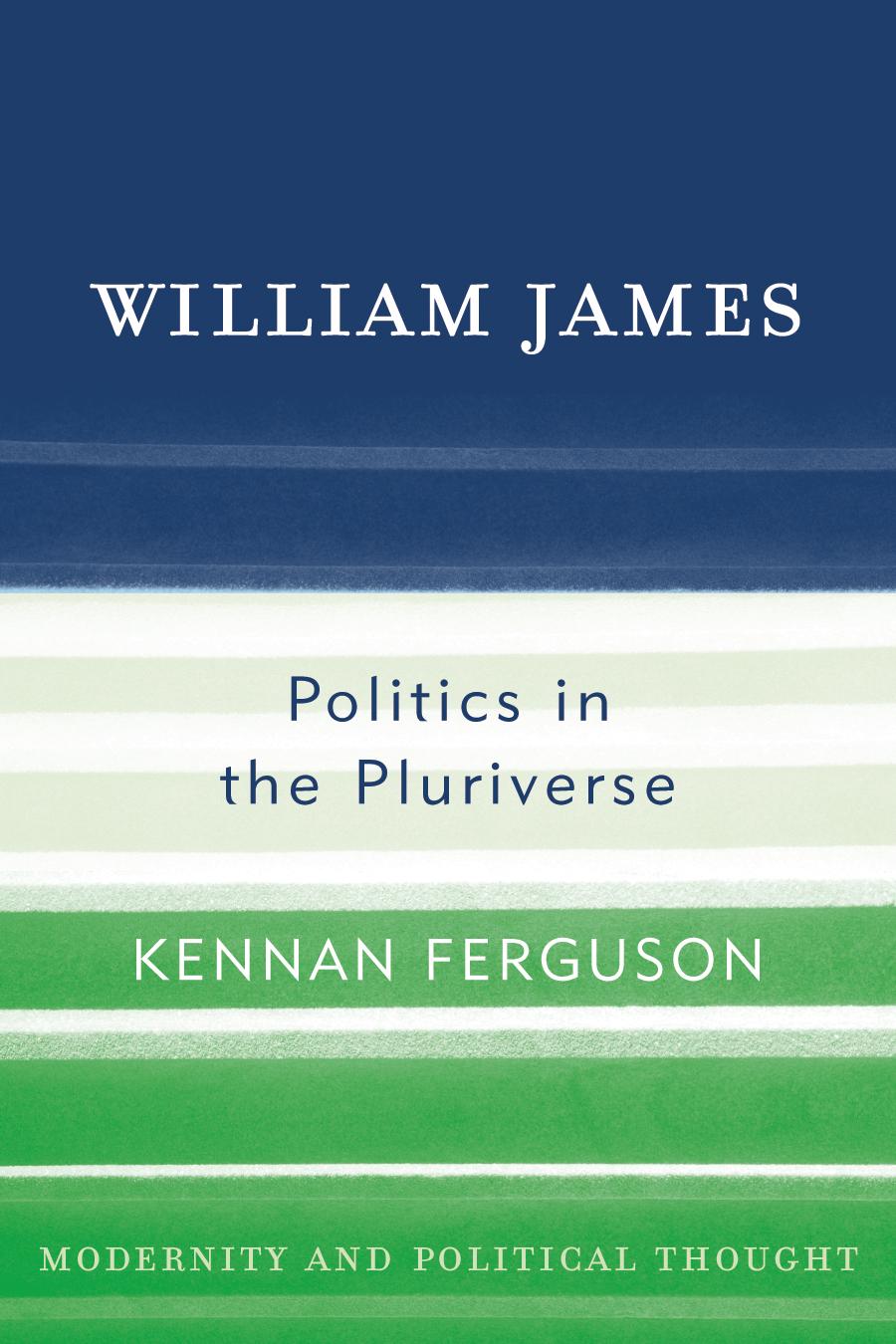
William James is known today strictly as a philosopher of pragmatism. Williams James: Politics in the Pluriverse challenges this understanding. Kennan Ferguson argues that James should instead be known as the progenitor of pluralism, one of the most influential and durable American political philosophies of the twentieth century.
James contended that engagement with the foreign, the difficult, and the uncomfortable makes us who we are. Rather than mitigating differences or attempting to resolve conflicts, he embraced them, wholeheartedly advocating the opportunity to be transformed. Pluralism, in the mind of the thinker who popularized the term, led to a more complex, more contentious, and far more interesting world.
Ferguson traces the historical importance and contemporary possibilities of pluralism's original political insight. In this important work he examines the trajectory of pluralism in the United States and England, the mutual influences of turn-of-the-century American and European philosophical traditions, and the relationship between pluralism and James's active anti-imperialism. James's unexpected political concepts and commitments both illuminate political philosophy of the 20th century and challenge contemporary assumptions about the desirability of unanimity. Pluralism, not unity, should be the goal of both politics and philosophy.
James contended that engagement with the foreign, the difficult, and the uncomfortable makes us who we are. Rather than mitigating differences or attempting to resolve conflicts, he embraced them, wholeheartedly advocating the opportunity to be transformed. Pluralism, in the mind of the thinker who popularized the term, led to a more complex, more contentious, and far more interesting world.
Ferguson traces the historical importance and contemporary possibilities of pluralism's original political insight. In this important work he examines the trajectory of pluralism in the United States and England, the mutual influences of turn-of-the-century American and European philosophical traditions, and the relationship between pluralism and James's active anti-imperialism. James's unexpected political concepts and commitments both illuminate political philosophy of the 20th century and challenge contemporary assumptions about the desirability of unanimity. Pluralism, not unity, should be the goal of both politics and philosophy.
Betaal eenvoudig met kaart, Klarna, Apple Pay of Google Pay. Niet tevreden? Je hebt altijd 14 dagen bedenktijd. Lees meer in onze voorwaarden. Heb je vragen, mail ons dan via hello@memmo.org.
Memmo maakt studeren makkelijker – waar je ook bent ter wereld. Wij brengen je cursusboeken en slimme studietools samen op één plek: samenvattingen, quizzen, podcasts en flashcards. En Ted, je studievriend die antwoord geeft op alles wat je je afvraagt. Meer dan 50.000 studenten studeren hier al – gebouwd om je sneller te laten leren en minder stress te geven.