
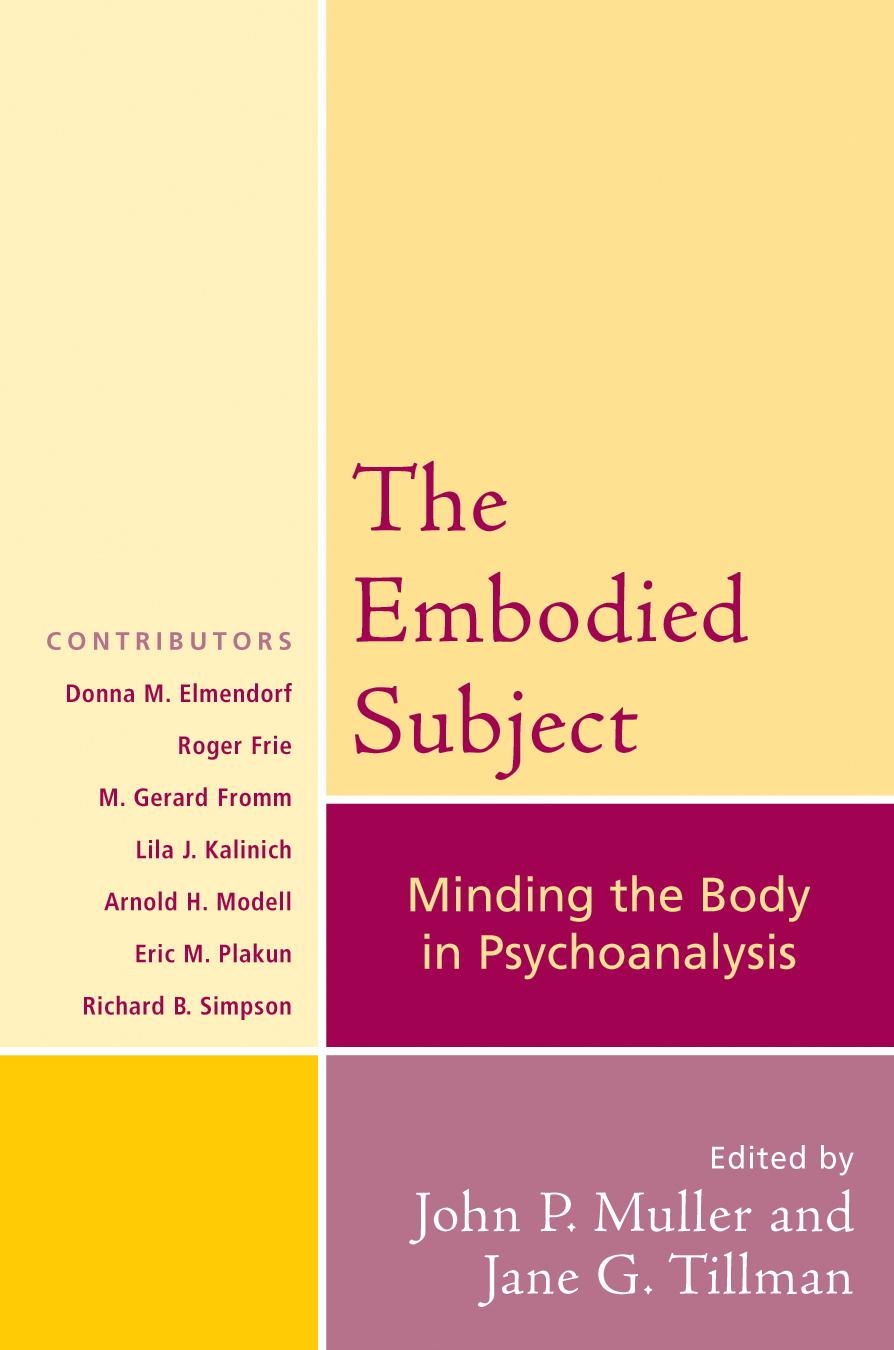
This volume addresses the topic of embodiment in psychoanalysis from both theoretical and clinical points of view. Freud's development of a psychoanalytic theory and treatment originated from his consideration of neurology, aphasia, and the great range of embodied signs constituting the hysterical neuroses. Symptoms and signs, Freud noted in 1895, "join in the conversation" by taking bodily form. The body and the mind form a nexus, which is the proper area of study for psychoanalysis.
Because this is a vast field of inquiry, a pluralistic perspective is taken by this collection of papers, ranging from philosophic and semiotic understandings of the body, to Freudian, Lacanian, feminist, and object relations hypotheses. Clinical phsnomena such as self-mutilation, fantasy about the body and its representations and meanings, enactment, sexuality, and psychotic fragmentation are addressed in an attempt to extend our understanding of the psychoanalytic traditions that have evolved in relation to Freud's discoveries.
This volume includes representative work from established psychoanalysts (Kalinich, Modell), psychoanalysts with sophisticated philosophical grounding (Frie, Simpson), and clinicians working with severely disturbed patients (Elmendorf, Plakun, Tillman, Fromm).
Because this is a vast field of inquiry, a pluralistic perspective is taken by this collection of papers, ranging from philosophic and semiotic understandings of the body, to Freudian, Lacanian, feminist, and object relations hypotheses. Clinical phsnomena such as self-mutilation, fantasy about the body and its representations and meanings, enactment, sexuality, and psychotic fragmentation are addressed in an attempt to extend our understanding of the psychoanalytic traditions that have evolved in relation to Freud's discoveries.
This volume includes representative work from established psychoanalysts (Kalinich, Modell), psychoanalysts with sophisticated philosophical grounding (Frie, Simpson), and clinicians working with severely disturbed patients (Elmendorf, Plakun, Tillman, Fromm).
Betaal eenvoudig met kaart, Klarna, Apple Pay of Google Pay. Niet tevreden? Je hebt altijd 14 dagen bedenktijd. Lees meer in onze voorwaarden. Heb je vragen, mail ons dan via hello@memmo.org.
Memmo maakt studeren makkelijker – waar je ook bent ter wereld. Wij brengen je cursusboeken en slimme studietools samen op één plek: samenvattingen, quizzen, podcasts en flashcards. En Ted, je studievriend die antwoord geeft op alles wat je je afvraagt. Meer dan 50.000 studenten studeren hier al – gebouwd om je sneller te laten leren en minder stress te geven.