
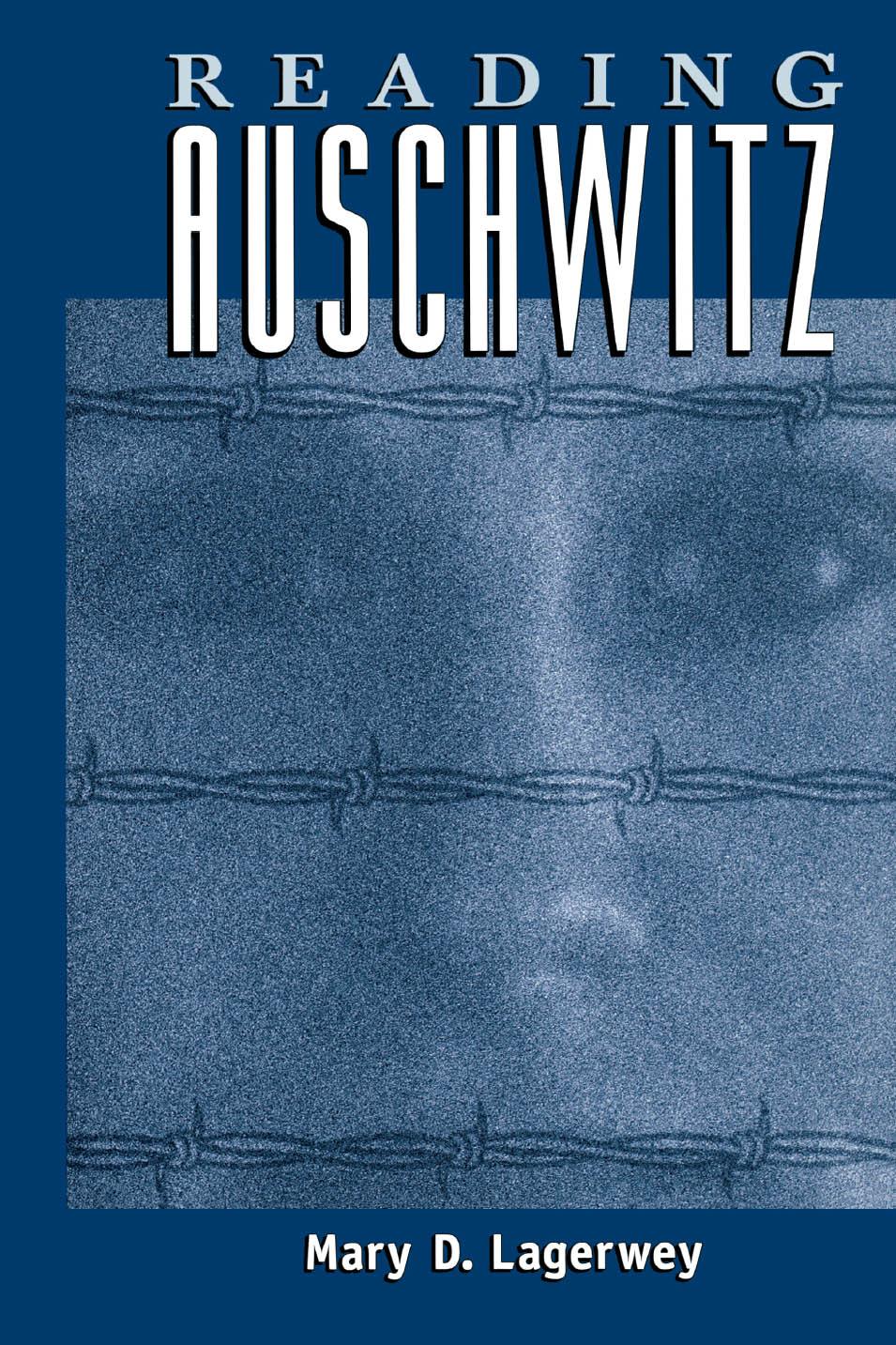
'My mind refuses to play its part in the scholarly exercise. I walk around in a daze, remembering occasionally to take a picture. I've heard that many people cry here, but I am too numb to feel. The wind whips through my wool coat. I am very cold, and I imagine what the wind would have felt like for someone here fifty years ago without coat, boots, or gloves. Hours later as I write, I tell myself a story about the day, hoping it is true, and hoping it will make sense of what I did and did not feel.' _From the Foreword Most of us learn of Auschwitz and the Holocaust through the writings of Anne Frank and Elie Wiesel. Remarkable as their stories are, they leave many voices of Auschwitz unheard. Mary Lagerwey seeks to complicate our memory of Auschwitz by reading less canonical survivors: Jean Amery, Charlotte Delbo, Fania Fenelon, Szymon Laks, Primo Levi, and Sara Nomberg-Przytyk. She reads for how gender, social class, and ethnicity color their tellings. She asks whether we can_whether we should_make sense of Auschwitz. And throughout, Lagerwey reveals her own role in her research; tells of her own fears and anxieties presenting what she, a non-Jew born after the fall of Nazism, can only know second-hand. For any student of the Holocaust, for anyone trying to make sense of the final solution, Reading Auschwitz represents a powerful struggle with what it means to read and tell stories after Auschwitz.
Betaal eenvoudig met kaart, Klarna, Apple Pay of Google Pay. Niet tevreden? Je hebt altijd 14 dagen bedenktijd. Lees meer in onze voorwaarden. Heb je vragen, mail ons dan via hello@memmo.org.
Memmo maakt studeren makkelijker – waar je ook bent ter wereld. Wij brengen je cursusboeken en slimme studietools samen op één plek: samenvattingen, quizzen, podcasts en flashcards. En Ted, je studievriend die antwoord geeft op alles wat je je afvraagt. Meer dan 50.000 studenten studeren hier al – gebouwd om je sneller te laten leren en minder stress te geven.