
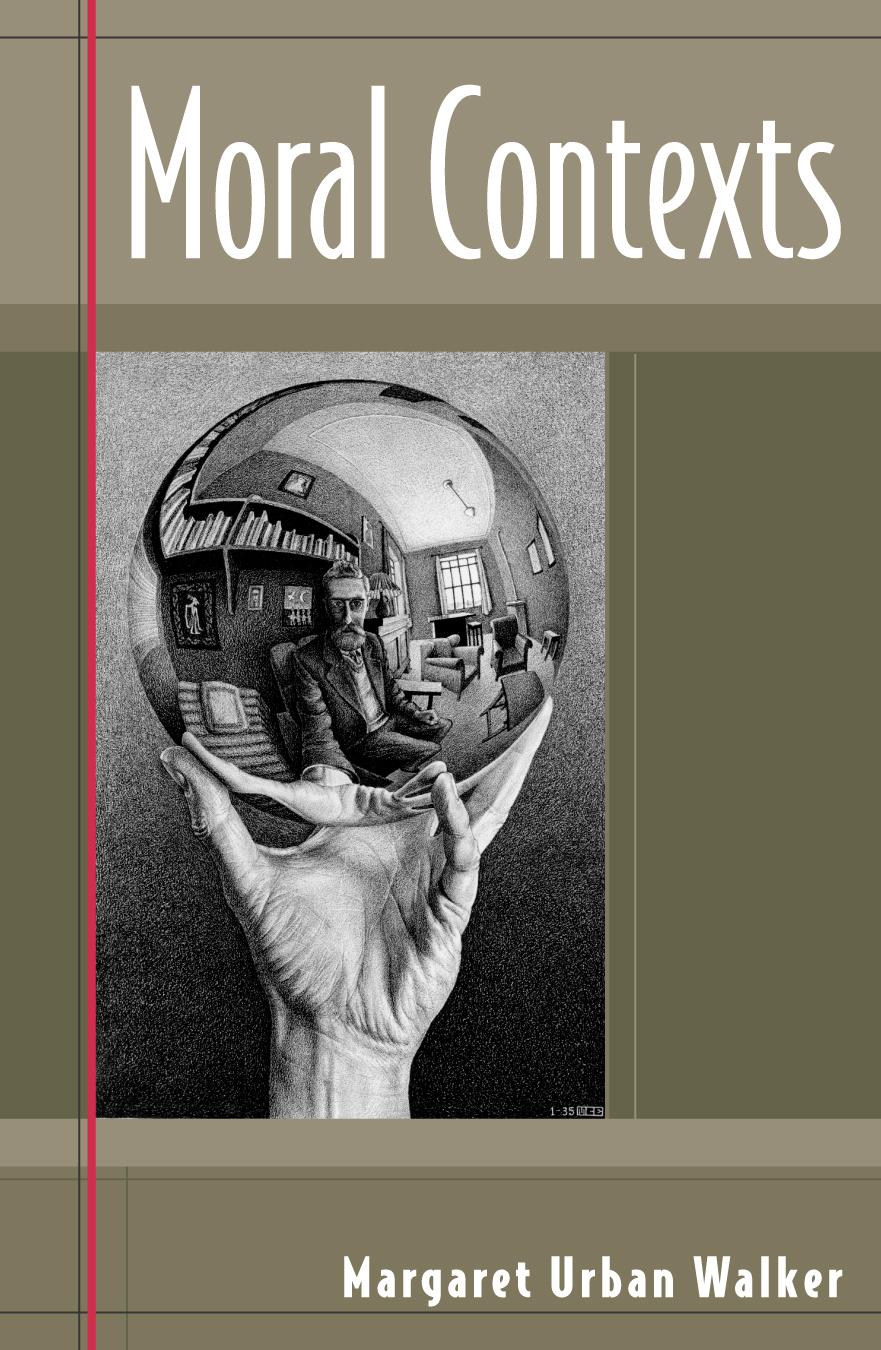
Many contexts shape and limit moral thinking in philosophy and life. Human conditions of vulnerability and interdependency, of limited awareness and control, of imperfect insight into ourselves and others are inevitable contexts that neither moral thought nor theory should forget. To be truly reflective, moral thinking and moral philosophy must become aware of the contexts that bind our thinking about how to live. This collection of essays by Margaret Urban Walker seek to show how to do this, and why it makes a difference.
Contingent and changeable contexts that shape moral thinking include our individual histories, our social positions, and institutional roles, relationships, cultural settings, and social arrangements, and the specific moral idioms we pick up along the way. The paradigms and specialized language of ethical theory are contexts, too; they shape how moral theory looks and what or whom it looks at. Ethical theory and practice are meaningless without these Moral Contexts.
Contingent and changeable contexts that shape moral thinking include our individual histories, our social positions, and institutional roles, relationships, cultural settings, and social arrangements, and the specific moral idioms we pick up along the way. The paradigms and specialized language of ethical theory are contexts, too; they shape how moral theory looks and what or whom it looks at. Ethical theory and practice are meaningless without these Moral Contexts.
Betaal eenvoudig met kaart, Klarna, Apple Pay of Google Pay. Niet tevreden? Je hebt altijd 14 dagen bedenktijd. Lees meer in onze voorwaarden. Heb je vragen, mail ons dan via hello@memmo.org.
Memmo maakt studeren makkelijker – waar je ook bent ter wereld. Wij brengen je cursusboeken en slimme studietools samen op één plek: samenvattingen, quizzen, podcasts en flashcards. En Ted, je studievriend die antwoord geeft op alles wat je je afvraagt. Meer dan 50.000 studenten studeren hier al – gebouwd om je sneller te laten leren en minder stress te geven.