
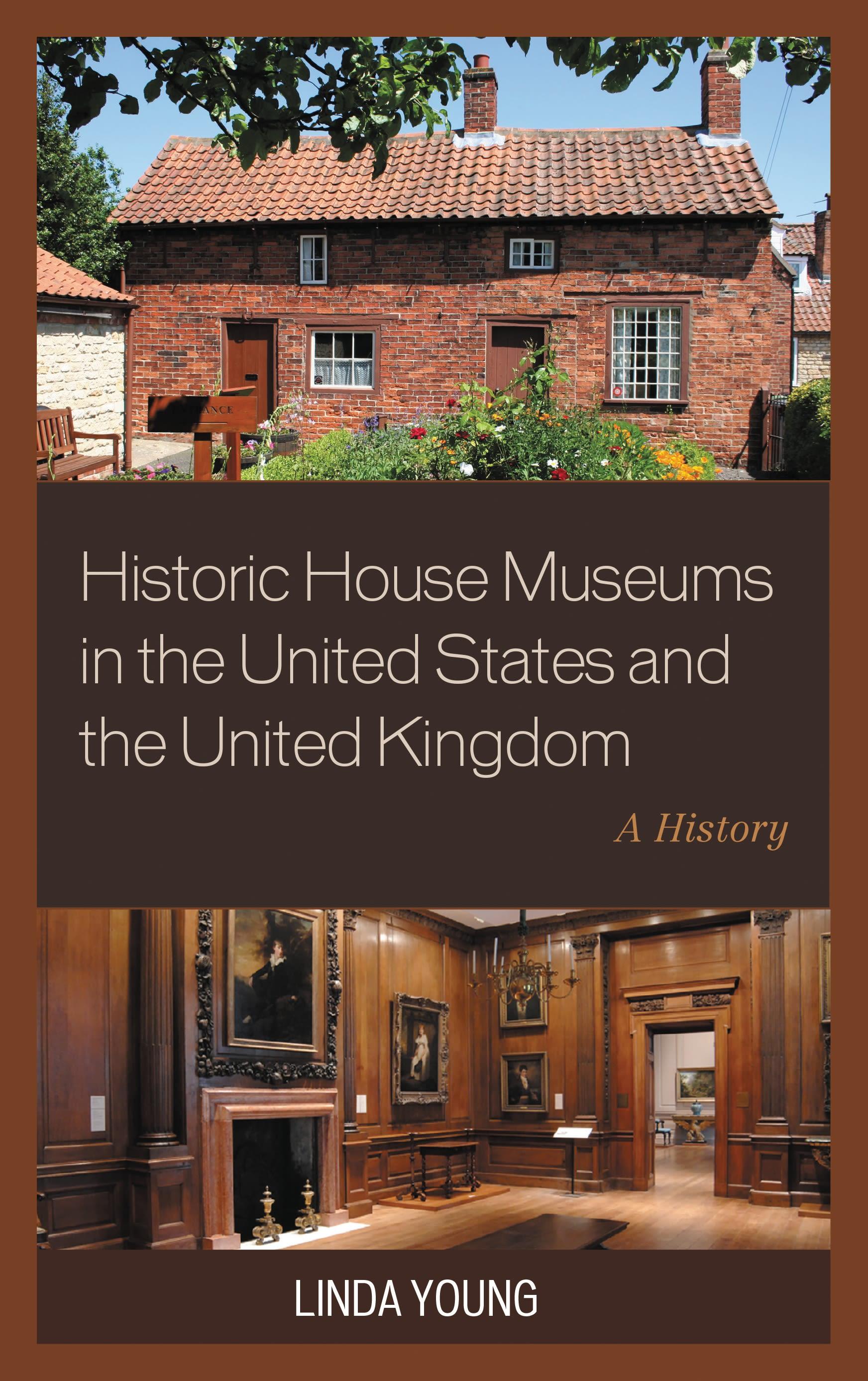
Historic House Museums in the United States and the United Kingdom: A History addresses the phenomenon of historic houses as a distinct species of museum. Everyone understands the special nature of an art museum, a national museum, or a science museum, but “house museum” nearly always requires clarification. In the United States the term is almost synonymous with historic preservation; in the United Kingdom, it is simply unfamiliar, the very idea being conflated with stately homes and the National Trust.
By analyzing the motivation of the founders, and subsequent keepers, of house museums, Linda Young identifies a typology that casts light on what house museums were intended to represent and their significance (or lack thereof) today. This book examines:
• heroes’ houses: once inhabited by great persons (e.g., Shakespeare’s birthplace, Washington’s Mount Vernon);
• artwork houses: national identity as specially visible in house design, style, and technique (e.g., Frank Lloyd Wright houses, Modernist houses);
• collectors’ houses: a microcosm of collecting in situ domesticu, subsequently presented to the nation as the exemplars of taste (e.g., Sir John Soane’s Museum, Isabella Stewart Gardner Museum);
• English country houses: the palaces of the aristocracy, maintained thanks to primogeniture but threatened with redundancy and rescued as museums to be touted as the peak of English national culture; English country houses: the palaces of the aristocracy, maintained for centuries thanks to primogeniture but threatened by redundancy and strangely rescued as museums, now touted as the peak of English national culture;
• Everyman/woman’s social history houses: the modern, demotic response to elite houses, presented as social history but tinged with generic ancestor veneration (e.g., tenement house museums in Glasgow and New York).
By analyzing the motivation of the founders, and subsequent keepers, of house museums, Linda Young identifies a typology that casts light on what house museums were intended to represent and their significance (or lack thereof) today. This book examines:
• heroes’ houses: once inhabited by great persons (e.g., Shakespeare’s birthplace, Washington’s Mount Vernon);
• artwork houses: national identity as specially visible in house design, style, and technique (e.g., Frank Lloyd Wright houses, Modernist houses);
• collectors’ houses: a microcosm of collecting in situ domesticu, subsequently presented to the nation as the exemplars of taste (e.g., Sir John Soane’s Museum, Isabella Stewart Gardner Museum);
• English country houses: the palaces of the aristocracy, maintained thanks to primogeniture but threatened with redundancy and rescued as museums to be touted as the peak of English national culture; English country houses: the palaces of the aristocracy, maintained for centuries thanks to primogeniture but threatened by redundancy and strangely rescued as museums, now touted as the peak of English national culture;
• Everyman/woman’s social history houses: the modern, demotic response to elite houses, presented as social history but tinged with generic ancestor veneration (e.g., tenement house museums in Glasgow and New York).
Betaal eenvoudig met kaart, Klarna, Apple Pay of Google Pay. Niet tevreden? Je hebt altijd 14 dagen bedenktijd. Lees meer in onze voorwaarden. Heb je vragen, mail ons dan via hello@memmo.org.
Memmo maakt studeren makkelijker – waar je ook bent ter wereld. Wij brengen je cursusboeken en slimme studietools samen op één plek: samenvattingen, quizzen, podcasts en flashcards. En Ted, je studievriend die antwoord geeft op alles wat je je afvraagt. Meer dan 50.000 studenten studeren hier al – gebouwd om je sneller te laten leren en minder stress te geven.