
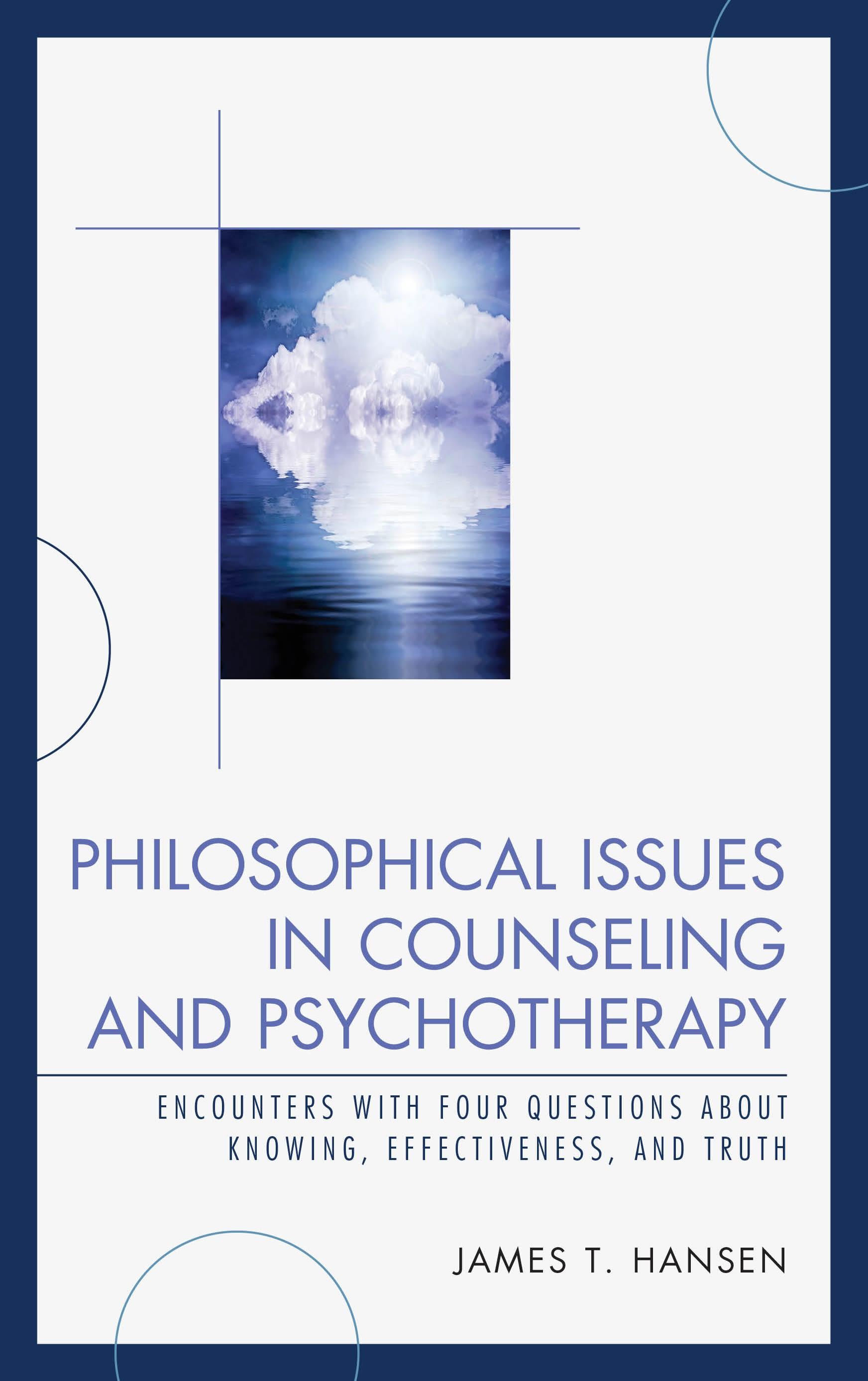
To become a counselor or psychotherapist, one must learn a confusing and conceptually disconnected array of theories, techniques, and ideologies. For instance, CBT, humanistic, and psychodynamic interventions have virtually opposite conceptual foundations, but they are all used to help clients. What principles, however, connect the various movements, trends, and methods of helping? In Philosophical Issues in Counseling and Psychotherapy: Encounters with Four Questions about Knowing, Effectiveness, and Truth, James T. Hansen asks and proposes beginning resolutions to four fundamental philosophical questions about knowing, effectiveness, and truth that are designed to unite and give meaning to diverse and seemingly contradictory models of helping: What does it mean to know a client? What makes counseling effective? Are truths discovered or created in the counseling relationship? Should counselors abandon the idea of truth? Although these questions are complex, Hansen provides plain language answers that make the material accessible to readers who have no formal education in philosophy. Furthermore, he addresses these questions in the context of his personal struggles to find meaning—making the book an engaging and highly enjoyable reading experience.
Betaal eenvoudig met kaart, Klarna, Apple Pay of Google Pay. Niet tevreden? Je hebt altijd 14 dagen bedenktijd. Lees meer in onze voorwaarden. Heb je vragen, mail ons dan via hello@memmo.org.
Memmo maakt studeren makkelijker – waar je ook bent ter wereld. Wij brengen je cursusboeken en slimme studietools samen op één plek: samenvattingen, quizzen, podcasts en flashcards. En Ted, je studievriend die antwoord geeft op alles wat je je afvraagt. Meer dan 50.000 studenten studeren hier al – gebouwd om je sneller te laten leren en minder stress te geven.