
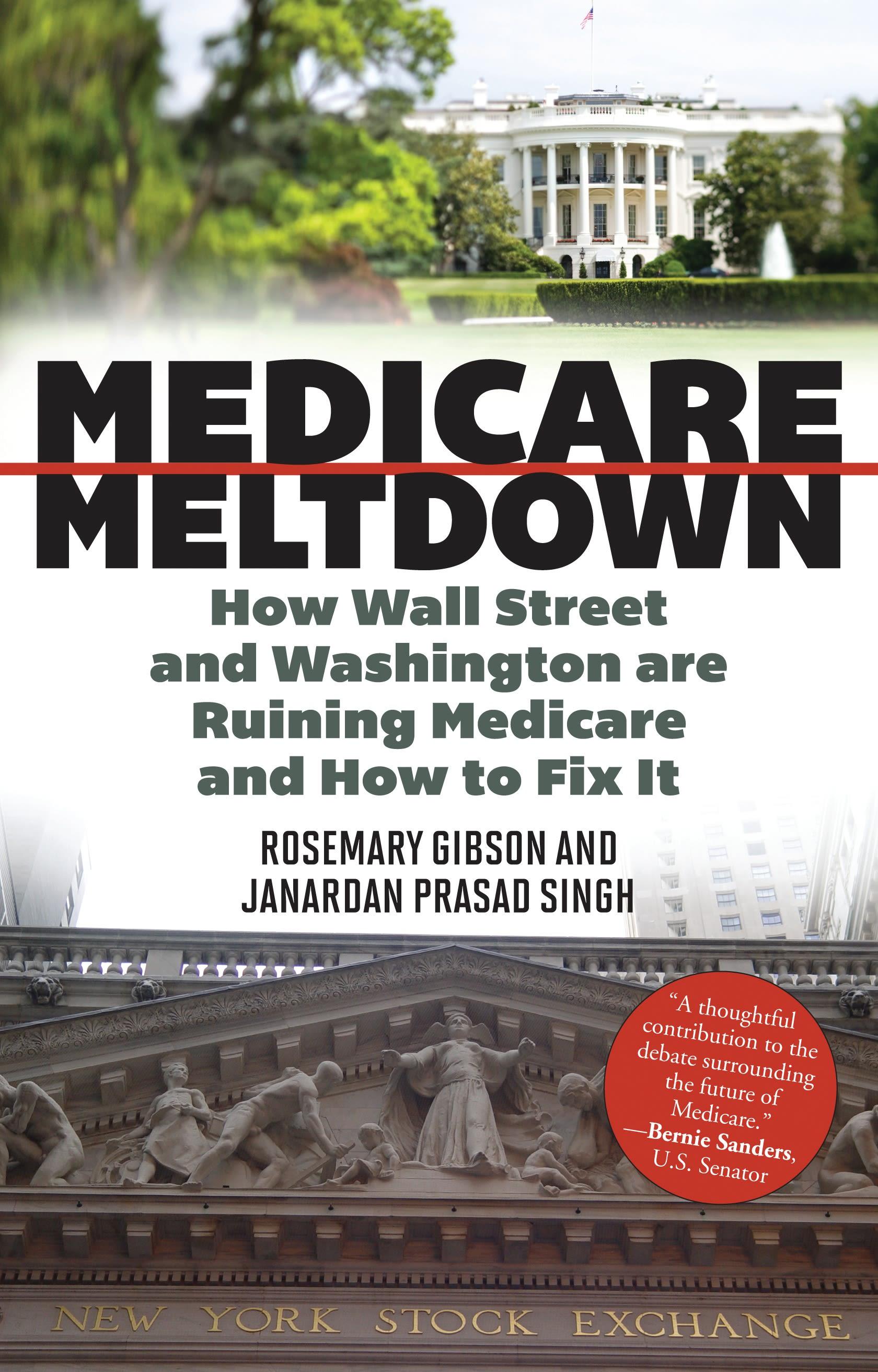
Medicare affects everyone. If you are a boomer, you are counting on Medicare to protect you from the cost of health care when you retire. If you have turned 65, you already depend on Medicare. If you are a Gen-X or Gen-Y, you are contributing to Medicare from your paycheck. Will Medicare continue to exist as we have known it? Will it be there when you need it? How much will it cost? As the future of Medicare is debated in Washington, Rosemary Gibson and Janardan Prasad Singh shine a light on a rarely-seen side of this storied program: the business of Medicare.
Medicare is known as an entitlement for the nation’s seniors. It is also the largest entitlement-based program for any business sector in the US economy. Its beneficiaries include hospitals, doctors, drug companies, device manufacturers, Wall Street investment banks, private equity firms, hedge funds, and others that rely on the $600 billion that Medicare spends a year.
The ties that bind Wall Street and Washington in the healthcare industry are strong, and they will play an outsized role in determining Medicare’s future. Gibson and Singh reveal how the industry’s interests are often at odds with those of seniors and boomers.
While some politicians point to the culture of dependence of the public on Medicare, the authors suggest that policymakers turn their attention to the culture of dependence of the healthcare industry on Medicare, which is the predominant force pushing the program toward a fiscal cliff.
The amount of waste in the Medicare program is equivalent to the entire economy of New Zealand. For Medicare to be sustained, this culture of dependence -- and the habits it breeds, namely waste, excessive pricing, and overuse of unnecessary services -- should be the first priority for the chopping block. By parings back the excess, the authors argue, Medicare can be sustained for future generations. This is essential reading for anyone interested in how Medicare works, how it could work better, and where it will go if reforms are not made.
Medicare is known as an entitlement for the nation’s seniors. It is also the largest entitlement-based program for any business sector in the US economy. Its beneficiaries include hospitals, doctors, drug companies, device manufacturers, Wall Street investment banks, private equity firms, hedge funds, and others that rely on the $600 billion that Medicare spends a year.
The ties that bind Wall Street and Washington in the healthcare industry are strong, and they will play an outsized role in determining Medicare’s future. Gibson and Singh reveal how the industry’s interests are often at odds with those of seniors and boomers.
While some politicians point to the culture of dependence of the public on Medicare, the authors suggest that policymakers turn their attention to the culture of dependence of the healthcare industry on Medicare, which is the predominant force pushing the program toward a fiscal cliff.
The amount of waste in the Medicare program is equivalent to the entire economy of New Zealand. For Medicare to be sustained, this culture of dependence -- and the habits it breeds, namely waste, excessive pricing, and overuse of unnecessary services -- should be the first priority for the chopping block. By parings back the excess, the authors argue, Medicare can be sustained for future generations. This is essential reading for anyone interested in how Medicare works, how it could work better, and where it will go if reforms are not made.
Pagina's: 152
Categorie: Statsvetenskap & Politik
e-ISBN: 9781442219809
Verzendgewicht: 1.2 kg
Verzending binnen: 1-2 dagen
Betaal eenvoudig met kaart, Klarna, Apple Pay of Google Pay. Niet tevreden? Je hebt altijd 14 dagen bedenktijd. Lees meer in onze voorwaarden. Heb je vragen, mail ons dan via hello@memmo.org.
Memmo maakt studeren makkelijker – waar je ook bent ter wereld. Wij brengen je cursusboeken en slimme studietools samen op één plek: samenvattingen, quizzen, podcasts en flashcards. En Ted, je studievriend die antwoord geeft op alles wat je je afvraagt. Meer dan 50.000 studenten studeren hier al – gebouwd om je sneller te laten leren en minder stress te geven.