
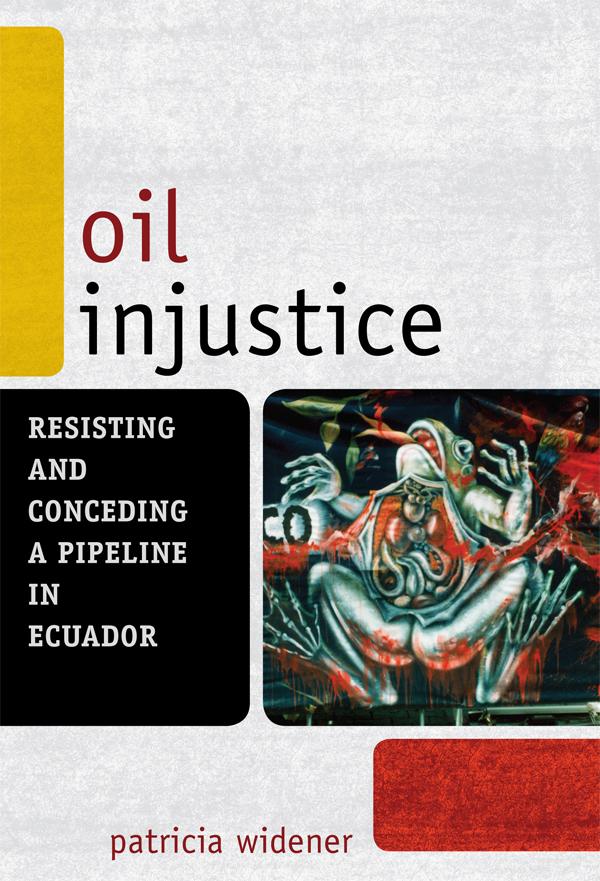
Oil Injustice examines the mobilization efforts of four communities with different oil histories in response to the construction of an oil pipeline. Using multiple sites in Ecuador as case studies, Patricia Widener examines the efforts of grassroots groups, non-governmental organizations, activist mayors, and transnational advocates that mobilized to redefine the country's oil path and to represent the voice of many local communities and organizations that sought to offer an alternative to the nation's oil dependency and to the use of its oil wealth. These groups generated divergent and at times rival reactions to the pipeline, though at their core, the multiple campaigns developed from a shared history and awareness of a number of marginalized communities and degraded environments in areas most important to the oil process. Widener shows that global environmental justice demands are bound within a capitalist political system, where community activists, national NGOs and their international allies are forced to seek local change rather than attempt to defeat a disabling and unequal system.
Betaal eenvoudig met kaart, Klarna, Apple Pay of Google Pay. Niet tevreden? Je hebt altijd 14 dagen bedenktijd. Lees meer in onze voorwaarden. Heb je vragen, mail ons dan via hello@memmo.org.
Memmo maakt studeren makkelijker – waar je ook bent ter wereld. Wij brengen je cursusboeken en slimme studietools samen op één plek: samenvattingen, quizzen, podcasts en flashcards. En Ted, je studievriend die antwoord geeft op alles wat je je afvraagt. Meer dan 50.000 studenten studeren hier al – gebouwd om je sneller te laten leren en minder stress te geven.