
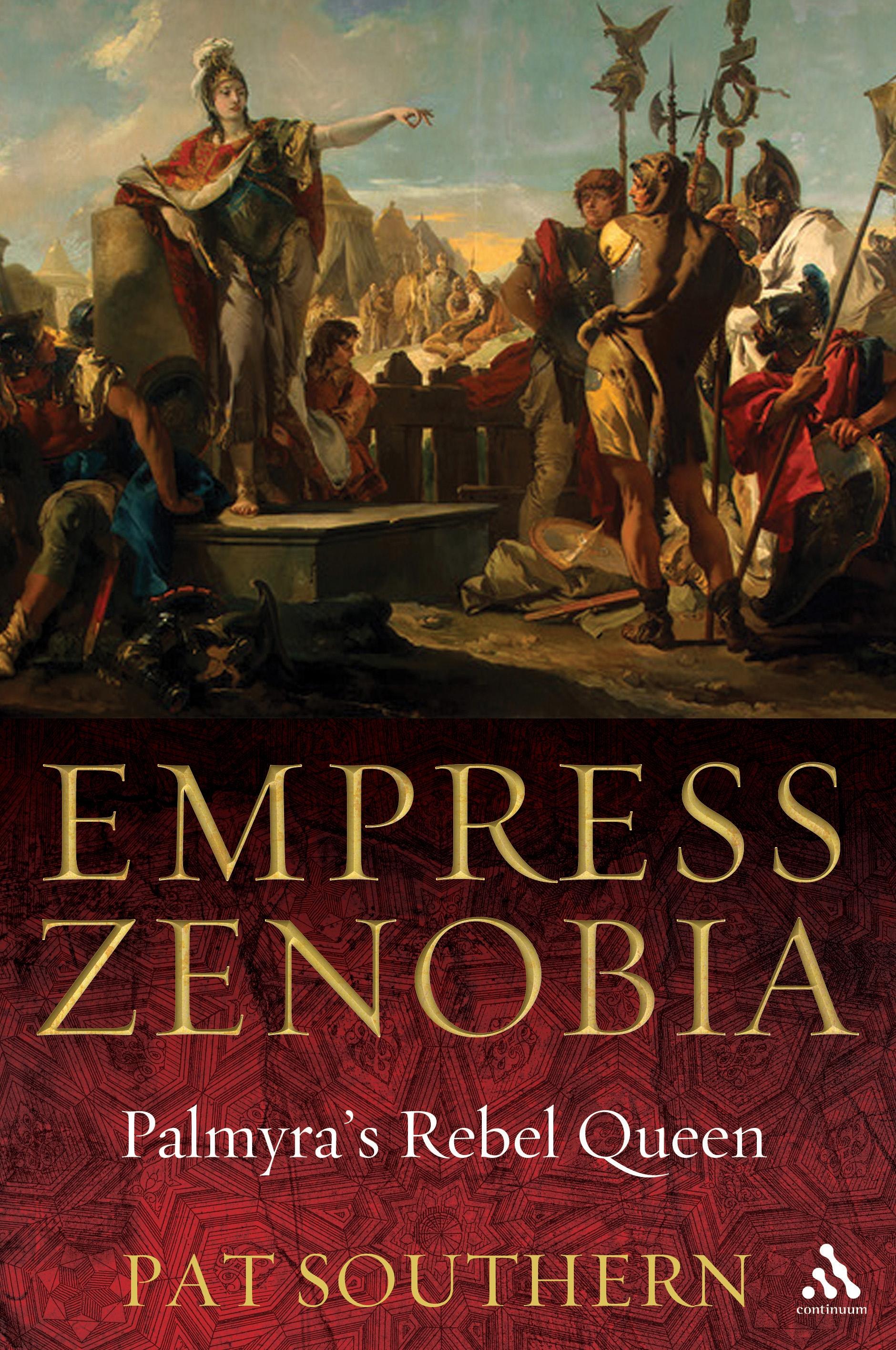
The ancient sources for the life and times of Zenobia are sparse, and the surviving literary works are biased towards the Roman point of view, much as are the sources for two other famous women who challenged Rome, Cleopatra and Boudica. In Empress Zenobia, Pat Southern seeks to tell the other side of the legendary 3rd century queen's place in history.
As queen of Palmyra (present-day Syria), Zenobia was acknowledged in her lifetime as beautiful and clever, gathering round her at the Palmyrene court writers and poets, artists and philosophers. It was said that Zenobia claimed descent from Cleopatra, which cannot be true but is indicative of how she saw herself and how she intended to be seen by others at home and abroad. This lively narrative explores the legendary queen and charts the progression of her unequivocal declaration, not only of independence from Rome, but of supremacy. Initially, Zenobia acknowledged the suzerainty of the Roman Emperors, but finally began to call herself Augusta and her son Vaballathus Augustus. There could be no clearer challenge to the authority of Rome in the east, drawing the Emperor Aurelian to the final battles and the submission of Palmyra in AD 272.
Zenobia's story has inspired many melodramatic fictions but few factual volumes of any authority have been published. Pat Southern's book is a lively account that is both up to date and authoritative, as well as thoroughly engaging.
As queen of Palmyra (present-day Syria), Zenobia was acknowledged in her lifetime as beautiful and clever, gathering round her at the Palmyrene court writers and poets, artists and philosophers. It was said that Zenobia claimed descent from Cleopatra, which cannot be true but is indicative of how she saw herself and how she intended to be seen by others at home and abroad. This lively narrative explores the legendary queen and charts the progression of her unequivocal declaration, not only of independence from Rome, but of supremacy. Initially, Zenobia acknowledged the suzerainty of the Roman Emperors, but finally began to call herself Augusta and her son Vaballathus Augustus. There could be no clearer challenge to the authority of Rome in the east, drawing the Emperor Aurelian to the final battles and the submission of Palmyra in AD 272.
Zenobia's story has inspired many melodramatic fictions but few factual volumes of any authority have been published. Pat Southern's book is a lively account that is both up to date and authoritative, as well as thoroughly engaging.
Betaal eenvoudig met kaart, Klarna, Apple Pay of Google Pay. Niet tevreden? Je hebt altijd 14 dagen bedenktijd. Lees meer in onze voorwaarden. Heb je vragen, mail ons dan via hello@memmo.org.
Memmo maakt studeren makkelijker – waar je ook bent ter wereld. Wij brengen je cursusboeken en slimme studietools samen op één plek: samenvattingen, quizzen, podcasts en flashcards. En Ted, je studievriend die antwoord geeft op alles wat je je afvraagt. Meer dan 50.000 studenten studeren hier al – gebouwd om je sneller te laten leren en minder stress te geven.