
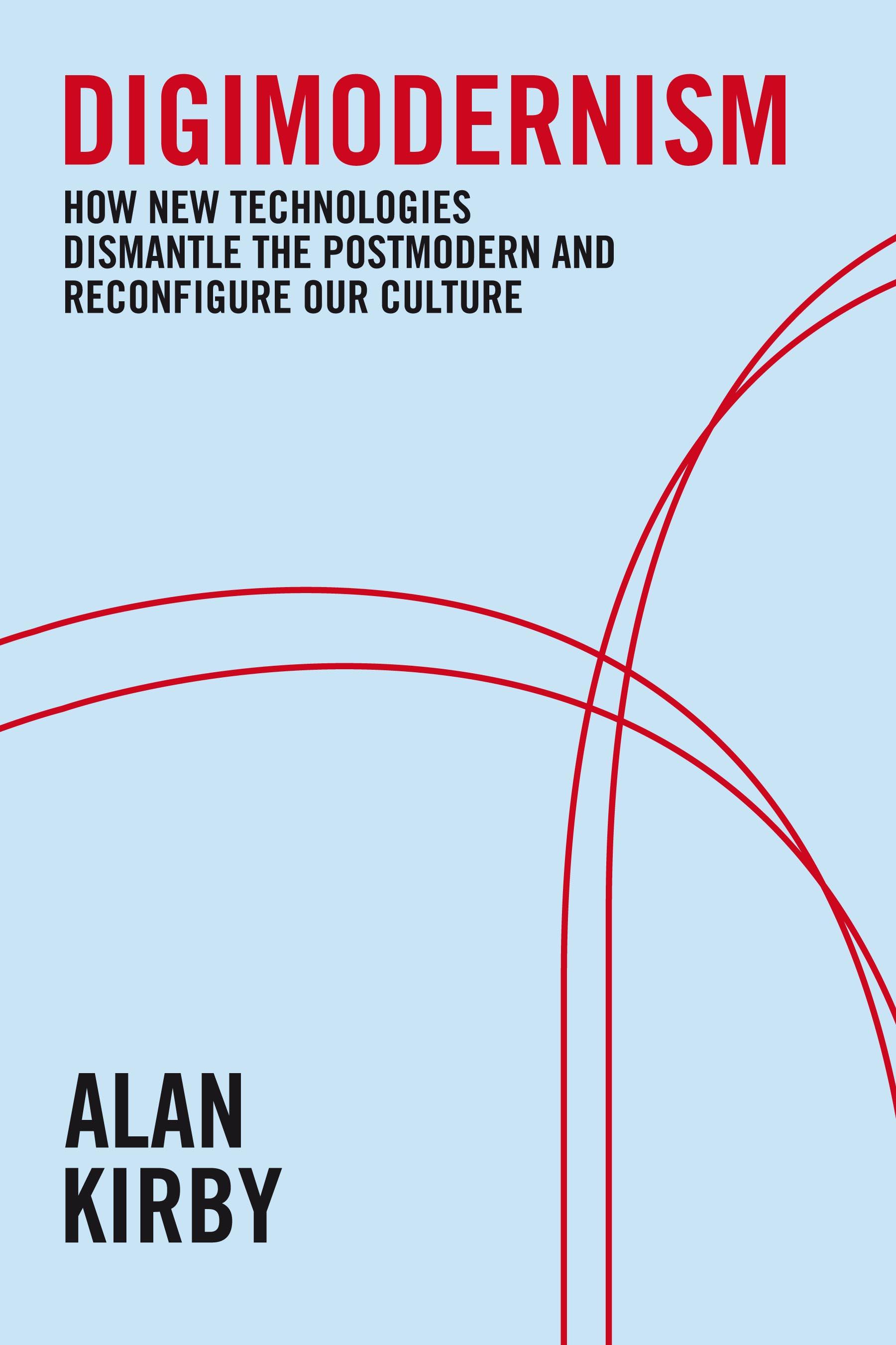
A bold new challenge to postmodern theory
The increasing irrelevance of postmodernism requires a new theory to underpin our current digital culture. Almost without anybody noticing, a new cultural paradigm has taken center stage, displacing an exhausted and increasingly marginalized postmodernism. Alan Kirby calls this cultural paradigm digimodernism, a name comprising both its central technical mode and the privileging of fingers and thumbs inherent in its use.
Beginning with the Internet (digimodernism's most important locus), then taking into account television, cinema, computer games, music, radio, etc., Kirby analyzes the emergence and implications of these diverse media, coloring our cultural landscape with new ideas on texts and how they work. This new kind of text produces distinctive forms of author and reader/viewer, which, in turn, lead to altered notions of authority, 'truth' and legitimization. With users intervening physically in the creation of texts, our electronically-dependent society is becoming more involved in the grand narrative.
To clarify these trends, Kirby compares them to the contrasting tendencies of the preceding postmodern era. In defining this new cultural age, the author avoids both facile euphoria and pessimistic fatalism, aiming instead to understand and thereby gain control of a cultural mode which seems, as though from nowhere, to have engulfed our society.
With new technologies unfolding almost daily, this work will help to categorize and explain our new digital world and our place in it, as well as equip us with a better understanding of the digital technologies that have a massive impact on our culture.
The increasing irrelevance of postmodernism requires a new theory to underpin our current digital culture. Almost without anybody noticing, a new cultural paradigm has taken center stage, displacing an exhausted and increasingly marginalized postmodernism. Alan Kirby calls this cultural paradigm digimodernism, a name comprising both its central technical mode and the privileging of fingers and thumbs inherent in its use.
Beginning with the Internet (digimodernism's most important locus), then taking into account television, cinema, computer games, music, radio, etc., Kirby analyzes the emergence and implications of these diverse media, coloring our cultural landscape with new ideas on texts and how they work. This new kind of text produces distinctive forms of author and reader/viewer, which, in turn, lead to altered notions of authority, 'truth' and legitimization. With users intervening physically in the creation of texts, our electronically-dependent society is becoming more involved in the grand narrative.
To clarify these trends, Kirby compares them to the contrasting tendencies of the preceding postmodern era. In defining this new cultural age, the author avoids both facile euphoria and pessimistic fatalism, aiming instead to understand and thereby gain control of a cultural mode which seems, as though from nowhere, to have engulfed our society.
With new technologies unfolding almost daily, this work will help to categorize and explain our new digital world and our place in it, as well as equip us with a better understanding of the digital technologies that have a massive impact on our culture.
Pagina's: 288
Categorie: Film- & Medievetenskap
e-ISBN: 9781441154163
Verzendgewicht: 1.2 kg
Verzending binnen: 1-2 dagen
Betaal eenvoudig met kaart, Klarna, Apple Pay of Google Pay. Niet tevreden? Je hebt altijd 14 dagen bedenktijd. Lees meer in onze voorwaarden. Heb je vragen, mail ons dan via hello@memmo.org.
Memmo maakt studeren makkelijker – waar je ook bent ter wereld. Wij brengen je cursusboeken en slimme studietools samen op één plek: samenvattingen, quizzen, podcasts en flashcards. En Ted, je studievriend die antwoord geeft op alles wat je je afvraagt. Meer dan 50.000 studenten studeren hier al – gebouwd om je sneller te laten leren en minder stress te geven.