
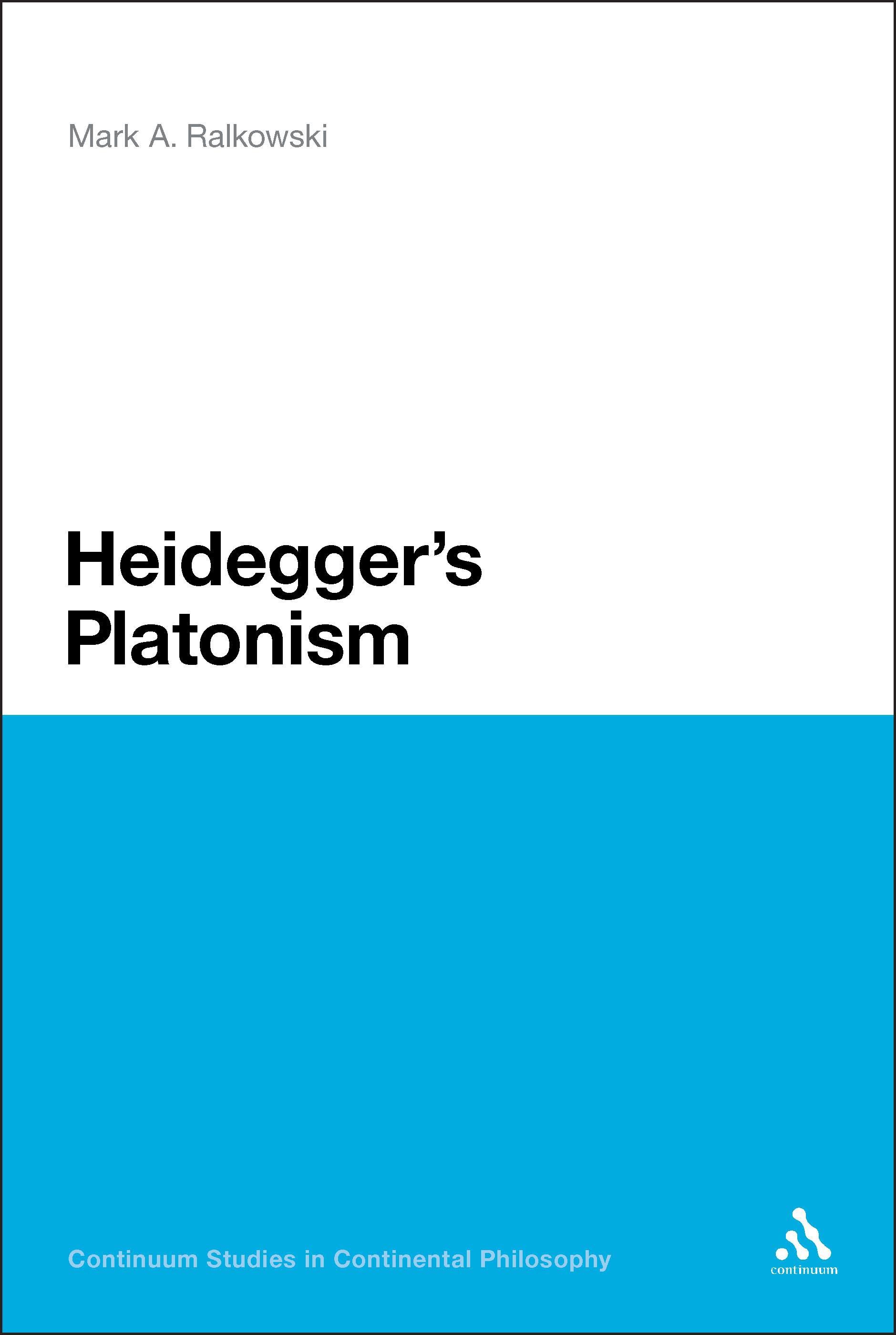
Heidegger's Platonism challenges Heidegger's 1940 interpretation of Plato as the philosopher who initiated the West's ontological decline into contemporary nihilism. Mark A. Ralkowski argues that, in his earlier lecture course, On the Essence of Truth, in which he appropriates Plato in a positive light, Heidegger discovered the two most important concepts of his later thought, namely the difference between the Being of beings and Being as such, and the 'belonging together' of Being and man in what he eventually calls Ereignis, the 'event of appropriation'.
Ralkowski shows that, far from being the grand villain of metaphysics, Plato was in fact the gateway to Heidegger's later period. Because Heidegger discovers the seeds of his later thought in his positive appropriation of Plato, this book argues that Heidegger's later thought is a return to and phenomenological transformation of Platonism, which is ironic not least because Heidegger thought of himself as the West's first truly post-Platonic philosopher.
Ralkowski shows that, far from being the grand villain of metaphysics, Plato was in fact the gateway to Heidegger's later period. Because Heidegger discovers the seeds of his later thought in his positive appropriation of Plato, this book argues that Heidegger's later thought is a return to and phenomenological transformation of Platonism, which is ironic not least because Heidegger thought of himself as the West's first truly post-Platonic philosopher.
Betaal eenvoudig met kaart, Klarna, Apple Pay of Google Pay. Niet tevreden? Je hebt altijd 14 dagen bedenktijd. Lees meer in onze voorwaarden. Heb je vragen, mail ons dan via hello@memmo.org.
Memmo maakt studeren makkelijker – waar je ook bent ter wereld. Wij brengen je cursusboeken en slimme studietools samen op één plek: samenvattingen, quizzen, podcasts en flashcards. En Ted, je studievriend die antwoord geeft op alles wat je je afvraagt. Meer dan 50.000 studenten studeren hier al – gebouwd om je sneller te laten leren en minder stress te geven.