
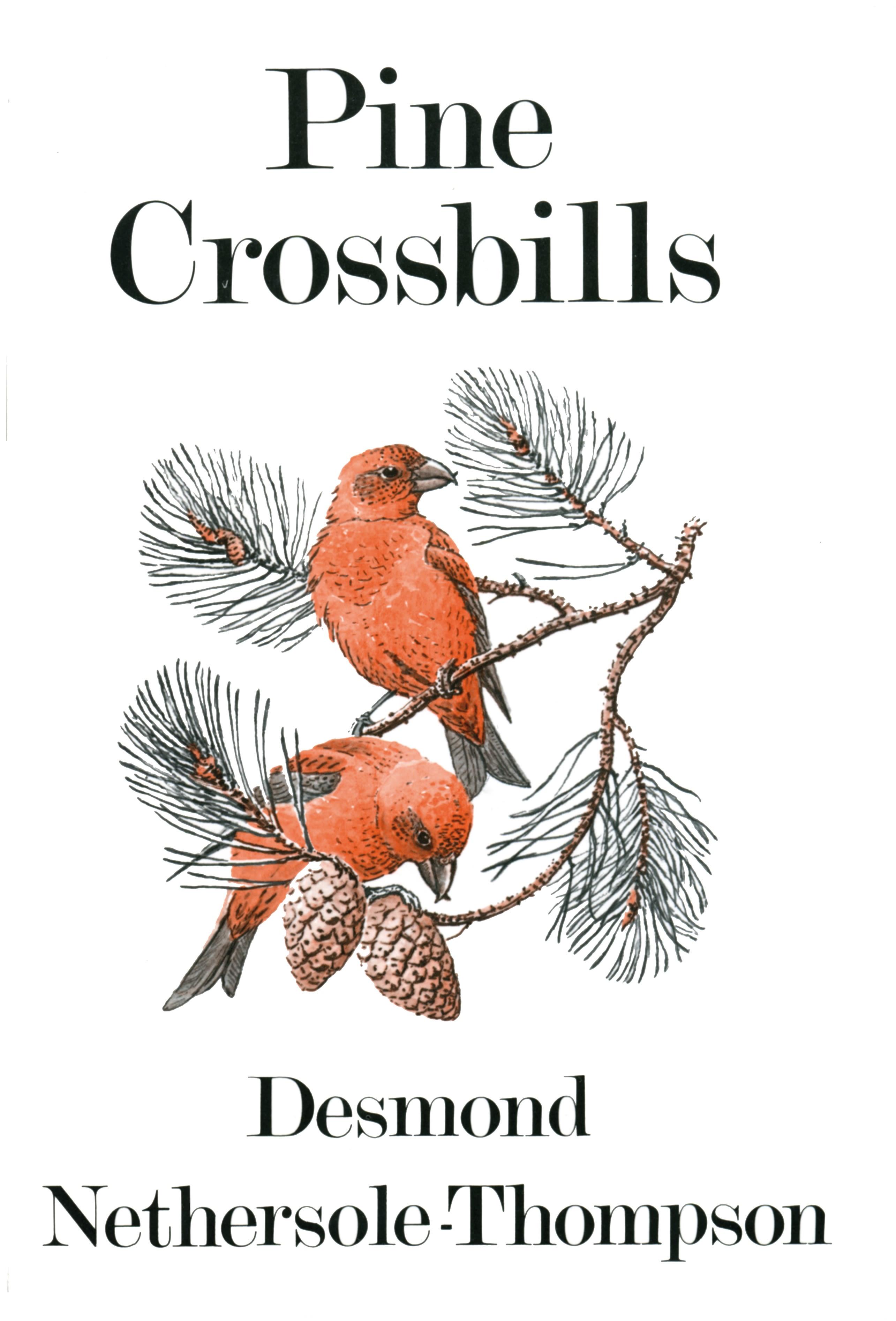
A comprehensive study of Pine Crossbills.
'From mid-January to mid-April 1935 I was off on my dilapidated bicycle, but how different Speyside was from Breckland. In late February many crossbills were still in flocks; I had to walk and cycle for many miles before finding my first nest in the last week of March, when I located a small breeding group in a plantation of old pines close to a keeper's cottage. Thenceforward, until 1942, I followed the crossbills and slowly began to understand a little about them.
At first everything was gloriously new. I watched my crossbills mating and discovered how subtly a winter flock changed to a mating party and from a mating party to mated groups. I studied patterns of territory and dispersion and watched how hens built their nests. I sat under trees and I climbed to nests. I watched hens brooding and saw cocks feeding them. One hen pitched on my fingers and allowed me to catch her. I still vividly recall the sharp resiny scent of her body. I saw pairs rear their young and followed them and their broods through the forest. Soon my notebooks were full, but this was only the beginning.'
That extract from the book's first chapter describes how the author began his study of the Scottish pine-feeding crossbills, having noticed earlier that the calls of crossbills in Rothiemurchus Forest were different from those of the spruce-feeding common crossbills he had known in the English Breckland.
From this study and a quest for the true identity of the Speyside crossbills has emerged that all too rare book, a work of scholarship and research that is wholly readable, in which the author's delight in his study subject becomes the reader's, too.
'From mid-January to mid-April 1935 I was off on my dilapidated bicycle, but how different Speyside was from Breckland. In late February many crossbills were still in flocks; I had to walk and cycle for many miles before finding my first nest in the last week of March, when I located a small breeding group in a plantation of old pines close to a keeper's cottage. Thenceforward, until 1942, I followed the crossbills and slowly began to understand a little about them.
At first everything was gloriously new. I watched my crossbills mating and discovered how subtly a winter flock changed to a mating party and from a mating party to mated groups. I studied patterns of territory and dispersion and watched how hens built their nests. I sat under trees and I climbed to nests. I watched hens brooding and saw cocks feeding them. One hen pitched on my fingers and allowed me to catch her. I still vividly recall the sharp resiny scent of her body. I saw pairs rear their young and followed them and their broods through the forest. Soon my notebooks were full, but this was only the beginning.'
That extract from the book's first chapter describes how the author began his study of the Scottish pine-feeding crossbills, having noticed earlier that the calls of crossbills in Rothiemurchus Forest were different from those of the spruce-feeding common crossbills he had known in the English Breckland.
From this study and a quest for the true identity of the Speyside crossbills has emerged that all too rare book, a work of scholarship and research that is wholly readable, in which the author's delight in his study subject becomes the reader's, too.
Betaal eenvoudig met kaart, Klarna, Apple Pay of Google Pay. Niet tevreden? Je hebt altijd 14 dagen bedenktijd. Lees meer in onze voorwaarden. Heb je vragen, mail ons dan via hello@memmo.org.
Memmo maakt studeren makkelijker – waar je ook bent ter wereld. Wij brengen je cursusboeken en slimme studietools samen op één plek: samenvattingen, quizzen, podcasts en flashcards. En Ted, je studievriend die antwoord geeft op alles wat je je afvraagt. Meer dan 50.000 studenten studeren hier al – gebouwd om je sneller te laten leren en minder stress te geven.