
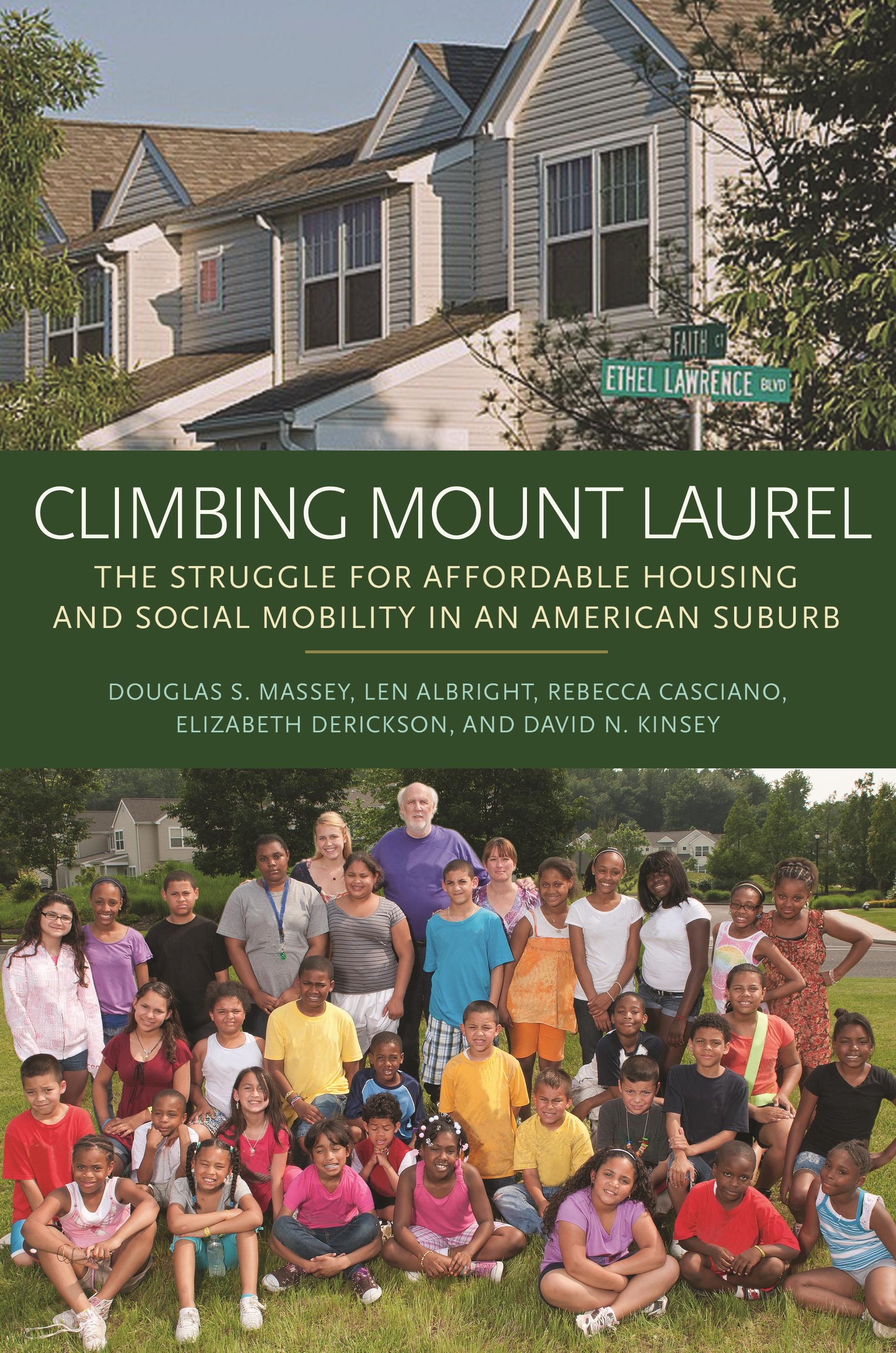
A close look at the aftereffects of the Mount Laurel affordable housing decision
Under the New Jersey State Constitution as interpreted by the State Supreme Court in 1975 and 1983, municipalities are required to use their zoning authority to create realistic opportunities for a fair share of affordable housing for low- and moderate-income households. Mount Laurel was the town at the center of the court decisions. As a result, Mount Laurel has become synonymous with the debate over affordable housing policy designed to create economically integrated communities. What was the impact of the Mount Laurel decision on those most affected by it? What does the case tell us about economic inequality?
Climbing Mount Laurel undertakes a systematic evaluation of the Ethel Lawrence Homes—a housing development produced as a result of the Mount Laurel decision. Douglas Massey and his colleagues assess the consequences for the surrounding neighborhoods and their inhabitants, the township of Mount Laurel, and the residents of the Ethel Lawrence Homes. Their analysis reveals what social scientists call neighborhood effects—the notion that neighborhoods can shape the life trajectories of their inhabitants. Climbing Mount Laurel proves that the building of affordable housing projects is an efficacious, cost-effective approach to integration and improving the lives of the poor, with reasonable cost and no drawbacks for the community at large.
Betaal eenvoudig met kaart, Klarna, Apple Pay of Google Pay. Niet tevreden? Je hebt altijd 14 dagen bedenktijd. Lees meer in onze voorwaarden. Heb je vragen, mail ons dan via hello@memmo.org.
Memmo maakt studeren makkelijker – waar je ook bent ter wereld. Wij brengen je cursusboeken en slimme studietools samen op één plek: samenvattingen, quizzen, podcasts en flashcards. En Ted, je studievriend die antwoord geeft op alles wat je je afvraagt. Meer dan 50.000 studenten studeren hier al – gebouwd om je sneller te laten leren en minder stress te geven.