
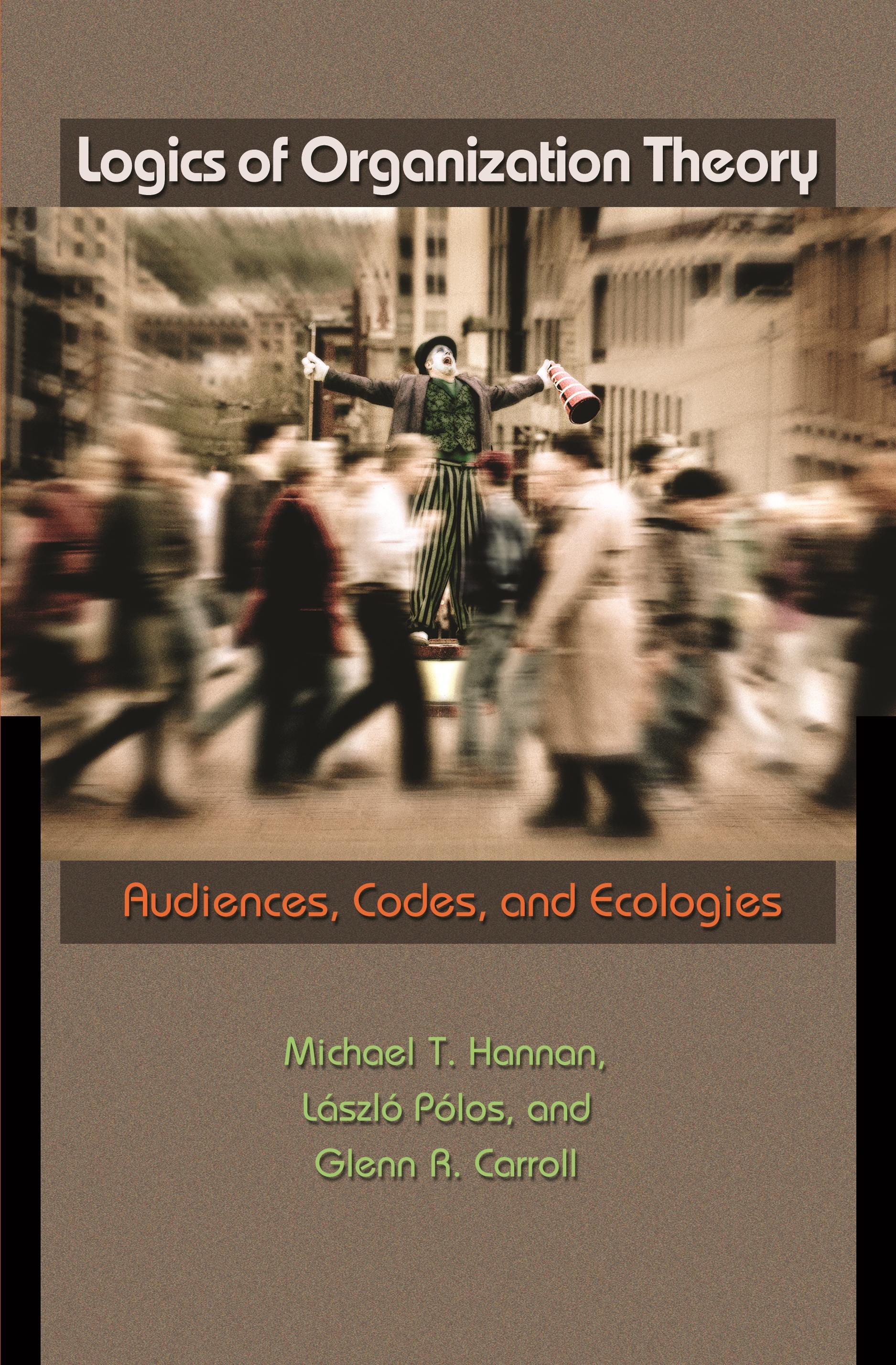
Building theories of organizations is challenging: theories are partial and "folk" categories are fuzzy. The commonly used tools--first-order logic and its foundational set theory--are ill-suited for handling these complications. Here, three leading authorities rethink organization theory. Logics of Organization Theory sets forth and applies a new language for theory building based on a nonmonotonic logic and fuzzy set theory. In doing so, not only does it mark a major advance in organizational theory, but it also draws lessons for theory building elsewhere in the social sciences.
Organizational research typically analyzes organizations in categories such as "bank," "hospital," or "university." These categories have been treated as crisp analytical constructs designed by researchers. But sociologists increasingly view categories as constructed by audiences. This book builds on cognitive psychology and anthropology to develop an audience-based theory of organizational categories. It applies this framework and the new language of theory building to organizational ecology. It reconstructs and integrates four central theory fragments, and in so doing reveals unexpected connections and new insights.
Betaal eenvoudig met kaart, Klarna, Apple Pay of Google Pay. Niet tevreden? Je hebt altijd 14 dagen bedenktijd. Lees meer in onze voorwaarden. Heb je vragen, mail ons dan via hello@memmo.org.
Memmo maakt studeren makkelijker – waar je ook bent ter wereld. Wij brengen je cursusboeken en slimme studietools samen op één plek: samenvattingen, quizzen, podcasts en flashcards. En Ted, je studievriend die antwoord geeft op alles wat je je afvraagt. Meer dan 50.000 studenten studeren hier al – gebouwd om je sneller te laten leren en minder stress te geven.