
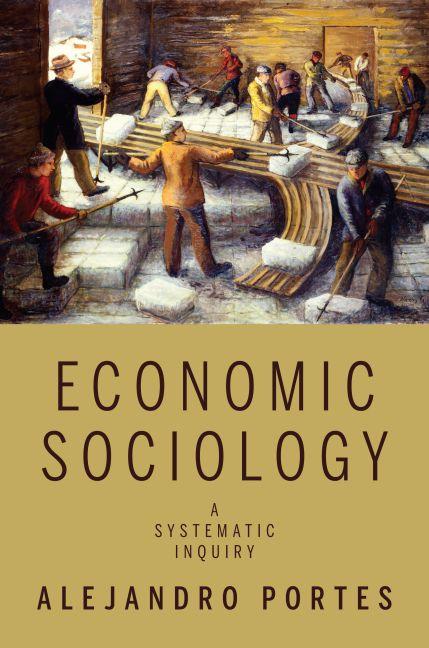
The sociological study of economic activity has witnessed a significant resurgence. Recent texts have chronicled economic sociology's nineteenth-century origins while pointing to the importance of context and power in economic life, yet the field lacks a clear understanding of the role that concepts at different levels of abstraction play in its organization. Economic Sociology fills this critical gap by surveying the current state of the field while advancing a framework for further theoretical development.
Alejandro Portes examines economic sociology's principal assumptions, key explanatory concepts, and selected research sites. He argues that economic activity is embedded in social and cultural relations, but also that power and the unintended consequences of rational purposive action must be factored in when seeking to explain or predict economic behavior. Drawing upon a wealth of examples, Portes identifies three strategic sites of research--the informal economy, ethnic enclaves, and transnational communities--and he eschews grand narratives in favor of mid-range theories that help us understand specific kinds of social action.
The book shows how the meta-assumptions of economic sociology can be transformed, under certain conditions, into testable propositions, and puts forward a theoretical agenda aimed at moving the field out of its present impasse.
Betaal eenvoudig met kaart, Klarna, Apple Pay of Google Pay. Niet tevreden? Je hebt altijd 14 dagen bedenktijd. Lees meer in onze voorwaarden. Heb je vragen, mail ons dan via hello@memmo.org.
Memmo maakt studeren makkelijker – waar je ook bent ter wereld. Wij brengen je cursusboeken en slimme studietools samen op één plek: samenvattingen, quizzen, podcasts en flashcards. En Ted, je studievriend die antwoord geeft op alles wat je je afvraagt. Meer dan 50.000 studenten studeren hier al – gebouwd om je sneller te laten leren en minder stress te geven.