
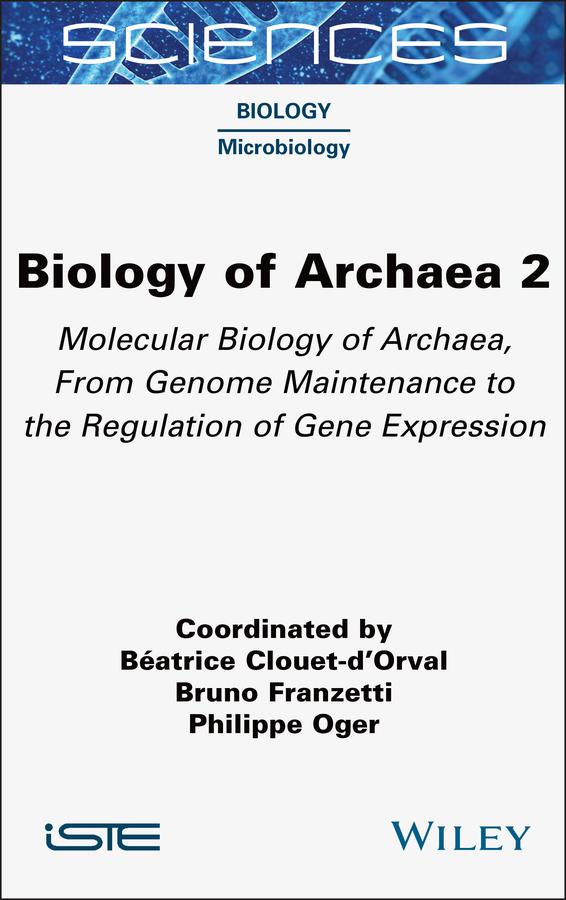
Archaea constitute a new branch of life alongside bacteria and eukaryotes. These microorganisms are unique in their cellular and molecular aspects. They have evolutionary links with the first eukaryotic cells and are now being used to elucidate fundamental biological questions.
Champions of extremophilicity, archaea are helping to lift the veil on the limits of life on Earth. Biology of Archaea 2 presents the diverse molecular mechanisms involved in the fundamental processes of genome maintenance and regulation of gene expression in archaeal cells.
This book analyzes the complex machinery involved in chromosome replication, DNA repair, RNA synthesis (transcription) and protein synthesis (translation), and explores the different classes of RNAs and enzymes involved in RNA maturation and degradation. These regulate the stability of messenger and regulatory non-coding RNAs, and contribute to the formation of the mature forms of ribosomal RNAs and transfer RNAs. These molecular mechanisms are closely related to those of eukaryotes.
Betaal eenvoudig met kaart, Klarna, Apple Pay of Google Pay. Niet tevreden? Je hebt altijd 14 dagen bedenktijd. Lees meer in onze voorwaarden. Heb je vragen, mail ons dan via hello@memmo.org.
Memmo maakt studeren makkelijker – waar je ook bent ter wereld. Wij brengen je cursusboeken en slimme studietools samen op één plek: samenvattingen, quizzen, podcasts en flashcards. En Ted, je studievriend die antwoord geeft op alles wat je je afvraagt. Meer dan 50.000 studenten studeren hier al – gebouwd om je sneller te laten leren en minder stress te geven.