
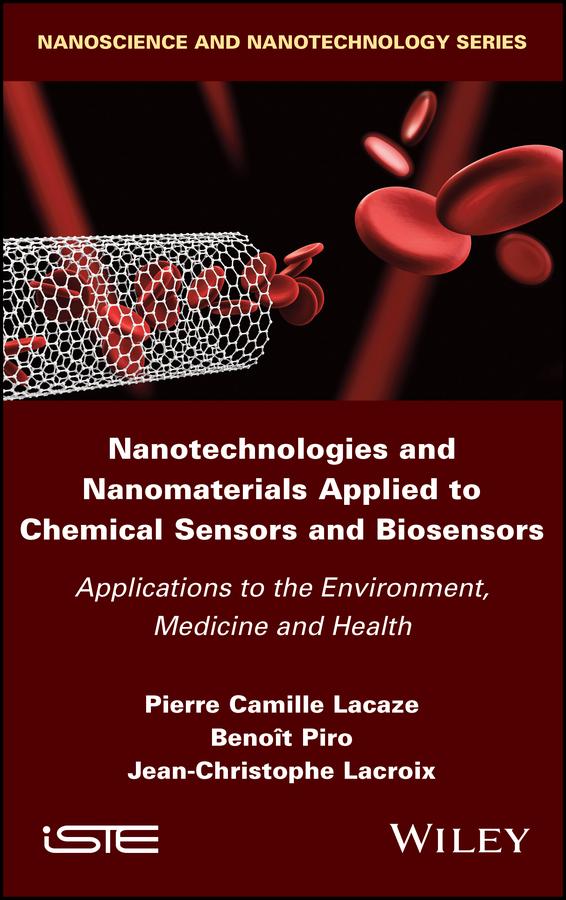
The key social issues of health, medicine, the environment, food and safety cannot be addressed without the support of chemical sensors and biosensors, whose performance is constantly improving in terms of reliability and cost, particularly in the production of autonomous devices connected to the Internet.
Obtaining high-intensity transduction signals arising from the interaction of an analyte and a sensor, enabling the identification and dosage of a given compound, requires the selection of suitable physical measurement methods and the creation of structures that react specifically to different types of analyte.
Nanotechnologies and Nanomaterials Applied to Chemical Sensors and Biosensors details recent advances in the field of sensor design using carbon-based nanomaterials (graphene, carbon nanotubes, carbon quantum dots, etc.) and inorganic nanomaterials (metallic nanoparticles, nanocrystals, transition metal dichalcogenides, etc.), as well as a variety of physical sensing methods (electrochemical, piezoelectric, electromagnetic, optic, optoelectronic, etc.).
Betaal eenvoudig met kaart, Klarna, Apple Pay of Google Pay. Niet tevreden? Je hebt altijd 14 dagen bedenktijd. Lees meer in onze voorwaarden. Heb je vragen, mail ons dan via hello@memmo.org.
Memmo maakt studeren makkelijker – waar je ook bent ter wereld. Wij brengen je cursusboeken en slimme studietools samen op één plek: samenvattingen, quizzen, podcasts en flashcards. En Ted, je studievriend die antwoord geeft op alles wat je je afvraagt. Meer dan 50.000 studenten studeren hier al – gebouwd om je sneller te laten leren en minder stress te geven.