
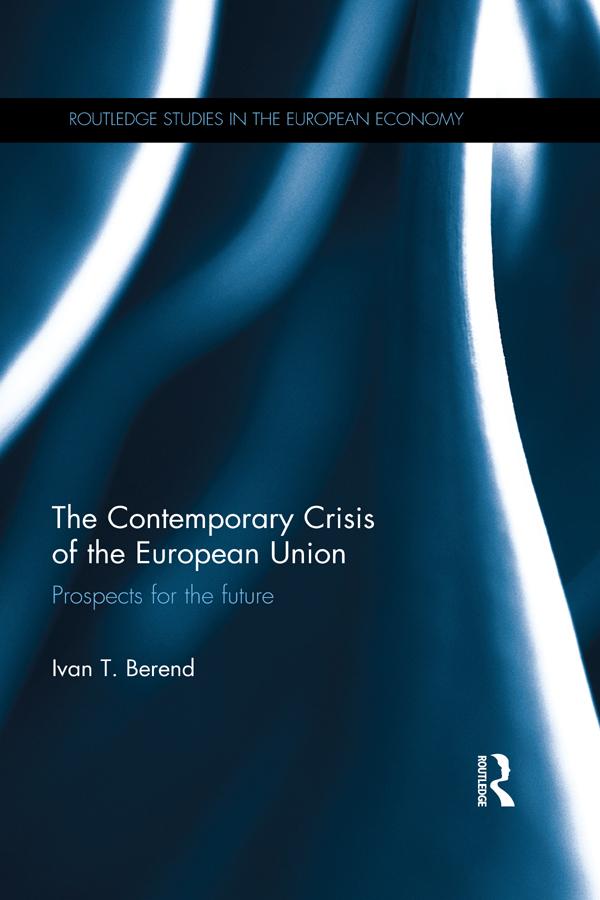
The European Union widened and deepened integration when it introduced the Single Market and the common currency, increasing the number of member countries from 12 to 28. After a quarter of a century, the 2008 financial and economic crisis opened a new chapter in the history of European integration. Prosperity was replaced by economic crisis and then long stagnation, with ramifications far beyond the economic arena.
For the first time, after more than half a century, some countries were almost forced to step out of the Union. History’s most frightening migration crisis shocked Europe and led to the strengthening of several anti-integration parties in various countries. This pioneering book discusses the nine crisis elements that could lead to disintegration of the EU. Beginning with the Greek Debt disaster this book delves into the cause of the recent European crisis and then onto the recent immigration influx and its consequences, as well as Britain’s exit from the Union. A concluding chapter, based on the facts of positive development during the crises years, gives a cautiously optimistic forecast for the future and asks the question: further integration or disintegration?
This volume is of great importance to academics, students and policy makers who have an interest in European politics, political economy and migration.
Betaal eenvoudig met kaart, Klarna, Apple Pay of Google Pay. Niet tevreden? Je hebt altijd 14 dagen bedenktijd. Lees meer in onze voorwaarden. Heb je vragen, mail ons dan via hello@memmo.org.
Memmo maakt studeren makkelijker – waar je ook bent ter wereld. Wij brengen je cursusboeken en slimme studietools samen op één plek: samenvattingen, quizzen, podcasts en flashcards. En Ted, je studievriend die antwoord geeft op alles wat je je afvraagt. Meer dan 50.000 studenten studeren hier al – gebouwd om je sneller te laten leren en minder stress te geven.