
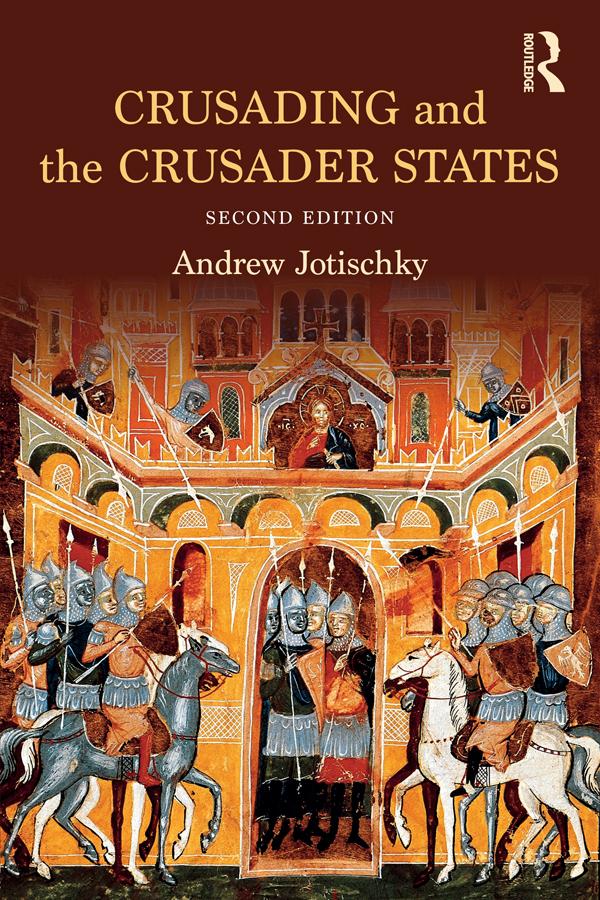
Crusading and the Crusader States explores how the idea of holy war emerged from the troubled society of the eleventh century, and why Jerusalem and the Holy Land were so important to Europeans. It follows the progress of the major crusading expeditions, offering insights into initial success and subsequent failure, charts the development of new attitudes towards Islam and its followers, and shows the effects of the Crusades on society and culture in the Near East.
Providing analysis and discussion of this vital period of medieval history, Andrew Jotischky discusses key questions such as how crusading evolved in theory and practice, how crusading expeditions were planned and carried out, why they were considered such an essential part of medieval society, and why their popularity endured despite military failures.
This new edition takes into account the wealth of rich and varied recent research to show why crusading should be seen as central to the European experience in the Middle Ages. It engages with key historiographical debates of the past decade, including how Crusades were formed, the political culture and social networks of crusading, and the effects of crusading on western religious and aristocratic culture. It now extends into the fifteenth century to discuss the lasting ramifications of the Crusades, and illustrate their legacy into the early modern period.
It is essential reading for all students of the Crusades and medieval history.
Betaal eenvoudig met kaart, Klarna, Apple Pay of Google Pay. Niet tevreden? Je hebt altijd 14 dagen bedenktijd. Lees meer in onze voorwaarden. Heb je vragen, mail ons dan via hello@memmo.org.
Memmo maakt studeren makkelijker – waar je ook bent ter wereld. Wij brengen je cursusboeken en slimme studietools samen op één plek: samenvattingen, quizzen, podcasts en flashcards. En Ted, je studievriend die antwoord geeft op alles wat je je afvraagt. Meer dan 50.000 studenten studeren hier al – gebouwd om je sneller te laten leren en minder stress te geven.