
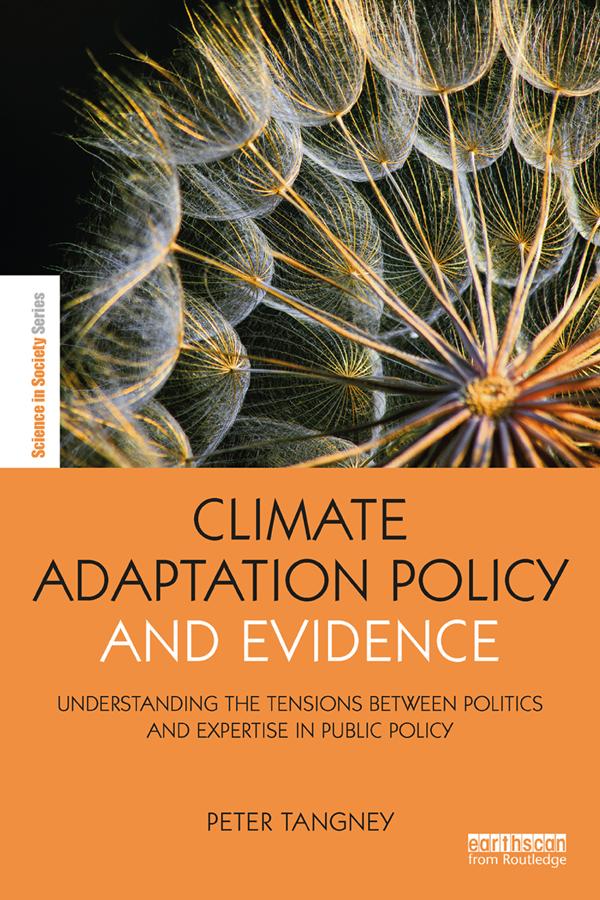
Evidence-based policymaking is often promoted within liberal democracies as the best means for government to balance political values with technical considerations. Under the evidence-based mandate, both experts and non-experts often assume that policy problems are sufficiently tractable and that experts can provide impartial and usable advice to government so that problems like climate change adaptation can be effectively addressed; at least, where there is political will to do so. This book compares the politics and science informing climate adaptation policy in Australia and the UK to understand how realistic these expectations are in practice.
At a time when both academics and practitioners have repeatedly called for more and better science to anticipate climate change impacts and, thereby, to effectively adapt, this book explains why a dearth of useful expert evidence about future climate is not the most pressing problem. Even when it is sufficiently credible and relevant for decision-making, climate science is often ignored or politicised to ensure the evidence-based mandate is coherent with prevailing political, economic and epistemic ideals. There are other types of policy knowledge too that are, arguably, much more important. This comparative analysis reveals what the politics of climate change mean for both the development of useful evidence and for the practice of evidence-based policymaking.
Betaal eenvoudig met kaart, Klarna, Apple Pay of Google Pay. Niet tevreden? Je hebt altijd 14 dagen bedenktijd. Lees meer in onze voorwaarden. Heb je vragen, mail ons dan via hello@memmo.org.
Memmo maakt studeren makkelijker – waar je ook bent ter wereld. Wij brengen je cursusboeken en slimme studietools samen op één plek: samenvattingen, quizzen, podcasts en flashcards. En Ted, je studievriend die antwoord geeft op alles wat je je afvraagt. Meer dan 50.000 studenten studeren hier al – gebouwd om je sneller te laten leren en minder stress te geven.