
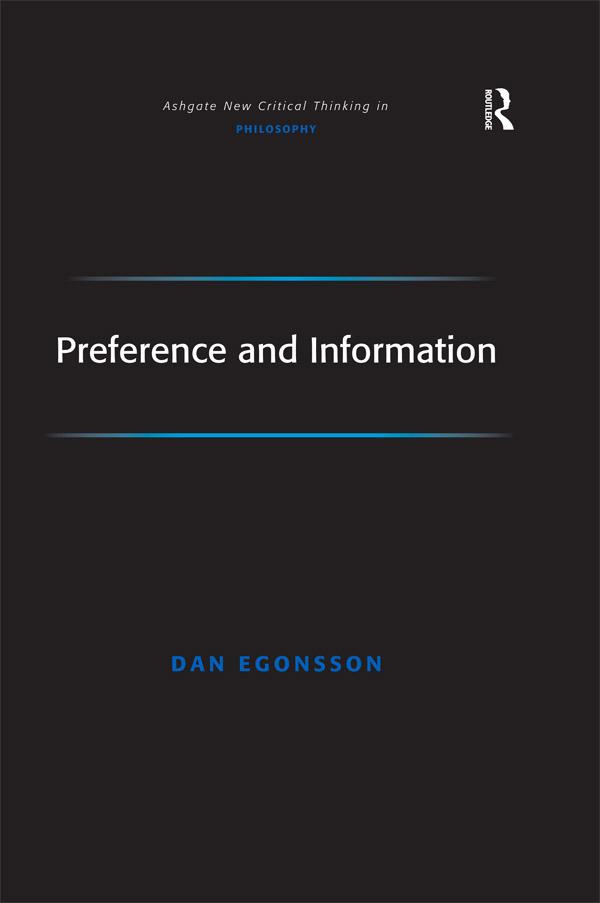
Is it important to our quality of life that the preferences we satisfy are rational and well-informed? Standard preferentialist theories allege that a person's preferences and their satisfaction are the correct measure of well-being. In preference-sensitive theories, preferences are important but do not count for everything. This raises the question of whether we ought to make demands on these preferences. In this book Egonsson presents a critical analysis of the 'Full Information Account of the Good', which claims that only the satisfaction of rational and fully informed preferences has value for a person. The problems he deals with include: how is an information requirement to be formulated and shaped? Is it possible to design a requirement that is both neutral to the agent's epistemic situation and reasonable? Is the requirement reasonable? Does it make sense to claim that some are better off if we satisfy the preferences they would have had in some merely hypothetical circumstances? This is an important new book on preference rationality which will be of great interest to academics and students of ethics, quality of life, and rationality.
Pagina's: 176
Categorie: Filosofi
e-ISBN: 9781351909198
Verzendgewicht: 1.2 kg
Verzending binnen: 1-2 dagen
Betaal eenvoudig met kaart, Klarna, Apple Pay of Google Pay. Niet tevreden? Je hebt altijd 14 dagen bedenktijd. Lees meer in onze voorwaarden. Heb je vragen, mail ons dan via hello@memmo.org.
Memmo maakt studeren makkelijker – waar je ook bent ter wereld. Wij brengen je cursusboeken en slimme studietools samen op één plek: samenvattingen, quizzen, podcasts en flashcards. En Ted, je studievriend die antwoord geeft op alles wat je je afvraagt. Meer dan 50.000 studenten studeren hier al – gebouwd om je sneller te laten leren en minder stress te geven.
Misschien vind je dit ook leuk
Koop het boek0