
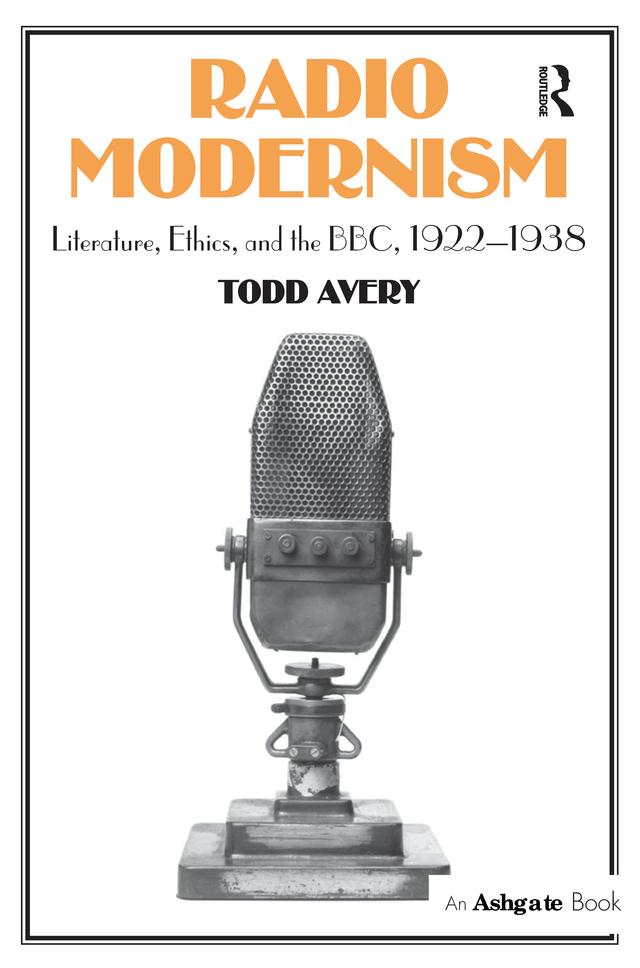
Radio Modernism marries the fields of radio studies and modernist cultural historiography to the recent 'ethical turn' in literary and cultural studies to examine how representative British writers negotiated the moral imperative for public service broadcasting that was crafted, embraced, and implemented by the BBC's founders and early administrators. Weaving together the institutional history of the BBC and developments in ethical philosophy as mediated and forged by writers such as T. S. Eliot, H. G. Wells, E. M. Forster, and Virginia Woolf, Todd Avery shows how these and other prominent authors' involvement with radio helped to shape the ethical contours of literary modernism. In so doing, Avery demonstrates the central role radio played in the early dissemination of modernist art and literature, and also challenges the conventional assertion that modernists were generally elitist and anti-democratic. Intended for readers interested in the fields of media and cultural studies and modernist historiography, this book is remarkable in recapturing for a twenty-first-century audience the interest, fascination, excitement, and often consternation that British radio induced in its literary listeners following its inception in 1922.
Betaal eenvoudig met kaart, Klarna, Apple Pay of Google Pay. Niet tevreden? Je hebt altijd 14 dagen bedenktijd. Lees meer in onze voorwaarden. Heb je vragen, mail ons dan via hello@memmo.org.
Memmo maakt studeren makkelijker – waar je ook bent ter wereld. Wij brengen je cursusboeken en slimme studietools samen op één plek: samenvattingen, quizzen, podcasts en flashcards. En Ted, je studievriend die antwoord geeft op alles wat je je afvraagt. Meer dan 50.000 studenten studeren hier al – gebouwd om je sneller te laten leren en minder stress te geven.
Misschien vind je dit ook leuk
Koop het boek0