
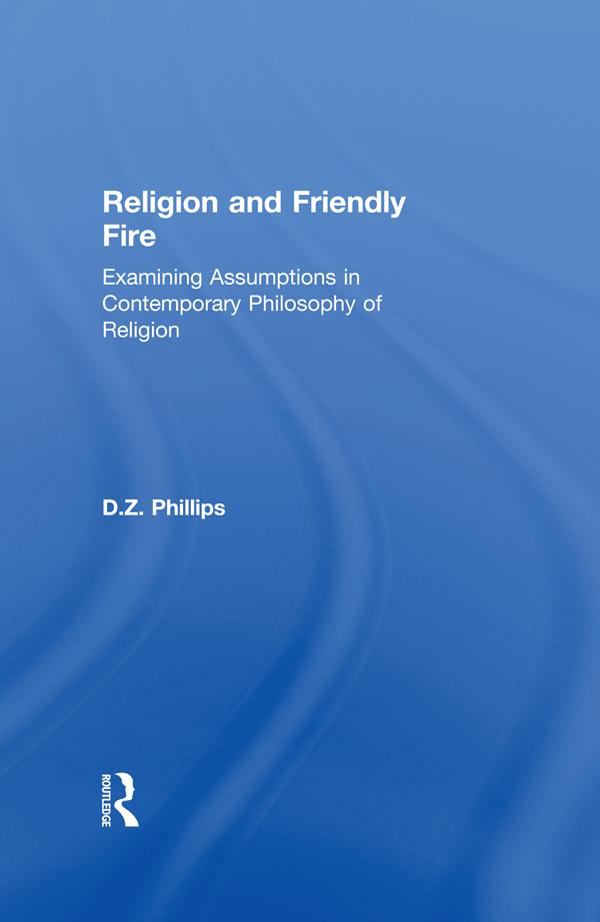
In locating friendly fire in contemporary philosophy of religion, D.Z. Phillips shows that more harm can be done to religion by its philosophical defenders than by its philosophical despisers. Friendly fire is the result of an uncritical acceptance of empiricism, and Phillips argues that we need to examine critically the claims that individual consciousness is the necessary starting point from which we have to argue: for the existence of an external world and the reality of God; that God is a person without a body, a pure consciousness; and that to assent to a religious belief is essentially to assign a truth value to a proposition independent of any confessional context. When these products of friendly fire are avoided, we arrive at a new understanding of belief, trust and the soul, and refuse to say more or less than we know about the realities of human life in the service of religious apologetics.
Betaal eenvoudig met kaart, Klarna, Apple Pay of Google Pay. Niet tevreden? Je hebt altijd 14 dagen bedenktijd. Lees meer in onze voorwaarden. Heb je vragen, mail ons dan via hello@memmo.org.
Memmo maakt studeren makkelijker – waar je ook bent ter wereld. Wij brengen je cursusboeken en slimme studietools samen op één plek: samenvattingen, quizzen, podcasts en flashcards. En Ted, je studievriend die antwoord geeft op alles wat je je afvraagt. Meer dan 50.000 studenten studeren hier al – gebouwd om je sneller te laten leren en minder stress te geven.
Misschien vind je dit ook leuk
Koop het boek0