
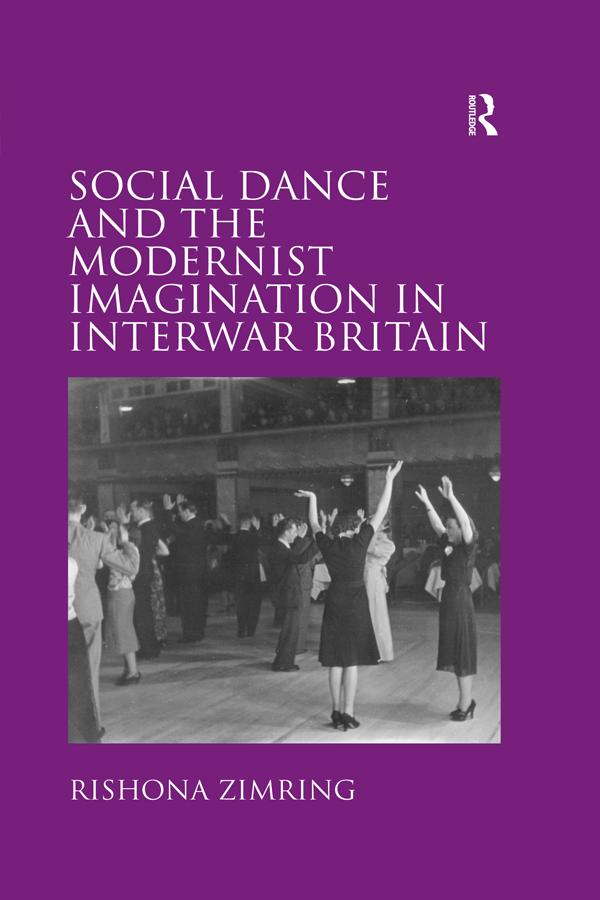
Social dance was ubiquitous in interwar Britain. The social mingling and expression made possible through non-theatrical participatory dancing in couples and groups inspired heated commentary, both vociferous and subtle. By drawing attention to the ways social dance accrued meaning in interwar Britain, Rishona Zimring redefines and brings needed attention to a phenomenon that has been overshadowed by other developments in the history of dance. Social dance, Zimring argues, haunted the interwar imagination, as illustrated in trends such as folk revivalism and the rise of therapeutic dance education. She brings to light the powerful figurative importance of popular music and dance both in the aftermath of war, and during Britain’s entrance into cosmopolitan modernity and the modernization of gender relations. Analyzing paintings, films, memoirs, a ballet production, and archival documents, in addition to writings by Virginia Woolf, D.H. Lawrence, Katherine Mansfield, Vivienne Eliot, and T.S. Eliot, to name just a few, Zimring provides crucial insights into the experience, observation, and representation of social dance during a time of cultural transition and recuperation. Social dance was pivotal in the construction of modern British society as well as the aesthetics of some of the period’s most prominent intellectuals.
Betaal eenvoudig met kaart, Klarna, Apple Pay of Google Pay. Niet tevreden? Je hebt altijd 14 dagen bedenktijd. Lees meer in onze voorwaarden. Heb je vragen, mail ons dan via hello@memmo.org.
Memmo maakt studeren makkelijker – waar je ook bent ter wereld. Wij brengen je cursusboeken en slimme studietools samen op één plek: samenvattingen, quizzen, podcasts en flashcards. En Ted, je studievriend die antwoord geeft op alles wat je je afvraagt. Meer dan 50.000 studenten studeren hier al – gebouwd om je sneller te laten leren en minder stress te geven.
Misschien vind je dit ook leuk
Koop het boek0