
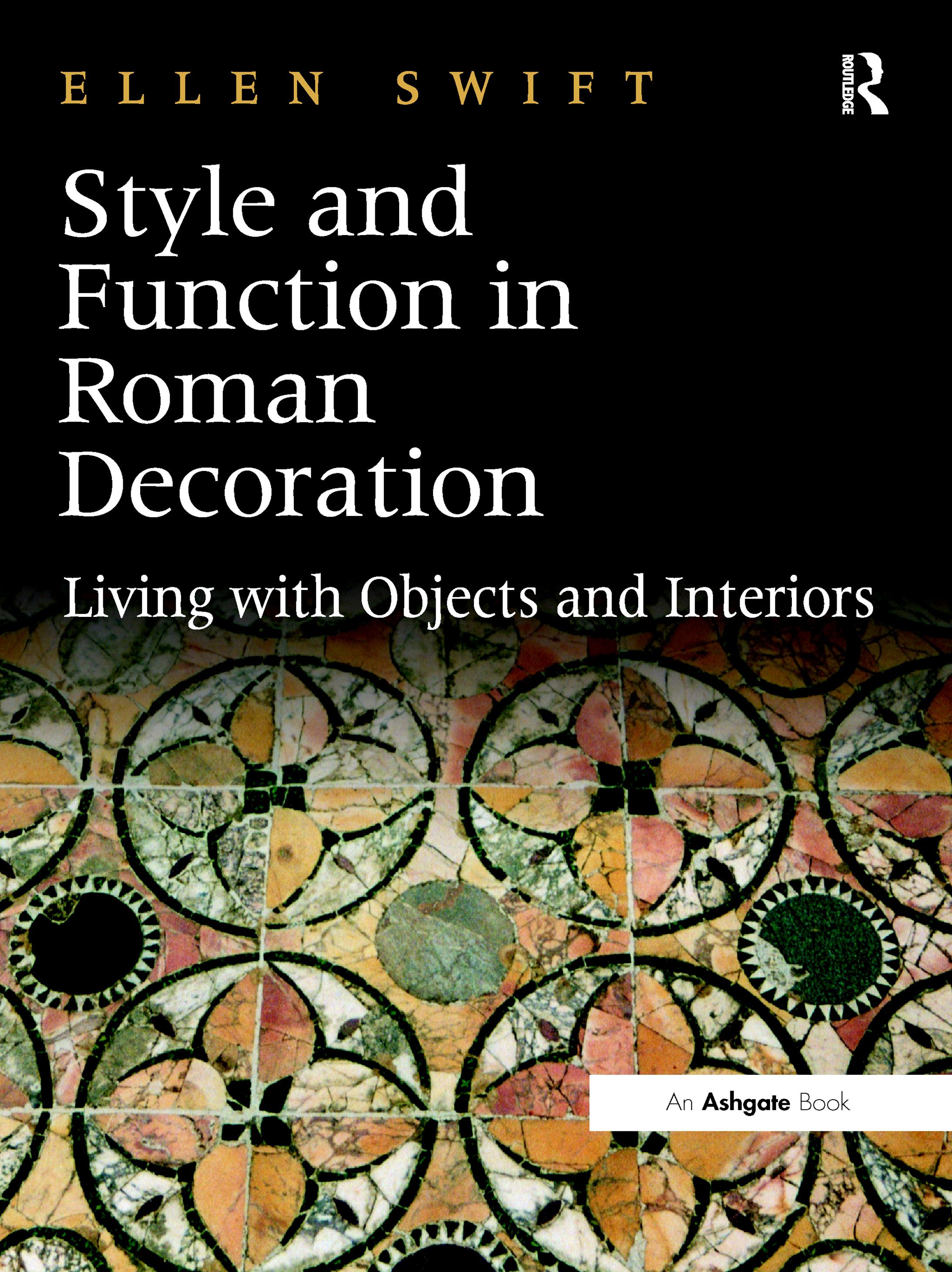
This important book puts forward a new interpretation of Roman decorative art, focusing on the function of decoration in the social context. It examines the three principal areas of social display and conspicuous consumption in the Roman world: social space, entertainment, and dress, and discusses the significance of the decoration of objects and interiors within these contexts, drawing examples from both Rome and its environs, and the Western provinces, from the early Imperial period to Late Antiquity. Focusing on specific examples, including mosaics and other interior décor, silver plate, glass and pottery vessels, and jewellery and other dress accessories, Swift demonstrates the importance of decoration in creating and maintaining social networks and identities and fostering appropriate social behaviour, and its role in perpetuating social convention and social norms. It is argued that our understanding of stylistic change and the relationship between this and the wider social context in the art of the Roman period is greatly enhanced by an initial focus on the particular social relationships fostered by decorated objects and spaces. The book demonstrates that an examination of so-called 'minor art' is fundamental in any understanding of the relationship between art and its social context, and aims to reinvigorate debate on the value of decoration and ornament in the Roman period and beyond.
Betaal eenvoudig met kaart, Klarna, Apple Pay of Google Pay. Niet tevreden? Je hebt altijd 14 dagen bedenktijd. Lees meer in onze voorwaarden. Heb je vragen, mail ons dan via hello@memmo.org.
Memmo maakt studeren makkelijker – waar je ook bent ter wereld. Wij brengen je cursusboeken en slimme studietools samen op één plek: samenvattingen, quizzen, podcasts en flashcards. En Ted, je studievriend die antwoord geeft op alles wat je je afvraagt. Meer dan 50.000 studenten studeren hier al – gebouwd om je sneller te laten leren en minder stress te geven.
Misschien vind je dit ook leuk
Koop het boek0