
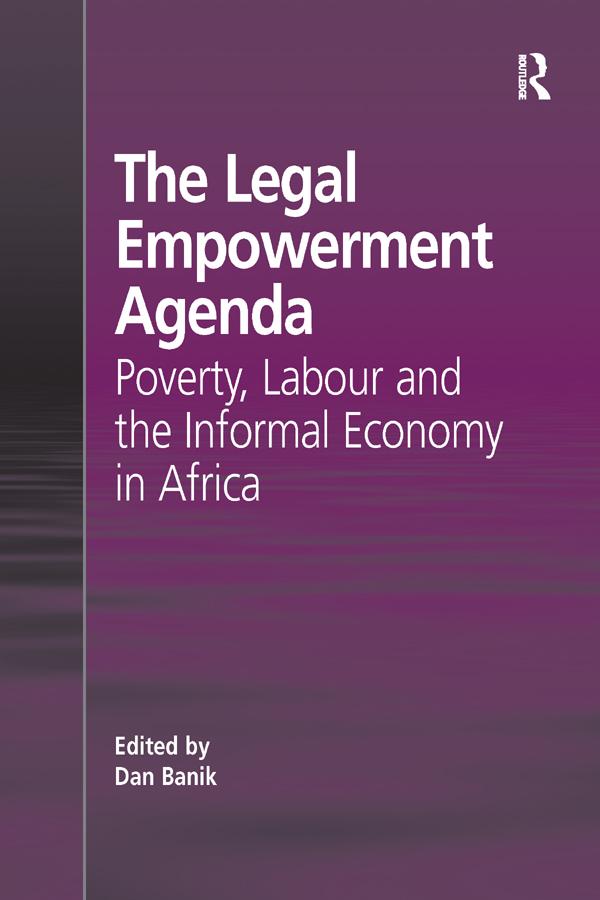
Despite providing society with a set of crucial services, large groups of workers in the informal economy are subject to exclusion and discrimination, and their lives are characterised by various types of vulnerabilities and deprivations that result from the denial of social, economic, political and legal protection. Although not new to the development vocabulary, the informal economy has received renewed attention in recent years largely due to the ILO's 'decent work' agenda and various efforts to promote 'legal empowerment of the poor'. With an explicit focus on labour rights, the book focuses on a nuanced understanding of the regulatory and operational challenges and dilemmas related to implementing the two approaches in selected countries in sub-Saharan Africa. In addition to analyzing structures and relations of power between the formal and the informal economies, the book critically discusses the work of governments, civil society organizations and the poor themselves to address the daily challenges of living in the informal economy.
Betaal eenvoudig met kaart, Klarna, Apple Pay of Google Pay. Niet tevreden? Je hebt altijd 14 dagen bedenktijd. Lees meer in onze voorwaarden. Heb je vragen, mail ons dan via hello@memmo.org.
Memmo maakt studeren makkelijker – waar je ook bent ter wereld. Wij brengen je cursusboeken en slimme studietools samen op één plek: samenvattingen, quizzen, podcasts en flashcards. En Ted, je studievriend die antwoord geeft op alles wat je je afvraagt. Meer dan 50.000 studenten studeren hier al – gebouwd om je sneller te laten leren en minder stress te geven.
Misschien vind je dit ook leuk
Koop het boek0