
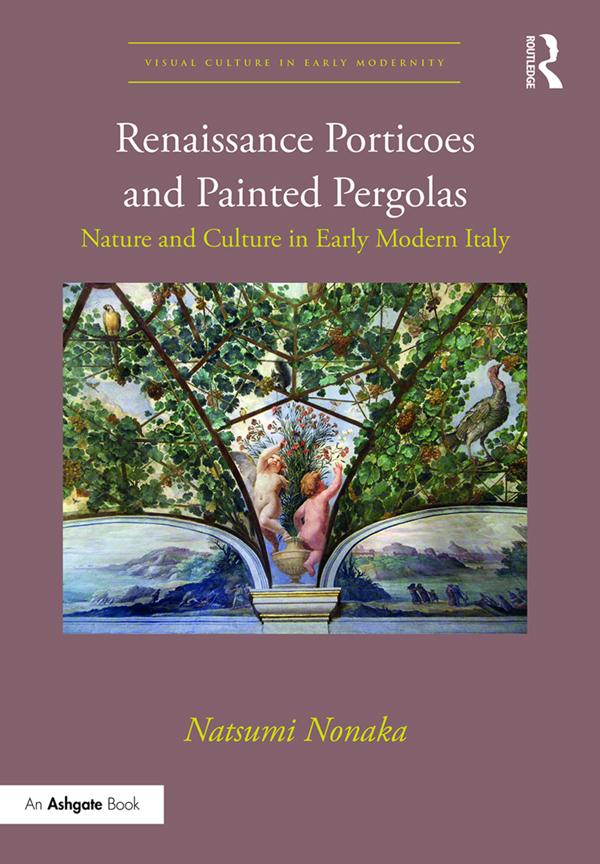
This book is the first study of the portico and its decorative program as a cultural phenomenon in Renaissance Italy. Focusing on a largely neglected group of porticoes decorated with painted pergolas that appeared in Rome and environs in the sixteenth and early seventeenth centuries, it tells the story of how an element of the garden—the pergola—became a pictorial topos in portico decoration, and evolved, hand in hand with its real cousin in the garden, into an object for cultural emulation among the educated patrons of early modern Rome. The liminality of both the portico and the pergola at the interface of architecture and garden is key to the interpretation of these architectural and painted forms, which rests on the intersecting frameworks of the classical tradition, natural history, and the cultural identity of the aristocracy. In the mediating space of the Renaissance portico, the illusionism pergola created an art gallery, a natural history museum, and a virtual garden where one could engage in leisurely strolls, learned conversations, appreciation of art, and scientific investigation, as well as extensive travel across time and space. The book proposes the interpretation that the illusionistic pergola was an artistic formula for the early modern perception of nature.
Betaal eenvoudig met kaart, Klarna, Apple Pay of Google Pay. Niet tevreden? Je hebt altijd 14 dagen bedenktijd. Lees meer in onze voorwaarden. Heb je vragen, mail ons dan via hello@memmo.org.
Memmo maakt studeren makkelijker – waar je ook bent ter wereld. Wij brengen je cursusboeken en slimme studietools samen op één plek: samenvattingen, quizzen, podcasts en flashcards. En Ted, je studievriend die antwoord geeft op alles wat je je afvraagt. Meer dan 50.000 studenten studeren hier al – gebouwd om je sneller te laten leren en minder stress te geven.