
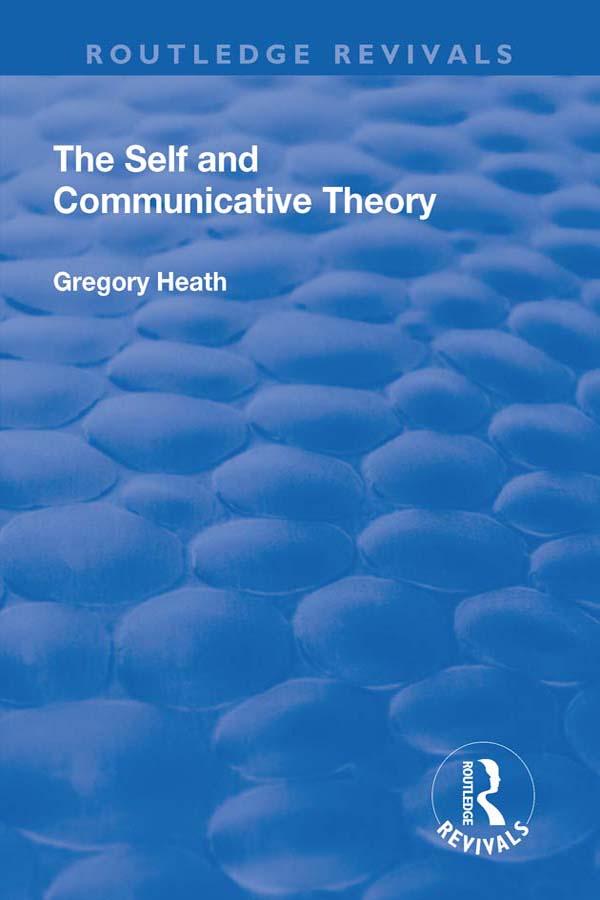
This title was first published in 2000: This text contributes to the development of communicative theory by advancing a theory of the self-sufficient to support intersubjectivity and meet the conditions required for communicative rationality and communicative reason. The conclusion supports theories advanced by Habermas, Apel and Wittgenstein, evaluated against the background of later works from Immanuel Kant. The origins of communicative theory in the writings of Kant and Charles Sanders Peirce are sketched, followed by an outline of the development of the theory by Apel and Habermas. In this discussion a central issues is identified as the failure of communicative theory to produce an adequate theory of the self as the subject of communicative transactions. It is argued that both Mead and Habermas fail to fully establish intersubjectivity as they retain elements of a Cartesian introspective subjectivity. An alternative approach, developed by Charles Taylor, is then discussed. Finally, it is argued that freedom and imagination, understood in the context of Kant and the late Wittgenstein are the key elements to a self capable of supporting the intersubjectivity required by communicative theory.
Betaal eenvoudig met kaart, Klarna, Apple Pay of Google Pay. Niet tevreden? Je hebt altijd 14 dagen bedenktijd. Lees meer in onze voorwaarden. Heb je vragen, mail ons dan via hello@memmo.org.
Memmo maakt studeren makkelijker – waar je ook bent ter wereld. Wij brengen je cursusboeken en slimme studietools samen op één plek: samenvattingen, quizzen, podcasts en flashcards. En Ted, je studievriend die antwoord geeft op alles wat je je afvraagt. Meer dan 50.000 studenten studeren hier al – gebouwd om je sneller te laten leren en minder stress te geven.