
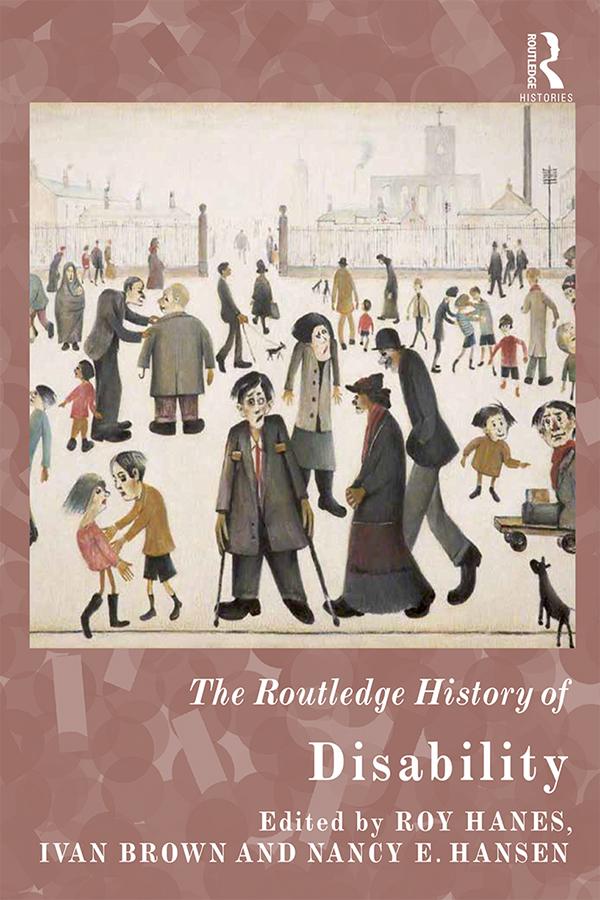
The Routledge History of Disability explores the shifting attitudes towards and representations of disabled people from the age of antiquity to the twenty-first century. Taking an international view of the subject, this wide-ranging collection shows that the history of disability cuts across racial, ethnic, religious, cultural, gender and class divides, highlighting the commonalities and differences between the experiences of disabled persons in global historical context.
The book is arranged in four parts, covering histories of disabilities across various time periods and cultures, histories of national disability policies, programs and services, histories of education and training and the ways in which disabled people have been seen and treated in the last few decades. Within this, the twenty-eight chapters discuss topics such as developments in disability issues during the late Ottoman period, the history of disability in Belgian Congo in the early twentieth century, blind asylums in nineteenth-century Scotland and the systematic killing of disabled children in Nazi Germany.
Illustrated with images and tables and providing an overview of how various countries, cultures and societies have addressed disability over time, this comprehensive volume offers a global perspective on this rapidly growing field and is a valuable resource for scholars of disability studies and histories of disabilities.
Betaal eenvoudig met kaart, Klarna, Apple Pay of Google Pay. Niet tevreden? Je hebt altijd 14 dagen bedenktijd. Lees meer in onze voorwaarden. Heb je vragen, mail ons dan via hello@memmo.org.
Memmo maakt studeren makkelijker – waar je ook bent ter wereld. Wij brengen je cursusboeken en slimme studietools samen op één plek: samenvattingen, quizzen, podcasts en flashcards. En Ted, je studievriend die antwoord geeft op alles wat je je afvraagt. Meer dan 50.000 studenten studeren hier al – gebouwd om je sneller te laten leren en minder stress te geven.